Electronic keyless entry system smart lock on residential door in Tempe AZ — CallOrange Locksmith

Go Keyless: Why Your Next Home Lock Should Be an Electronic Keyless Entry System

Go Keyless: Why Your Next Home Lock Should Be an Electronic Keyless Entry System

Most homeowners don’t think about their front door lock until a key goes missing — and by then, the question isn’t just “where is it?” but “who might have it?” A lost or unaccounted-for key is enough to compromise your entire home’s security, since standard locks offer no way to track duplicates or revoke access. Electronic keyless entry systems close that gap entirely. In this guide, you’ll learn how these systems work, which type fits your home, and why the installation process matters just as much as the product you choose.

What Are Keyless Entry Systems?

A keyless entry system is an electronic lock that authenticates the person — not a physical key. Access is granted through a PIN code, fingerprint scan, smartphone app, or RFID fob, depending on the model. Most residential units are designed to fit a standard deadbolt backset, so they integrate with existing doors without structural modifications.

Unlike a traditional lock-and-key setup, these systems let you create and revoke credentials without calling a residential locksmith for a rekey. Change a code in seconds. Add a temporary PIN for a contractor. Delete access when someone moves out. The control stays with you.


Why Standard Deadbolts Leave Gaps in Your Home Safety

A traditional deadbolt provides solid resistance to brute-force entry — but it has vulnerabilities that go unnoticed until they’re exploited:

  • Untracked duplication: Any hardware store can copy a house key in minutes. You have no way of knowing how many copies exist or who has them.
  • Lock bumping: A specially cut “bump key” can manipulate the standard pin-tumbler mechanism in most residential deadbolts, a technique documented extensively by security researchers at organizations like the American National Standards Institute (ANSI).
  • Thumbturn lock exposure: Interior-facing thumbturn locks can be turned from outside if an intruder breaks a glass panel adjacent to the door — a risk that keyless systems with no thumbturn exposure eliminate.
  • Zero access history: Standard locks offer no log. You have no record of who entered or when.

Electronic keyless entry systems address every one of these points at the hardware level.


4 Types of Keyless Entry Systems for Homes

1. Keypad Deadbolts

The most accessible entry into keyless security. A numeric keypad replaces the traditional cylinder. Set a personal code for your household, a separate temporary code for guests or service workers, and delete it when it’s no longer needed. These work entirely offline — no Wi-Fi, no app, no dependency on a phone.

2. Smart Locks with App Control

These connect via Bluetooth or Wi-Fi and pair with a smartphone app. Lock or unlock your door from anywhere, receive entry alerts, and manage access codes remotely. Popular brands like Schlage, Yale, and August integrate with Google Home and Amazon Alexa for voice control.

3. Biometric Fingerprint Locks

Fingerprint scanners store individual prints and grant access in under a second. There’s no code to share, no fob to lose — access is literally on your hand. High-end models store up to 100 fingerprints, making them practical for households with multiple family members.

4. RFID / Key Fob Proximity Locks

A programmed card or fob held near the reader unlocks the door. Common in commercial applications, these are gaining traction in residential settings, especially as part of a broader high-security lock setup that combines multiple access layers.


Keyless Entry Systems Comparison

Use this overview to identify which system aligns with your household’s needs before consulting your locksmith:

Feature Keypad Deadbolt Smart Lock Biometric Lock RFID / Fob Lock
Physical key required No Optional backup No No
Remote access No Yes (app) No No
Temporary access codes Yes Yes No Yes (fobs)
Access log Basic Full history Some models Yes
Works offline Yes Yes (offline mode) Yes Yes
Thumbturn bypass risk Low Low Low Low
Best for Budget upgrade Tech-savvy owners High security Multi-user homes

Deadbolt Security Grades: What the ANSI Rating Actually Means

ANSI classifies residential locks into three grades. Grade 1 is the highest — engineered to withstand over 250,000 open/close cycles and kick-in forces exceeding 250 lbs. Most quality smart locks are built on a Grade 1 or Grade 2 deadbolt frame, meaning the electronic component rides on a mechanically sound foundation.

That said, a Grade 1 lock installed on a weak door frame still fails. When a professional locksmith from CallOrange installs your system in Tempe, Mesa, or Chandler, the assessment always includes the door frame and strike plate — not just the lock itself.


Pro Tip: The Strike Plate Is the Most Overlooked Part of Any Lock Installation

After installing keyless systems across Tempe and the East Valley, the most consistent finding is this: most builder-grade homes ship with a 2-inch strike plate held by half-inch screws that bite into the door jamb alone. A well-placed kick bypasses even the strongest deadbolt in that scenario.

The fix is simple: replace it with a 6-inch reinforced strike plate using 3-inch screws that anchor into the structural stud behind the jamb. This single upgrade dramatically increases door-kick resistance — no new lock required. When you pair it with a quality keyless deadbolt, you’ve addressed two of the most common residential entry points at once.


Before You Buy: 5 Home Safety Checks for Keyless Lock Installation

  1. Door frame integrity — Inspect for rot, previous damage, or gaps around the latch area before installing any lock.
  2. Door thickness — Most smart locks fit doors 1-3/8″ to 1-3/4″ thick. Confirm your door’s measurement before ordering.
  3. Wi-Fi signal strength at the door — App-controlled locks require a stable signal. A weak connection causes intermittent failures.
  4. Existing lock condition — If your current deadbolt is worn or misaligned, start with a lock change before adding electronics on top of a failing mechanism.
  5. Backup access plan — Every keyless lock should have a secondary entry method: a physical key override slot, a backup code, or a mechanical bypass kept in a secure location.

Do You Still Need a Traditional Deadbolt Alongside a Keyless Lock?

In most cases, no — because keyless entry systems are deadbolts. The locking bolt mechanism is identical; only the access method changes. Some retrofit smart locks slide over your existing deadbolt cylinder, preserving the mechanical bolt while adding electronic control. Others fully replace the cylinder.

If your existing lock is still structurally sound, a lock rekey followed by a smart retrofit may be the most cost-effective path. If the hardware is worn or outdated, a full lock replacement sets a cleaner foundation.


Schedule a Keyless Lock Installation or Home Security Audit in Tempe

Switching to a keyless entry system is one of the most practical home safety upgrades available — but the product is only as good as the installation behind it. Misaligned bolts, incorrect backset sizing, and skipped strike plate reinforcement are all common errors in DIY setups that compromise the security you paid for.

The team at CallOrange Locksmith Tempe has been installing and servicing residential locks across Tempe, Mesa, Chandler, Scottsdale, and Phoenix since 2008. We’ll assess your door, recommend the right system, and complete the installation correctly the first time.

Call (480) 847-2635 or visit our contact page to schedule a consultation. You can also find us on Google Maps for directions to our Tempe location.

Frequently Asked Questions

Are keyless entry systems safe against hacking or code theft?
Quality keyless entry systems use AES-128 or AES-256 encryption for wireless communication, making remote interception impractical for standard residential attacks. Rolling code technology changes the authentication signal with every use, so a captured signal can’t be replayed. The greater vulnerability is usually a weak or reused PIN code — not the hardware itself. A residential locksmith can advise on best practices for code management and layered security.
What happens if the battery dies on a keyless lock?
Nearly all residential keyless locks include a low-battery warning — typically an audible alert or flashing indicator — well before power fails completely. Most models also have a physical key override cylinder as a backup. A select few higher-end units include an emergency terminal on the exterior that accepts a 9V battery for one more code entry. Replacing the batteries once or twice a year prevents the situation entirely.
Can a keyless entry lock be installed on any residential door?
Most standard keyless locks fit doors between 1-3/8″ and 1-3/4″ thick with a standard 2-1/8″ bore hole — covering the vast majority of residential exterior doors. Doors outside those dimensions may require adapters or a different product line. A professional locksmith will verify these specs during a site visit to avoid compatibility issues at installation.
Do keyless entry systems require Wi-Fi to function?
No — only smart locks with app control require a Wi-Fi or Bluetooth connection. Keypad deadbolts, biometric locks, and RFID systems operate entirely offline with no network dependency. Smart locks also function locally when the internet is down; you simply lose the remote-access feature until connectivity is restored.
Is it better to install a keyless lock myself or hire a professional locksmith?
Simple keypad deadbolts are designed for DIY installation on a properly prepared door. However, professional installation ensures correct bolt alignment, door frame integrity assessment, and proper programming. For biometric, RFID, or smart locks with wiring components, professional installation is the recommended path. See our lock change service for what a professional installation includes.
Can I keep my existing deadbolt and just add a keyless entry system?
Yes — retrofit smart locks attach to the interior side of your existing deadbolt and motorize the thumbturn, so your exterior hardware stays the same while you gain electronic control. If the existing deadbolt is worn or low-grade, a full lock replacement first is recommended for the strongest foundation.
Have a question not listed here? Call (480) 847-2635 or visit our contact page — our team in Tempe is available to help.
Lock bumping protection guide — CallOrange Locksmith Tempe

Stop Lock Bumping: How to Upgrade Your Home’s Vulnerable Entryways

Stop Lock Bumping: How to Upgrade Your Home’s Vulnerable Entryways for Real Lock Bumping Protection

Lock bumping is a low-tech break-in method that opens standard pin tumbler deadbolts in seconds using only a modified key and a blunt object — no drilling, no forced entry, and no visible damage left behind.
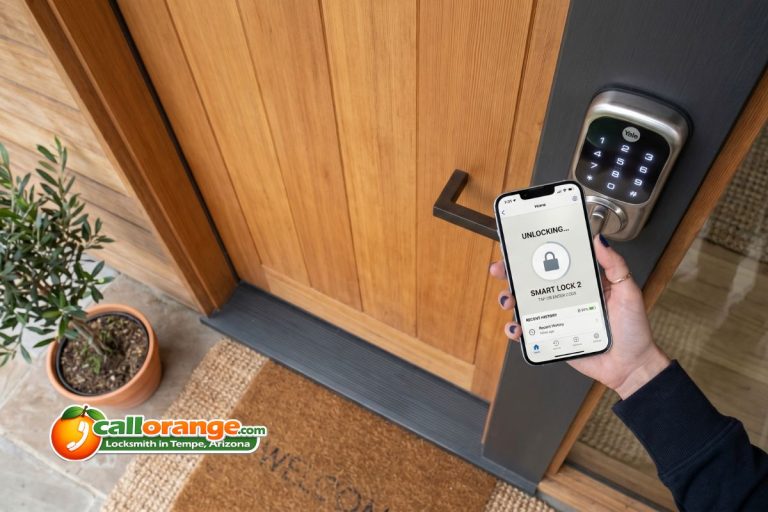
Most homeowners assume a deadbolt means safety. The reality: a technique called lock bumping renders the majority of standard residential locks open in a single strike, and most people never know it happened until valuables are already gone. The fix isn’t complicated — but it requires knowing which hardware actually holds up and when to bring in a professional locksmith for a full residential security review. In this guide, you’ll find exactly what to look for, which upgrades deliver genuine protection, and how to build real lock bumping protection at every entryway in your home.

What Is Lock Bumping and Why Does It Threaten Home Safety?

Lock bumping exploits a fundamental flaw in the pin tumbler mechanism — the internal design found in virtually every standard residential deadbolt on the market. A bump key is a specially cut key modified so each cut reaches the maximum depth allowed by the keyway. The key is inserted into the target lock, and when struck sharply with a mallet or blunt object, the kinetic energy causes all driver pins to jump simultaneously. For a fraction of a second, the pins clear the shear line and the cylinder turns freely.

The entire process takes under thirty seconds. It leaves no scratches on the keyway, no damaged frame, and no evidence of forced entry. On insurance claims and police reports, it often registers as an unexplained entry. According to ALOA (Associated Locksmiths of America), bump keys can be manufactured from standard key blanks and have been extensively documented in security research since the early 2000s.

Is Your Current Deadbolt at Risk?

If your deadbolt carries a standard ANSI/BHMA Grade 2 or Grade 3 rating and uses a conventional pin tumbler cylinder, it’s likely vulnerable. This covers the majority of builder-grade locks installed in rental properties and tract homes across Tempe, Mesa, Chandler, Scottsdale, and the broader East Valley.

Signs your current hardware may not be delivering adequate home safety:

  • The lock was installed by the original builder or left behind by a previous occupant
  • No “bump-resistant” or “high-security” designation appears on the packaging
  • The cylinder uses a standard 5- or 6-pin configuration without secondary anti-bump features

If you’re unsure what’s installed at your entries, a residential security assessment from our team can identify every vulnerability before it becomes an entry point for an intruder.

Lock Bumping Protection: The Deadbolts and Hardware That Actually Hold Up

Bump-Resistant vs. Bump-Proof — Know the Difference

There’s a meaningful distinction between these two terms. Bump-resistant locks use modified pin chambers or secondary locking elements that raise the difficulty of a successful bump attempt — but they are not impervious with enough persistence. Bump-proof locks eliminate the pin tumbler mechanism entirely:

  • Disc detainer locks — use rotating discs instead of driver pins. No bump key geometry can exploit this mechanism.
  • Sidebar locks (e.g., Medeco Maxum, Mul-T-Lock MT5+) — require both a rotational and a lateral movement to turn the cylinder, making them mechanically resistant to both bumping and picking.
  • Dimple locks — use a different keyway orientation that standard bump keys cannot target.

For whole-home deadbolt security, look for locks carrying an ANSI/BHMA Grade 1 rating with documented anti-bump, anti-pick, and anti-drill certifications. Our licensed technicians handle deadbolt upgrades and full lock changes for residential clients throughout Tempe and the East Valley.

The Thumbturn Lock: How It Fits Into Your Defense

A thumbturn lock — the interior rotating knob on a single-cylinder deadbolt — doesn’t directly resist a bump entry from outside. However, its configuration matters in composite attack scenarios. Doors with decorative glass panels are especially vulnerable: a bump entry is followed by a hand reaching through shattered glass to turn the interior thumbturn. For those specific openings, a double-cylinder deadbolt requiring a key on both sides is worth serious consideration. For standard solid wood or fiberglass doors, a quality single-cylinder thumbturn paired with a certified Grade 1 deadbolt delivers solid protection.

🔐 Pro Tip — From the Field

In servicing locks throughout Tempe and the East Valley, the single most overlooked upgrade is the strike plate. A standard builder-grade strike plate uses 3/4-inch screws driven into soft wood framing — it offers almost no resistance to a coordinated kick. Replacing it with a reinforced steel strike plate secured with 3-inch screws into the door stud — at the same time as the deadbolt upgrade — closes both the bump vulnerability and the kick-in vulnerability in one visit. Address them together or you’ve only solved half the problem.

Home Safety Goes Beyond the Cylinder

Upgrading the cylinder is step one. A layered home safety strategy closes the remaining gaps that a new deadbolt alone cannot address:

  • Door reinforcement kits — door jamb armor and hinge reinforcers protect against kick-in attacks that can defeat even a bump-proof lock if the frame gives way first
  • Smart locks with tamper alerts — models with app-based tamper notifications add a detection layer, even when the underlying cylinder remains a pin tumbler design
  • Entry-point cameras — visible surveillance deters opportunistic bump attempts before they start
  • Rekeying after every occupancy change — a professional lock rekey ensures no copied keys from former tenants or contractors remain in circulation

For commercial and multi-tenant properties, the same principles scale up. Commercial locksmith services address high-security cylinder replacements for mortise lock bodies, cylindrical commercial hardware, and access control integration at high-traffic entries.

Get a Professional Locksmith Security Audit — Don’t Wait for a Break-In

Real lock bumping protection isn’t a product you pick up from a hardware store shelf — it’s the right hardware, installed correctly, at every vulnerable entry point in your home. A licensed locksmith can walk every exterior door, assess the cylinder grade, inspect strike plate depth, flag glass-panel risks, and recommend targeted upgrades without replacing hardware that’s already performing at the level your home needs.

CallOrange Locksmith Tempe provides residential security assessments and deadbolt upgrades throughout Tempe, Mesa, Chandler, Scottsdale, Phoenix, and Gilbert. Find us on Google Maps, or reach our team directly at (480) 847-2635 to schedule a home security review.

Don’t let an intruder reveal the gap in your deadbolt security. Contact CallOrange Locksmith Tempe today and have every entry point assessed by a licensed professional who knows the East Valley.

Lock Type Comparison: Bump Resistance & Security Grade
Lock Type Mechanism Bump Resistant? ANSI Grade Best Application
Standard Pin Tumbler Deadbolt 5–6 pin tumbler ✗ No Grade 2–3 Builder-grade residential
Kwikset SmartKey Re-keyable side-locking bar ~ Partial Grade 2 Budget residential upgrade
Schlage B60N Deadbolt Pin tumbler + alarm alert ~ Partial Grade 1 Mid-range residential
Smart Lock (e.g., Schlage Encode) Pin tumbler + electronics ~ Partial Grade 1 Modern smart home
Double-Cylinder Deadbolt Pin tumbler — keyed both sides ~ Partial Grade 1–2 Doors with glass panels
Medeco Maxum Deadbolt Sidebar + rotating pins ✓ Yes Grade 1 High-security residential
Mul-T-Lock MT5+ Telescopic pin tumbler ✓ Yes Grade 1 High-security residential / commercial
Abloy Protec2 Disc detainer (no pins) ✓ Yes Grade 1 Premium residential / commercial
High-Security Mortise Lock Mortise cylinder + deadbolt ✓ Yes* Grade 1 Commercial & multi-unit residential

* Bump resistance depends on the cylinder installed. ANSI/BHMA Grade 1 = highest residential/commercial standard.

Frequently Asked Questions — Lock Bumping Protection

Common questions from homeowners in Tempe, Mesa, Chandler, and the East Valley.

?

What exactly is lock bumping and how does it work?

Lock bumping is a non-destructive entry technique that exploits the pin tumbler mechanism inside most standard deadbolts. An attacker inserts a specially cut bump key into the keyway and strikes it sharply. The impact causes all the driver pins to jump simultaneously, momentarily clearing the shear line and allowing the cylinder to turn. The process leaves no visible damage, making it difficult to detect on a police report or insurance claim.

?

How do I know if my current deadbolt is vulnerable to bumping?

If your deadbolt is a standard pin tumbler model rated ANSI/BHMA Grade 2 or Grade 3 — which covers the vast majority of builder-grade hardware — it’s likely vulnerable. Look at the lock packaging or the lock body itself. If you don’t see designations like “bump-resistant,” “high-security,” or an ANSI Grade 1 rating with additional certifications, assume the lock can be bumped. A licensed locksmith can assess every entry in your home and give you a clear picture of where you stand.

?

What are the best locks for lock bumping protection?

Locks that eliminate the pin tumbler mechanism entirely provide the strongest protection. Disc detainer locks (like the Abloy Protec2) and sidebar locks (like the Medeco Maxum or Mul-T-Lock MT5+) are considered bump-proof by design. For homeowners looking for a strong upgrade without going to the highest tier, ANSI Grade 1 deadbolts with documented anti-bump certifications offer a meaningful improvement over standard builder hardware. Have a professional locksmith assess your specific doors before selecting a model.

?

What is a thumbturn lock and does it affect bump resistance?

A thumbturn lock is the interior rotating knob on a single-cylinder deadbolt — the part you turn from the inside without a key. It doesn’t directly affect how resistant the lock is to bumping from outside. However, its design becomes relevant for doors with glass panels. On those doors, a break-in may combine a bump entry with a reach-through to turn the interior thumbturn. For glass-panel doors, a double-cylinder deadbolt — requiring a key on both sides — removes that secondary vulnerability entirely.

?

Can a smart lock be bumped the same way?

It depends on the model. Many smart locks still use a traditional pin tumbler cylinder as a physical backup, which means they remain vulnerable to bumping despite the electronic access component. Smart locks that rely exclusively on electronic or motorized mechanisms — with no physical keyway at all — are immune to bump attacks. If you use a smart lock with a physical key backup, check the cylinder grade and verify it carries anti-bump certification.

?

Do I need a professional locksmith to upgrade my locks, or can I do it myself?

High-security locks — particularly sidebar and disc detainer models — require precise installation to function correctly. An improperly installed bump-proof lock can fail to engage fully, defeating its purpose entirely. Beyond the cylinder itself, a professional locksmith inspects the strike plate, checks door alignment, and assesses the entire entry. For standard Grade 1 deadbolt upgrades, a competent DIYer can manage installation, but a security audit from a licensed locksmith identifies vulnerabilities a product swap alone won’t solve.

Best smart locks 2026

The Ultimate Guide to the Best Smart Locks of 2026: Reviews & Picks

You come home after a long day, hands full of groceries, only to realize you’ve misplaced your keys again. Or maybe you’re worried about that spare key hidden under the doormat that anyone could find. These everyday frustrations are exactly why homeowners across Tempe, Mesa, and Phoenix are switching to smart locks. A well-chosen smart lock removes the need for physical keys, strengthens your front door, and gives you total control over who enters your home. Keep reading to discover the best smart locks 2026 has to offer, along with expert insights from our team of locksmith professionals.
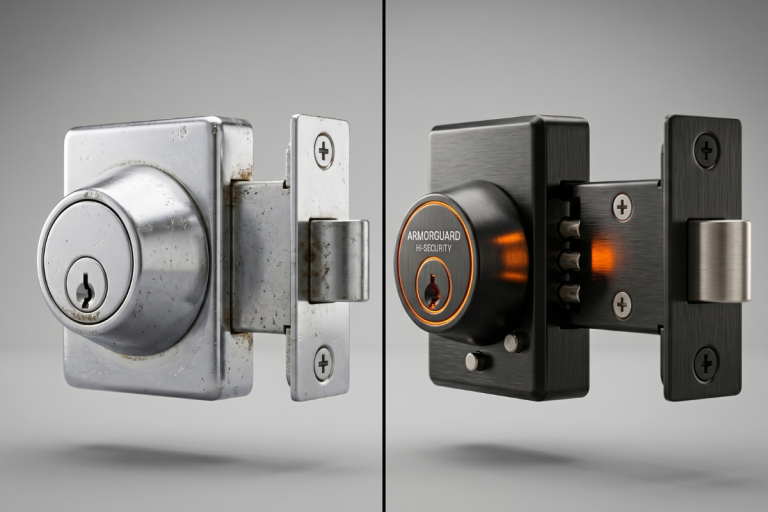
Why Smart Locks Are a Game-Changer for Home Safety

Smart locks have evolved far beyond simple keyless entry. Today’s models combine advanced deadbolt security with smartphone integration, biometric recognition, and voice control. For homeowners in Arizona’s growing metro areas, upgrading to a smart lock means eliminating the vulnerabilities of traditional pin tumbler cylinders while gaining features that make daily life simpler.

Modern smart locks resist common break-in methods like lock picking, bumping, and drilling. Many include tamper alerts that notify your phone if someone attempts forced entry. This layer of protection transforms your front door from a basic barrier into an active component of your home safety system.

How a Professional Locksmith Recommends Choosing Your Smart Lock

As a professional locksmith, I tell every client the same thing: the lock is only as strong as the door it’s installed on. Before choosing a smart lock, inspect your door frame, strike plate, and existing deadbolt bore. A ANSI Grade 1 or Grade 2 smart deadbolt paired with a reinforced strike plate offers far better protection than a premium smart lock mounted on a weak frame.

You should also consider:

  • Connectivity type — Wi-Fi, Bluetooth, Z-Wave, or Matter compatibility
  • Power source — battery life and backup options
  • Entry methods — keypad, fingerprint, app, voice assistant, or physical key override
  • Interior mechanism — thumbturn lock design for easy exit
  • Weather resistance — critical in Arizona’s extreme heat

The Best Smart Locks of 2026: Top Picks Compared

After testing and installing dozens of models for homeowners across Tempe and the East Valley, these are the standout smart locks worth your investment this year.

Smart Lock Model Entry Methods Connectivity Battery Life Security Grade Best For
Schlage Encode Plus Keypad, App, Apple Home Key, Key Wi-Fi, Matter ~6 months ANSI Grade 1 Overall top pick
Yale Assure Lock 2 Touch Fingerprint, Keypad, App Wi-Fi, Z-Wave, Matter ~12 months ANSI Grade 2 Biometric fans
August Wi-Fi Smart Lock (4th Gen) App, Auto-Unlock, Keypad (add-on) Wi-Fi, Bluetooth ~3–6 months Retrofit Grade 2 Renters & retrofits
Aqara U100 Fingerprint, Keypad, Apple Home Key, Key Bluetooth, HomeKit ~8 months ANSI Grade 2 Apple ecosystem
Level Lock+ Apple Home Key, App, Physical Key Bluetooth, HomeKit ~12 months ANSI Grade 2 Invisible design
Lockly Vision Elite Fingerprint, Keypad, Video, App, Key Wi-Fi ~6 months ANSI Grade 2 Built-in camera


Schlage Encode Plus — Our Top Overall Pick

The Encode Plus combines bank-level deadbolt security with built-in Wi-Fi and Apple Home Key support. No hub required. Its hardened steel bolt and anti-pick shield make it one of the toughest residential smart locks on the market.

Yale Assure Lock 2 Touch — Best Fingerprint Model

Yale’s fingerprint sensor recognizes up to 50 prints and unlocks in under a second. The sleek keypad-free version gives your door a clean, modern look while maintaining serious security credentials.

August Wi-Fi (4th Gen) — Best for Renters

This retrofit model installs over your existing deadbolt, keeping your original keys functional. Perfect for tenants who need smart features without replacing the landlord’s hardware.

Pro Tip: Don’t Skip the Strike Plate Upgrade

Here’s something most online reviews won’t tell you. After 10+ years installing smart locks across Phoenix, I’ve seen forced-entry attempts succeed on expensive smart deadbolts simply because the strike plate was secured with short half-inch screws. Always upgrade to 3-inch screws that anchor directly into the door frame stud. This single $5 upgrade can triple your door’s resistance to kick-in attacks. Pair it with a reinforced strike plate for maximum deadbolt security.

Installation: DIY or Call a Professional?

Most smart locks are designed for DIY installation on standard doors with a pre-drilled bore. However, complications arise with older homes, misaligned frames, non-standard doors, or commercial applications. In these cases, a professional locksmith can properly align the bolt, verify latch depth, reinforce the strike area, and program your lock correctly from day one.

Improper installation is the single biggest reason smart locks fail early or get bypassed. If your door sticks, doesn’t latch cleanly, or has visible gaps, schedule a professional assessment before installing any new hardware.

Frequently Asked Questions About Smart Locks

Are smart locks safer than traditional deadbolts?

Yes, when installed correctly. Most smart locks use ANSI Grade 1 or Grade 2 deadbolt construction with added features like tamper alerts, auto-lock, and encrypted communication. They eliminate vulnerabilities such as lost keys and lock bumping that plague older mechanical locks.

What happens to my smart lock if the power goes out?

Smart locks run on batteries, not household electricity, so a power outage won’t affect them. Most models send low-battery alerts weeks before failure, and many include a physical key override or external battery contacts for emergency access.

Can a smart lock be hacked?

Major brands like Schlage, Yale, and August use bank-level AES 128-bit encryption and secure authentication protocols. The greater risk is weak Wi-Fi passwords or shared access codes. Always use a strong router password and rotate guest codes regularly.

Do I need a professional locksmith to install a smart lock?

Standard doors with pre-drilled bores can often accept DIY installation. However, older homes, misaligned frames, or commercial doors usually require a professional locksmith to ensure proper alignment, strike plate reinforcement, and bolt function. Incorrect installation is the leading cause of smart lock failure.

How long do smart lock batteries last?

Battery life varies from 3 to 12 months depending on the model, usage frequency, and connectivity type. Wi-Fi-native locks drain faster than Bluetooth or Z-Wave models. Most smart locks use 4 AA batteries and send push notifications when replacement is needed.

Will a smart lock work with my existing door?

Most smart locks fit standard U.S. door prep: 2-1/8 inch bore, 1 inch edge bore, and a door thickness between 1-3/8 and 1-3/4 inches. Retrofit models like the August Wi-Fi install over your existing deadbolt without replacing hardware. Unusual doors may need a locksmith assessment.

Can I give temporary access codes to guests or contractors?

Yes. Most smart locks allow unlimited or scheduled-use codes that expire after a specific date, time window, or number of entries. This is ideal for Airbnb hosts, dog walkers, cleaners, and delivery services in Tempe and the East Valley.

Need help choosing or installing the right smart lock? Call CallOrange Locksmith Tempe at (480) 847-2635 for a professional consultation.

Secure Your Home with Expert Smart Lock Installation

Choosing and installing the right smart lock is an investment in your family’s home safety. If you live in Tempe, Mesa, Chandler, Scottsdale, or Phoenix, our licensed team at CallOrange Locksmith Tempe can help you select, install, and configure the perfect smart lock for your home. We also perform complete security audits to identify weak points in your doors, frames, and existing locks.

Call (480) 847-2635 today to schedule your smart lock installation or home security consultation with a professional locksmith who knows Arizona homes inside and out.

High security deadbolts

Standard vs. High-Security Deadbolts: Is the Extra Cost Worth It?

You came home from a weekend trip, slid your key into the front door, and noticed something that made your stomach drop — fresh scratches around the lock cylinder. Maybe nothing happened this time, but the message is clear: your standard deadbolt is the only thing standing between your family and a determined intruder, and most standard deadbolts can be defeated in under 60 seconds by someone who knows what they’re doing.
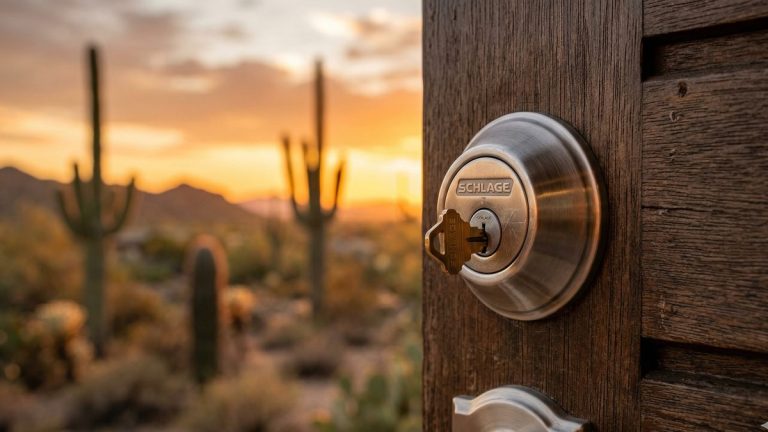
The solution is straightforward. High security deadbolts are engineered to resist the exact attack methods burglars use most often: picking, bumping, drilling, and kick-ins. They cost more upfront, but they’re the difference between a locked door and a secured door.

Keep reading to learn exactly what separates a high-security deadbolt from the hardware store special, what you should expect to pay, and whether the extra investment actually makes sense for your home. If you’d rather skip ahead and talk to a technician, CallOrange Locksmith Tempe handles residential locksmith installations across the East Valley.

What Makes a Deadbolt “High-Security”?

A standard deadbolt from a big-box store is built to meet a minimum ANSI Grade 2 or Grade 3 rating. It keeps honest people honest. A high-security deadbolt is a different product category entirely — built to ANSI Grade 1 commercial standards with hardened steel internals, anti-drill pins, anti-pick sidebars, and patented keyways that prevent unauthorized key duplication.

[IMAGE: Insert Image Described Here] Photorealistic close-up side-by-side comparison of two deadbolt cylinders cut in half to show their internal mechanisms. The left cylinder shows a basic pin-tumbler standard deadbolt with brass pins, while the right cylinder shows a high-security deadbolt with hardened steel anti-drill pins, a sidebar mechanism, and a reinforced strike plate, lit with clean studio lighting on a neutral gray background.

The brands professional locksmiths actually install in their own homes — Medeco, Mul-T-Lock, Schlage Primus, and Abloy — share four core features that cheap deadbolts don’t have:

1. Hardened Steel Inserts

Anti-drill pins made of hardened steel or carbide shatter drill bits before the bit can reach the cylinder pins.

2. Patented Keyways

You can’t walk into a hardware store and copy the key. Duplication requires a registered dealer and proof of ownership.

3. Pick and Bump Resistance

Lock bumping — a technique where a specially cut key is tapped to force pins into position — defeats most standard deadbolts. High-security cylinders use sidebars and rotating pins that don’t respond to bumping at all.

4. Reinforced Strike Plates

The lock is only as strong as the frame it’s attached to. High-security kits include heavy-duty strike plates with 3-inch screws that anchor into the wall stud, not just the doorjamb. If your existing hardware is older or you’re not sure it’s anchored properly, a lock change service is the cleanest way to bring the whole door up to standard.

Standard vs. High-Security Deadbolts: Side-by-Side Comparison

Feature Standard Deadbolt High-Security Deadbolt
ANSI Grade Grade 2 or 3 Grade 1 (Commercial)
Pick Resistance Low — 30 seconds to 2 minutes High — 10+ minutes or unpickable
Bump Resistance Vulnerable Fully resistant
Drill Resistance Minimal Hardened steel + carbide pins
Key Duplication Any hardware store Patented — authorized dealer only
Kick-In Resistance Depends on strike plate Reinforced 3-inch anchor screws
Average Lifespan 5–7 years 15–25 years
Installation Cost (per door) $45 – $120 $180 – $450
Warranty 1–5 years limited Lifetime mechanical (most brands)

The Real Cost Difference — And What You Get For It

A standard Kwikset or basic Schlage deadbolt runs $25 to $60 at a home improvement store, plus $50 to $100 for professional installation. Total: around $75 to $160 per door.

A high-security deadbolt from Medeco or Mul-T-Lock typically costs $150 to $280 for the hardware, plus $80 to $180 for professional installation by a licensed locksmith. Total: around $230 to $460 per door.

The gap is real — roughly $150 to $300 more per door. But spread that over a 20-year service life and the math changes. You’re paying about $15 to $25 extra per year for hardware that actually resists the attack methods used in real-world break-ins.

If you’re not ready to replace the full cylinder, a professional lock rekey is a lower-cost alternative that invalidates any existing keys — useful after moving in or losing a copy, though it won’t increase the lock’s security grade.

The Thumbturn Lock Consideration

One upgrade worth discussing with your locksmith is the interior thumbturn lock style. Standard interior thumbturns can be defeated through a technique called “lock flipping” if there’s a nearby window or mail slot — a burglar uses a tool to reach in and rotate the thumbturn. High-security deadbolts offer double-cylinder options (key on both sides) or captive thumbturn designs that prevent this exact attack.

Commercial properties face similar challenges on a larger scale, which is why business owners typically opt for high security locks designed for commercial use with restricted keyways and master key systems.

Pro Tip From 10+ Years in the Field

Here’s what most homeowners get wrong: they spend $400 on a premium deadbolt and screw it into a factory doorframe using the original 3/4-inch screws that came with the builder’s hardware. I’ve responded to dozens of break-in calls where the lock held perfectly — but the frame split in half on the first kick.

If you’re upgrading to a high security deadbolt, insist on three things during installation:

  1. Three-inch screws through the strike plate into the wall stud. Not the doorjamb. The stud.
  2. A reinforced box strike, not a flat plate. The box protects the bolt on all four sides.
  3. Solid-core or metal door. A hollow-core door defeats any lock you put on it.

Any professional locksmith worth hiring will do all three by default. If they don’t bring up the strike plate upgrade, find a different locksmith.

Is the Extra Cost Worth It?

For deadbolt security on a primary residence, the answer is almost always yes — especially if you meet any of these conditions: you live in a ground-floor home, your door is visible from the street, you’ve recently moved in and don’t know who has copies of the old keys, or you have valuables, firearms, or family members you’re responsible for protecting.

If you’re ever locked out mid-upgrade or need emergency access before the new hardware arrives, residential home lockout service gets you back inside without damaging the door. For a rental property or a secondary interior door, a mid-grade Schlage Grade 1 residential deadbolt may be enough. Talk to a licensed locksmith who can evaluate your specific situation rather than guessing.

Are high security deadbolts really pick-proof?

No lock is 100% pick-proof, but high-security deadbolts from brands like Medeco and Mul-T-Lock are rated to resist picking for 10+ minutes — far beyond the time most burglars will spend at a front door. Their sidebars, rotating pins, and tight tolerances also make them fully resistant to lock bumping, which defeats most standard deadbolts in seconds.

Can I install a high-security deadbolt myself?

Technically yes, but we don’t recommend it. High-security deadbolts require precise alignment, reinforced strike plate installation with 3-inch screws into the wall stud, and sometimes door frame reinforcement. A professional residential locksmith ensures the hardware performs to its rated security level — a poorly installed premium lock is no better than a cheap one.

How much does a high-security deadbolt cost installed?

Expect to pay between $230 and $460 per door installed, which includes the hardware ($150–$280) and professional installation ($80–$180). Final pricing depends on the brand you choose, door condition, and whether frame reinforcement is needed. Contact CallOrange Locksmith Tempe or call (480) 847-2635 for a specific quote on your home.

What’s the difference between a thumbturn lock and a double-cylinder deadbolt?

A thumbturn lock has a key cylinder on the exterior and a rotating knob on the interior. A double-cylinder deadbolt requires a key on both sides — more secure if there’s a window near the door, but a safety concern during emergencies since you need the key to exit. Your locksmith can help you choose based on your door’s location and local fire code requirements.

Will a high-security deadbolt work with my existing door?

Most high-security deadbolts fit standard 2-1/8 inch door prep, which is the size used on the majority of American residential doors built since the 1970s. If your door is solid-core wood, fiberglass, or metal, you’re a good candidate. Hollow-core interior doors should not receive high-security hardware — the door itself becomes the weak point. A lock change specialist can evaluate your door during a site visit.

How long does installation take?

A single high-security deadbolt installation typically takes 45 minutes to 90 minutes, including strike plate reinforcement and function testing. If you’re upgrading multiple doors or need frame repair, plan for 2 to 4 hours on-site. Most CallOrange locksmith jobs are completed in a single visit.

Ready to Upgrade Your Home Safety?

Every home has different entry points, frame conditions, and security needs. A 15-minute in-person security audit from a licensed professional will tell you exactly which doors need high-security hardware and which ones are already well-protected.

CallOrange Locksmith Tempe has been installing high-security deadbolts across Tempe, Mesa, Chandler, Scottsdale, and Phoenix since 2008. Our technicians carry Medeco, Mul-T-Lock, and Schlage Primus hardware on every truck and can complete most installations in a single visit. See the full list of locksmith services we offer, or contact us to schedule directly.

Call (480) 847-2635 to schedule your home security audit or high-security deadbolt installation today.

best-door-locks-arizona-heat

Best Door Locks for Arizona Homes: Heat-Resistant Picks for 2026

Standard residential locks degrade faster in Arizona because daily thermal cycling between 115°F+ surface temperatures and overnight cooling expands and contracts internal metal components beyond factory tolerances. Heat-resistant door locks use hardened steel pin stacks, reinforced spring alloys, and UV-stabilized finishes designed to maintain cylinder precision through thousands of expansion cycles. A licensed locksmith matches the right lock grade to your door’s exposure, security requirements, and budget.

Prices shown reflect general market ranges for the Tempe and Phoenix metro area as of 2026. Actual costs depend on lock brand, security grade, and installation requirements. Contact us directly for a personalized quote.

If you’ve lived in Tempe for more than a few years, you’ve probably noticed that exterior door hardware doesn’t last as long here as manufacturers claim. A deadbolt rated for ten to fifteen years of residential use in a temperate climate might show significant wear in five to seven years on a south-facing or west-facing door in the Phoenix metro area. The finish fades and flakes. The key gets harder to turn. The deadbolt sticks in summer and loosens in winter. These aren’t signs of a defective lock — they’re signs of a lock that wasn’t built for desert conditions.

The problem starts with the pin tumbler mechanism inside the cylinder. Each time the lock heats up, the brass pins, steel springs, and zinc alloy housing expand at different rates. Over thousands of cycles, this differential expansion widens the clearances between pins and chambers. The lock still functions, but the tolerances that make it resistant to picking, bumping, and manipulation have degraded. A lock that was ANSI Grade 2 when installed might perform closer to Grade 3 after five Arizona summers.

Choosing the right lock for an Arizona home means looking past brand recognition and focusing on material composition, security grade, and finish durability. The residential locksmith team at CallOrange.com installs and services every major lock brand in Tempe and across the Phoenix metro area. With 4.8 stars across 1,451 Google reviews and eleven years of Arizona-specific experience, our technicians know which locks hold up and which ones don’t in this climate.

Lock Model Grade Pick/Bump Resistant Best For AZ Heat Rating
Schlage B60N Grade 1 Yes — 6-pin anti-pick Primary entry doors, sun-exposed Excellent
Medeco Maxum Grade 1 Yes — rotating pins, UL 437 High-security homes, restricted key Excellent
Mul-T-Lock Hercular Grade 1 Yes — telescoping pins Maximum security, dual shear line Excellent
Schlage Encode Plus Grade 2 Yes — with key backup Smart home, Apple Home Key Good (shade preferred)
Kwikset SmartKey (current gen) Grade 2 Yes — SecureScreen DIY rekeying, shaded doors Good
Yale Assure Lock 2 Grade 2 Yes — with key backup Multi-platform smart home Good (shade preferred)
Builder-grade (generic) Grade 3 Minimal Interior doors only Poor — replace on exterior
Schlage B60N
GradeGrade 1
Pick/Bump ResistantYes — 6-pin anti-pick
Best ForPrimary entry doors, sun-exposed
AZ Heat RatingExcellent
Medeco Maxum
GradeGrade 1
Pick/Bump ResistantYes — rotating pins, UL 437
Best ForHigh-security homes, restricted key
AZ Heat RatingExcellent
Mul-T-Lock Hercular
GradeGrade 1
Pick/Bump ResistantYes — telescoping pins
Best ForMaximum security, dual shear line
AZ Heat RatingExcellent
Schlage Encode Plus
GradeGrade 2
Pick/Bump ResistantYes — with key backup
Best ForSmart home, Apple Home Key
AZ Heat RatingGood (shade preferred)
Kwikset SmartKey (current gen)
GradeGrade 2
Pick/Bump ResistantYes — SecureScreen
Best ForDIY rekeying, shaded doors
AZ Heat RatingGood
Yale Assure Lock 2
GradeGrade 2
Pick/Bump ResistantYes — with key backup
Best ForMulti-platform smart home
AZ Heat RatingGood (shade preferred)
Builder-grade (generic)
GradeGrade 3
Pick/Bump ResistantMinimal
Best ForInterior doors only
AZ Heat RatingPoor — replace on exterior

Understanding Lock Grades and Why They Matter in Arizona

The American National Standards Institute (ANSI) and the Builders Hardware Manufacturers Association (BHMA) rate residential and commercial locks on a three-tier grading system. The grade determines how much physical abuse, cycle wear, and manipulation resistance a lock provides out of the box.

ANSI/BHMA Grade 1 is the highest rating for commercial and residential use. Grade 1 deadbolts must withstand 250,000 locking cycles, ten strikes of 75 pounds each, and pass UL 437 pick and drill resistance tests. These locks use hardened steel components, reinforced mounting hardware, and finishes designed for high-traffic environments. In Arizona, Grade 1 hardware lasts significantly longer than lower grades because the internal components are built with tighter manufacturing tolerances that absorb thermal cycling better.

ANSI/BHMA Grade 2 is the standard for quality residential hardware. Grade 2 deadbolts must survive 400,000 cycles (more than Grade 1 for cycles, fewer for forced entry resistance) and moderate physical attacks. Most name-brand residential deadbolts from Schlage, Kwikset, and Baldwin fall into this category. In Arizona’s heat, Grade 2 locks perform well for five to eight years on shaded doors and three to five years on sun-exposed doors before tolerances degrade noticeably.

ANSI/BHMA Grade 3 is the minimum for residential use. Builder-grade hardware — the locks that come pre-installed in new construction — are almost always Grade 3. These locks meet basic functional requirements but offer minimal pick resistance, shorter bolt throws, and finishes that break down quickly in UV exposure. If your Tempe home still has the original builder-grade locks, upgrading is one of the most impactful security improvements you can make.

The practical takeaway for Arizona homeowners: Grade 1 or Grade 2 hardware from a reputable manufacturer provides the best balance of security and longevity. Grade 3 locks should be replaced, especially on exterior doors that receive direct afternoon sun. A locksmith can assess your current hardware grade during a lock rekey or inspection visit.

Top Lock Brands That Perform Well in Arizona Heat

Not all locks within the same grade perform equally in desert conditions. Material choices, finish coatings, and internal design differences create real-world performance gaps between brands. Here are the locks that Tempe locksmiths see lasting the longest on Arizona doors.

Schlage B60N is the most widely recommended Grade 1 residential deadbolt for Arizona homes. The solid metal construction, six-pin cylinder (compared to the five-pin standard in most competitors), and anti-pick shield provide strong baseline security. The finish options include a PVD (Physical Vapor Deposition) coating on certain models that resists UV degradation significantly better than standard plated finishes. Schlage’s cylinders use nickel silver pins that handle thermal cycling better than standard brass.

Medeco Maxum represents the high-security tier. Medeco’s patented rotating pin system adds a third dimension to the pin tumbler mechanism — pins must not only be lifted to the correct height but rotated to the correct angle. This makes the lock essentially pick-proof and bump-proof with current techniques. The Maxum model uses a Grade 1 rated deadbolt with a one-inch bolt throw and hardened steel insert to resist cutting and sawing. For Arizona, Medeco’s solid brass construction handles thermal cycling well, and the restricted keyway prevents unauthorized key duplication.

Mul-T-Lock Hercular uses a telescoping pin-within-a-pin design that provides two shear lines instead of one. This doubles the number of pin positions an attacker must defeat simultaneously, making manipulation extremely difficult. The Hercular model includes a hardened steel bolt, anti-drill protection, and bump resistance built into the cylinder design. The chrome-plated finish holds up well in Arizona conditions, though brass body construction ensures good thermal stability.

Schlage Encode Plus is the leading smart lock option for Arizona homes. Unlike battery-powered smart locks that struggle in extreme heat, the Encode Plus uses a robust electronic platform with Apple Home Key support. The important distinction for Arizona: the Encode Plus includes a physical key backup cylinder, so battery failure from heat exposure doesn’t leave you locked out. The electronic components are housed behind the door where they’re protected from direct sun exposure.

Kwikset SmartKey deserves mention for its rekeying convenience — homeowners can rekey the lock themselves without removing it from the door. However, early SmartKey generations had known bypass vulnerabilities. Current-generation SmartKey (identified by the “SecureScreen” feature) has addressed these issues. For Arizona use, Kwikset’s finishes tend to degrade faster than Schlage’s PVD options on sun-exposed doors, but the locks perform well on shaded entries.

ASSA Abloy / Yale products cover the commercial crossover market. If you want a residential lock with commercial-grade internals, ASSA Abloy’s high-security cylinders use hardened steel components throughout and offer patented key control. Yale’s Assure Lock 2 is a strong smart lock alternative with multiple connectivity options and a solid mechanical backup.

What to Look for When Choosing a Lock for an Arizona Door

Beyond brand and grade, specific features determine how well a lock survives Arizona conditions. Use these criteria when evaluating any lock for a Tempe home.

Bolt throw length should be at least one inch. The bolt throw is the distance the deadbolt extends into the door frame when locked. Many Grade 3 and budget Grade 2 locks have bolt throws of only ½ to ¾ inch, which makes them vulnerable to frame spreading attacks. In Arizona, door frames expand in heat, and a short bolt can partially disengage from the strike plate during peak summer temperatures. A full one-inch throw maintains engagement even as the frame shifts.

Strike plate anchoring matters more than most homeowners realize. The strike plate — the metal plate on the door frame that receives the bolt — should be secured with 3-inch screws that reach into the structural stud behind the door frame. Most builder-installed strike plates use ¾-inch screws that only grip the thin door frame trim. Upgrading the strike plate screws is a five-minute improvement that dramatically increases kick-in resistance.

Finish type determines UV and weather resistance. PVD (Physical Vapor Deposition) finishes are the gold standard for Arizona exterior doors — they’re applied in a vacuum chamber and bond at the molecular level, creating a surface that resists UV fading, scratching, and corrosion. Standard electroplated finishes (common on budget locks) break down within two to three years on sun-exposed doors. Look for “PVD” or “Lifetime Finish” designations.

Pick and bump resistance are built into the cylinder design. Anti-pick pins (spool pins, serrated pins, or mushroom pins) make single-pin picking significantly more difficult. Bump resistance comes from specialized pin designs or sidebar mechanisms that prevent the bump technique from working. Grade 1 locks typically include both features; Grade 2 varies by manufacturer.

Smart lock battery management is critical in Arizona. Electronic locks that rely on AA or AAA batteries will drain faster on heat-exposed doors. Choose a smart lock with a physical key backup and an external emergency power terminal (9V battery contact) so you’re never locked out when the electronics fail. Replace batteries every six months on sun-exposed doors regardless of the low-battery indicator.

Common Lock Mistakes Arizona Homeowners Make

Certain lock choices and installation practices that work fine in other climates create problems in the Phoenix metro area. Avoid these common mistakes.

Keeping builder-grade locks after purchase. New construction in Tempe typically comes with the cheapest Grade 3 locks the builder can source. These locks meet code minimums but provide minimal security and degrade quickly in Arizona heat. Replacing them with Grade 1 or Grade 2 hardware should be part of your move-in process, ideally during the same visit when you rekey or replace locks for key control.

Using the same lock on all exposures. A north-facing front door and a west-facing back door experience dramatically different UV and heat loads. The west-facing door may need a higher-grade lock with a PVD finish, while the shaded north-facing door can use a standard finish. Matching the lock to the door’s exposure saves money and extends hardware life.

Ignoring the strike plate. A Grade 1 deadbolt with a one-inch bolt throw is only as strong as the strike plate holding it in the frame. If the strike plate is secured with short screws into soft trim wood, a single kick can split the frame and pop the bolt free. Upgrading to a reinforced strike plate with 3-inch structural screws takes minutes and costs less than a new lock.

Lubricating with WD-40. WD-40 is a solvent, not a lubricant. It temporarily loosens a sticky lock but evaporates quickly and leaves a residue that attracts Arizona’s fine desert dust. Within weeks, the lock is stickier than before. Use a dry graphite lubricant or a PTFE-based spray specifically designed for lock cylinders. A locksmith applies the correct lubricant during any service visit.

Skipping the physical key backup on smart locks. Every smart lock has a failure mode — dead battery, firmware crash, Bluetooth disconnection, Wi-Fi outage. In 115°F heat, electronic failures happen more frequently. A smart lock without a physical key backup or emergency power terminal is a lockout waiting to happen. Always verify the backup entry method works before relying on a keyless system as your only entry point.

How a Locksmith Helps You Choose and Install the Right Lock

Selecting and installing a residential lock involves more than picking a box off a shelf. A licensed locksmith evaluates your specific doors, security needs, and budget to recommend hardware that performs in Arizona conditions.

Door assessment comes first. The locksmith checks each exterior door for material (wood, fiberglass, steel), thickness, existing bore holes (standard is 2⅛-inch bore with a 2⅜-inch or 2¾-inch backset), and sun exposure. Doors that have warped from heat may need the bore realigned or the door planed before a new lock can operate correctly.

Security evaluation considers your neighborhood, the door’s visibility from the street, whether the door has glass panels near the lock (which allow an intruder to break glass and reach the thumb turn), and your daily access patterns. A door with a glass sidelight might need a double-cylinder deadbolt (keyed on both sides) or a smart lock with auto-lock to prevent reach-through attacks.

Lock recommendation matches grade, brand, and features to your situation. The locksmith explains the trade-offs between security level, cost, and convenience so you can make an informed decision. If you want a keypad deadbolt on the garage door, a high-security deadbolt on the front door, and standard Grade 2 on the back door, the technician can key the mechanical locks alike so one key works on both.

Professional installation ensures the lock operates correctly from day one. Improper installation — misaligned bore, incorrect backset, stripped screw holes, or a sagging strike plate — causes binding, premature wear, and security gaps that no lock grade can compensate for. The locksmith tests the lock from both sides, verifies the bolt fully extends into the strike plate, and confirms the key operates smoothly before completing the job.

Frequently Asked Questions

What lock grade is best for Arizona homes?

ANSI/BHMA Grade 1 provides the best security and durability for Arizona conditions. Grade 2 from quality manufacturers like Schlage also performs well. Avoid Grade 3 builder-grade locks on exterior doors — they degrade quickly in desert heat and offer minimal pick resistance.

How long do door locks last in Arizona heat?

Grade 1 locks typically last eight to twelve years on Arizona exterior doors. Grade 2 locks last five to eight years on shaded doors and three to five years on sun-exposed doors. Grade 3 builder-grade locks may show significant wear within two to three years on south-facing or west-facing entries.

Is Schlage or Kwikset better for Arizona?

Both brands make quality residential hardware. Schlage’s B60N offers a six-pin cylinder and PVD finish options that resist UV degradation better in direct sun. Kwikset’s SmartKey offers easy DIY rekeying convenience. For sun-exposed doors, Schlage’s finish durability gives it an edge.

Do smart locks work well in Arizona heat?

Smart locks work well if you manage battery replacement proactively. Batteries drain faster on heat-exposed doors — replace every six months instead of waiting for the low-battery warning. Always choose a smart lock with a physical key backup and emergency power terminal in case electronics fail.

What finish lasts longest on Arizona exterior doors?

PVD (Physical Vapor Deposition) finishes last the longest because they bond at the molecular level and resist UV fading, scratching, and corrosion. Standard electroplated finishes break down within two to three years on sun-exposed doors. Look for “PVD” or “Lifetime Finish” designations when shopping.

Should I replace builder-grade locks on a new home?

Yes. Builder-grade locks are almost always ANSI Grade 3 — the minimum allowed by code. They offer limited pick resistance, short bolt throws, and finishes that degrade quickly in Arizona sun. Upgrading to Grade 1 or Grade 2 hardware is one of the most impactful security improvements for a new home.

What lubricant should I use on door locks in Arizona?

Use dry graphite lubricant or a PTFE-based spray designed for lock cylinders. Never use WD-40 — it’s a solvent that evaporates quickly and leaves residue that attracts fine desert dust, making the lock stickier over time. A locksmith applies the correct lubricant during any service visit.

Choosing the Right Lock for Your Tempe Home

The lock on your exterior door is the primary physical barrier between your home and an intruder. In Arizona’s climate, that barrier degrades faster than anywhere else in the country if you choose the wrong hardware. A Grade 1 or high Grade 2 lock with a PVD finish, one-inch bolt throw, anti-pick pins, and a reinforced strike plate provides the security and durability that Tempe homes need.

CallOrange.com has been installing, rekeying, and replacing residential locks across Tempe and the Phoenix metro area since 2015. With 1,451 Google reviews at 4.8 stars, our licensed, insured, and bonded technicians carry inventory from Schlage, Kwikset, Medeco, Mul-T-Lock, and smart lock brands on every service call. Whether you need a single deadbolt upgrade, a whole-house lock replacement, or a professional assessment of your current hardware, the work gets done in one visit.

Call (480) 847-2635 and let us know what doors you want to secure and what’s currently installed. You can also reach out through the contact page or read more about our team on the about us page.

rekey-vs-lock-change-tempe

Rekey vs Replace Locks: Which One Saves You Money in Tempe?

Rekeying a lock changes the internal pin configuration inside the existing cylinder so that old keys stop working and a new key operates the lock. Replacing a lock removes the entire hardware — deadbolt, knob, or lever — and installs a new unit with a fresh cylinder, new keys, and updated internal components. A licensed locksmith evaluates the lock’s condition, the reason for the change, and your security goals to recommend the right option.

Prices shown reflect general market ranges for the Tempe and Phoenix metro area as of 2026. Actual costs depend on your lock type, number of locks, and whether additional work is needed. Contact us directly for a personalized quote.

Most homeowners in Tempe reach the rekey-or-replace decision after one of three events: they’ve just moved into a new home and don’t know how many copies of the existing key are circulating, they’ve had a roommate or tenant move out, or a key has been lost or stolen. In each scenario, the goal is the same — make sure nobody with an old key can open your doors. The question is whether you need new internal pins or entirely new hardware to achieve that goal.

The answer depends on what’s already on your door. A lock that’s structurally sound, operates smoothly, and provides the level of security you need is a strong candidate for rekeying. The locksmith disassembles the cylinder, swaps the pin stack for a new combination, and cuts a key to match. The entire process takes ten to fifteen minutes per lock, and the cost is a fraction of a full replacement because you’re keeping the existing hardware.

But if the lock is worn, damaged, outdated, or doesn’t meet current security standards, rekeying just gives you a fresh key for a weak lock. In that case, replacement is the smarter investment. A new deadbolt from Schlage, Kwikset, or Medeco gives you a current-generation cylinder with tighter tolerances, better pick resistance, and a finish that hasn’t been degraded by eleven years of Arizona UV exposure.

CallOrange.com has been helping Tempe homeowners make this decision since 2015. With 4.8 stars across 1,451 Google reviews, our licensed mobile locksmiths arrive with the tools and hardware inventory to rekey or replace any residential lock on-site — same visit, no second appointment needed. Whether you’re in a newly purchased home near Tempe Marketplace or a rental property near ASU, the residential locksmith team handles both options daily.

Situation Rekey Replace Why
Just moved into a resale home ✔ Recommended Only if locks are worn Eliminates unknown key copies at lowest cost
Tenant or roommate moved out ✔ Recommended Only if damaged Revokes access without replacing functional hardware
Key lost or stolen ✔ Recommended Only if security upgrade needed Immediate key invalidation, same-visit service
Lock cylinder feels loose or wobbly Temporary fix only ✔ Recommended Worn pin chambers need a new cylinder, not just new pins
Finish is corroded or flaking from UV Not effective ✔ Recommended Exterior damage migrates to internals over time
Upgrading to high-security or smart lock Not applicable ✔ Required New technology requires entirely new hardware
Want all doors on one key ✔ Recommended Works too, but costs more Keying alike during rekey is the most cost-effective method
Just moved into a resale home
Rekey✔ Recommended
ReplaceOnly if locks are worn
WhyEliminates unknown key copies at lowest cost
Tenant or roommate moved out
Rekey✔ Recommended
ReplaceOnly if damaged
WhyRevokes access without replacing functional hardware
Key lost or stolen
Rekey✔ Recommended
ReplaceOnly if security upgrade needed
WhyImmediate key invalidation, same-visit service
Lock cylinder feels loose or wobbly
RekeyTemporary fix only
Replace✔ Recommended
WhyWorn pin chambers need a new cylinder, not just new pins
Finish is corroded or flaking from UV
RekeyNot effective
Replace✔ Recommended
WhyExterior damage migrates to internals over time
Upgrading to high-security or smart lock
RekeyNot applicable
Replace✔ Required
WhyNew technology requires entirely new hardware
Want all doors on one key
Rekey✔ Recommended
ReplaceWorks too, but costs more
WhyKeying alike during rekey is the most cost-effective method

How Rekeying Works — and When It Makes Sense

Rekeying is a cylinder-level service. The locksmith removes the lock cylinder from the housing, dumps the existing pin stack, and loads a new set of pins cut to a different key depth. The springs, housing, and external hardware stay in place. When the locksmith reassembles the cylinder and tests the new key, every old key that previously worked on that lock becomes useless.

Rekeying makes sense when the lock hardware is in good condition but key control has been lost. This is the most common scenario for Tempe homeowners. You’ve moved into a resale home and the previous owner’s keys, their contractor’s keys, the old house cleaner’s keys, and the neighbor’s spare key all still work on your front door. You don’t need new hardware — you need new pins.

The process is also ideal when you want all the locks in your home to work on a single key. If your front deadbolt, back door knob, and garage entry use three different keys, a locksmith can rekey all of them to match one key. This is called keying alike, and it’s done during the same rekey visit with no additional hardware purchase.

Rekeying is the right choice when:

  • You’ve just moved into a home or apartment and never changed the locks
  • A tenant, roommate, or ex has moved out and kept their key
  • A key was lost or stolen and you want to eliminate access immediately
  • You want all your locks on one key for convenience
  • The existing locks are structurally sound and meet your security expectations
  • You’re on a budget and need to secure multiple doors at the lowest cost per lock

What rekeying does NOT fix: worn cylinders with sloppy keyway tolerances, deadbolts with short bolt throw, locks with visible corrosion from Arizona dust and monsoon moisture, or outdated hardware that lacks pick resistance, bump resistance, or drill resistance. If the lock itself is the problem, rekeying just puts fresh pins inside a compromised housing.

When Lock Replacement Is the Better Investment

Lock replacement removes everything — the deadbolt or knob assembly, the strike plate, and all associated hardware — and installs a new unit. You get a new cylinder with factory-fresh tolerances, new keys, new pins, a new finish, and whatever security features the replacement model includes.

Replacement is necessary when the lock has physical or mechanical problems that rekeying can’t fix. The most common triggers for replacement in the Tempe market are heat-related finish degradation, worn cylinder internals from fine desert dust, and outdated hardware that was builder-grade from the start.

Tempe homes built in the early 2000s often came with basic Kwikset or Defiant deadbolts that met minimum building code but offered little pick resistance. Two decades of thermal cycling — expanding in 115°F summers, contracting in 40°F winter mornings — wears the pin chambers and springs inside those cylinders. The deadbolt might still lock and unlock, but the tolerances are loose enough that a basic manipulation technique could defeat it. Rekeying that lock changes the key but doesn’t restore the cylinder to its original precision.

Consider replacing your locks when:

  • The deadbolt bolt throw is less than one inch (many older budget locks have ½-inch throws)
  • The cylinder turns with noticeably loose play — the key wobbles in the keyway
  • The lock finish is degraded, flaking, or corroded from UV exposure and monsoon moisture
  • You’re upgrading from a basic pin tumbler to a high-security cylinder (Medeco, Mul-T-Lock, Schlage Primus)
  • The lock doesn’t have anti-pick, anti-bump, or anti-drill features and you want that level of security
  • The strike plate is mounted with short screws that don’t reach the door frame stud
  • You want to switch from a keyed deadbolt to a smart lock or keypad system

A locksmith replaces the lock on-site in fifteen to twenty-five minutes depending on the hardware. If the door prep — the holes drilled in the door for the deadbolt and latch — matches the new lock’s specifications, it’s a direct swap. If the new lock requires a different bore size or backset, the locksmith modifies the door prep during installation.

Cost Comparison: Rekey vs Replace in the Tempe Market

This is where the decision gets practical. Both options have a service call component and a per-lock component, and the math changes depending on how many doors you need to secure.

Rekeying costs typically include the service call (travel and labor) plus a per-lock fee for the pin swap and new key cutting. Because the locksmith reuses your existing hardware, there’s no cost for new locks. If you’re rekeying four or five locks during the same visit, the per-lock cost decreases and the overall expense stays well below replacement.

Replacement costs include the service call plus the price of the new lock hardware plus installation labor per lock. The hardware cost varies significantly based on brand and security grade. A basic Kwikset deadbolt costs far less than a Medeco M3 or a Schlage B60N commercial-grade deadbolt. Smart locks and keypad deadbolts from August, Yale, or Schlage Encode carry higher hardware costs but eliminate the need for physical key management.

The break-even point. For a home with three to four entry doors, rekeying all of them costs roughly the same as replacing one lock. If your locks are in good shape and you just need key control, rekeying three to five locks in a single visit is the most cost-effective path. If one lock is damaged and needs replacement while the others are fine, the locksmith can replace the one and rekey the rest to match the new lock’s key — giving you one key for the entire house.

When replacement has better ROI despite higher upfront cost: If you’re replacing builder-grade locks with high-security hardware, the increased pick resistance, bump resistance, and drill resistance provides a tangible insurance benefit. Some homeowner’s insurance policies offer premium discounts for documented high-security lock installations. The initial investment pays for itself over the life of the lock, which is typically ten to fifteen years for quality residential hardware in Arizona conditions.

Rekey and Replace: Arizona-Specific Factors That Affect Your Decision

Arizona’s climate isn’t kind to door hardware, and the conditions in Tempe create specific wear patterns that influence whether rekeying or replacement is the smarter option.

Thermal cycling accelerates cylinder wear. A deadbolt on a south-facing or west-facing door in Tempe absorbs direct afternoon sun from March through October. The metal components inside the cylinder — pins, springs, driver pins, and the plug itself — expand and contract daily. Over five to ten years, this repeated cycling widens pin chamber tolerances beyond factory specifications. The lock still works, but it’s mechanically compromised. Rekeying puts new pins in worn chambers. Replacement puts new pins in new chambers.

UV degradation attacks finishes and plastic components. The brass, bronze, or satin nickel finish on an exterior lock exposed to Arizona sun degrades faster than the same lock in a shaded or northern-climate installation. Once the protective coating breaks down, the underlying metal corrodes from monsoon moisture and desert dust. A lock with a degraded finish is a candidate for replacement regardless of its internal condition because the exterior deterioration eventually migrates inward.

Desert dust clogs keyways and pin chambers. Fine silica particulate from the surrounding desert enters the keyway every time you insert or remove a key. Over time, this grit settles into the pin chambers and acts as an abrasive, wearing the pins and accelerating the tolerance problem. A locksmith performing a rekey will clean the cylinder during the process, but if the wear is already significant, cleaning and repinning is a temporary fix on a lock that needs replacement.

Monsoon season introduces moisture damage. Tempe’s July through September monsoon season brings sudden humidity spikes that affect door frame alignment and lock operation. A deadbolt that worked fine in May may stick or bind in August because the wooden door frame has swelled from moisture absorption. If the lock itself is sound but the door frame alignment has shifted, the locksmith adjusts the strike plate during a rekey visit. If the lock internals are also affected by moisture infiltration (visible corrosion on pins or springs), replacement is the cleaner fix.

What Happens During a Rekey Visit vs a Replacement Visit

Understanding the process helps you prepare and set expectations for timing and cost.

During a rekey visit, the locksmith arrives with a pinning kit — a case containing hundreds of pins in various lengths, organized by depth. The technician removes the cylinder from the lock housing, extracts the existing pins using a follower tool to keep the springs compressed, inserts new pins matched to a new key cut, reassembles the cylinder, and tests the new key. Each lock takes ten to fifteen minutes. If you’re keying multiple locks alike, the locksmith cuts all cylinders to the same pin depths so one key works everywhere.

During a replacement visit, the locksmith arrives with an inventory of new lock hardware — typically several brands and grades in the van. After you select the replacement lock based on your security needs and budget, the technician removes the old hardware (deadbolt, strike plate, and any associated components), confirms the door prep matches the new lock, installs the new hardware, tests operation from both sides, and provides the new keys. If you’re replacing multiple locks and want them keyed alike, the locksmith pins all the new cylinders to one key during installation.

The hybrid approach is the most common recommendation for Tempe homeowners who need both security improvement and key control. Replace the primary entry door deadbolt with a higher-security model, then rekey all remaining locks to match. One visit, one key, improved security on your most vulnerable entry point, and fresh pin configurations on every other door. This approach costs less than replacing every lock while still addressing the weakest point in your home’s security.

Frequently Asked Questions

Is rekeying cheaper than replacing a lock?

Yes, in most cases rekeying costs significantly less than a full lock replacement. Rekeying reuses your existing hardware and only changes the internal pin configuration, so you pay for labor and pins rather than new hardware. For a home with three to five doors, rekeying all of them typically costs about the same as replacing a single lock.

Can I rekey locks myself?

Some lock brands sell DIY rekey kits, but without proper training you risk damaging the cylinder, losing springs, or creating a pin configuration that jams. A locksmith completes the job in ten to fifteen minutes per lock with guaranteed results and no risk to your hardware.

Should I rekey when I move into a new home?

Absolutely. You have no way of knowing how many copies of the existing key were made by previous owners, their contractors, house cleaners, or neighbors. Rekeying immediately after closing or signing a lease is the most cost-effective way to secure your home from day one.

Can different lock brands be keyed alike?

In many cases, yes. A locksmith can rekey locks from different manufacturers to work with the same key, as long as the keyway profiles are compatible. Schlage and Kwikset use different keyways, so cross-brand keying alike may require changing one cylinder to match the other. Your locksmith will assess compatibility on-site.

How do I know if my lock needs replacement?

Signs that point to replacement rather than rekeying include: the key wobbles noticeably in the keyway, the deadbolt sticks or binds when turning, the finish is visibly corroded or flaking, or the bolt throw is less than one inch. A locksmith inspects the lock during any service visit and can recommend the right option based on the hardware’s condition.

Does Arizona heat affect lock lifespan?

Yes. Extreme heat causes daily thermal expansion and contraction of metal components inside the cylinder, gradually widening pin chamber tolerances. UV exposure degrades exterior finishes, and fine desert dust acts as an abrasive inside the keyway. Locks on south-facing and west-facing doors in Tempe typically show accelerated wear compared to shaded or north-facing installations.

Can I rekey and replace locks during the same visit?

Yes, and this is actually the most common approach. Many homeowners replace the primary deadbolt on the front door with a higher-security model and then rekey the remaining locks to match the new key. This gives you one key for the entire house, improved security on your main entry, and lower overall cost than replacing every lock.

Making the Right Choice for Your Tempe Home

The rekey-or-replace decision comes down to two questions: is the existing lock hardware structurally sound, and does it provide the level of security you need? If yes to both, rekey. If no to either, replace. A licensed locksmith inspects the lock, tests the cylinder, measures the bolt throw, and checks the strike plate anchoring before making a recommendation — so you don’t have to make the call blind.

CallOrange.com has been performing lock rekeying and replacements across Tempe and the Phoenix metro area since 2015. With 1,451 Google reviews at 4.8 stars, our licensed, insured, and bonded mobile technicians carry both pinning kits and new lock inventory on every call. Whether you need a full rekey after moving into a new home, a single deadbolt upgrade, or a hybrid approach that combines both services, the work gets done in one visit.

Call (480) 847-2635 and let us know how many locks you’re working with and what prompted the change — move-in, lost key, security upgrade, or tenant turnover. You can also reach out through the contact page or learn more about our residential locksmith team on the about us page.

locked-out-of-house-tempe

Locked Out of Your House in Tempe? Here’s What to Do

Getting locked out of your house in Tempe usually happens when a deadbolt latch engages behind a closed door, a key breaks inside the cylinder, or a smart lock loses its electronic connection. A licensed locksmith uses non-destructive entry techniques — pick sets, bypass tools, or bump-resistant methods — to open the door without damaging the lock, frame, or finish. Once inside, the technician inspects the lock and key to determine whether the lockout was caused by a worn component that needs repair.

Prices shown reflect general market ranges for the Tempe and Phoenix metro area as of 2026. Actual costs depend on your lock type, time of service, and whether additional work like rekeying or lock replacement is needed. Contact us directly for a personalized quote.

It happens without warning. You step outside to grab a package from the porch, the door swings shut behind you, and the deadbolt clicks. Your keys are on the kitchen counter. Your phone might be inside too. In Tempe, this scenario carries an extra layer of urgency that homeowners in cooler climates don’t face — standing outside during a July afternoon with surface temperatures above 150°F on concrete and stucco isn’t just uncomfortable. It’s a genuine health concern, especially for children, elderly residents, and pets left inside without someone to manage the thermostat.

The instinct is to try forcing the door, checking windows, or searching for a hidden key. But forcing entry risks damaging the door frame, bending the deadbolt, or breaking a window — all of which cost far more to repair than a professional home lockout service call. Windows in Arizona homes are often dual-pane for heat insulation, and replacing one runs hundreds of dollars. A damaged door frame compromises both security and weatherproofing in a climate where keeping conditioned air inside is essential.

The right approach is calling a licensed locksmith who specializes in residential lockout response. The technician arrives with the tools and training to open your specific lock type without damage — whether it’s a standard pin tumbler deadbolt, a Schlage keypad lock, a Kwikset SmartKey cylinder, or a smart lock from August, Yale, or Ring. The process takes minutes, and once you’re inside, the locksmith can address whatever caused the lockout in the first place.

CallOrange.com has been responding to house lockouts across Tempe and the Phoenix metro area since 2015. With 4.8 stars across 1,451 Google reviews, mobile technicians arrive at your location equipped to handle every residential lock type on the market. From historic homes near downtown Tempe to newer builds in Tempe South, the residential locksmith team knows the lock hardware and door configurations common to this area.

Lockout Scenario Common Cause What a Pro Does
Door closed and deadbolt engaged on its own Heat-related door expansion pushes bolt into strike plate Non-destructive pick or bypass entry; adjusts bolt alignment
Key turns but deadbolt won’t retract Worn pin tumblers or debris in cylinder from desert dust Picks cylinder to open; cleans and lubricates internals
Key broke off inside the lock Worn key blade or heat-warped key forced into cylinder Extracts broken fragment with extractor tools; tests cylinder
Smart lock keypad won’t respond Dead batteries or overheated electronic module Emergency 9V terminal power restore; replaces batteries
Knob lock locked from inside, no key needed to lock Privacy or passage knob auto-locked when door pulled shut Bypasses knob lock mechanism with credit-card shim or tool
Garage door won’t open, house door locked Garage motor overheated or circuit board failed Opens house door via lock manipulation; advises on garage repair
Door closed and deadbolt engaged on its own
Common CauseHeat-related door expansion pushes bolt into strike plate
What a Pro DoesNon-destructive pick or bypass entry; adjusts bolt alignment
Key turns but deadbolt won’t retract
Common CauseWorn pin tumblers or debris in cylinder from desert dust
What a Pro DoesPicks cylinder to open; cleans and lubricates internals
Key broke off inside the lock
Common CauseWorn key blade or heat-warped key forced into cylinder
What a Pro DoesExtracts broken fragment with extractor tools; tests cylinder
Smart lock keypad won’t respond
Common CauseDead batteries or overheated electronic module
What a Pro DoesEmergency 9V terminal power restore; replaces batteries
Knob lock locked from inside, no key needed to lock
Common CausePrivacy or passage knob auto-locked when door pulled shut
What a Pro DoesBypasses knob lock mechanism with credit-card shim or tool
Garage door won’t open, house door locked
Common CauseGarage motor overheated or circuit board failed
What a Pro DoesOpens house door via lock manipulation; advises on garage repair

What to Do Immediately When You’re Locked Out

The first few minutes after realizing you’re locked out of your house in Tempe matter more than you’d think. Taking the right steps in order prevents panic decisions that make the situation worse or more expensive.

Check all doors and accessible windows first. Walk the perimeter of your home and test every entry point — front door, back door, garage side door, sliding patio door, and any ground-floor windows. In Tempe’s older neighborhoods near University Drive and Apache Boulevard, many homes have casement windows that latch from inside but occasionally have gaps that allow the latch to be released with a thin tool. Don’t force anything — just check whether any entry point was left unlocked.

Check the garage. If you have an attached garage with an interior door to the house, and the garage door has a keypad with a code you remember, you may be able to enter through the garage without calling anyone. Some homes also have a garage side door with a separate key that a neighbor might have a copy of.

Call a household member or neighbor with a spare key. If anyone else has a key to your home — a spouse, roommate, family member, or trusted neighbor — calling them is the simplest and least expensive solution. This is also why having a spare key stored with a trusted person is one of the best preventive steps you can take.

Do not try to pick the lock yourself. YouTube tutorials make lock picking look simple, but attempting it without proper tools and training usually results in a damaged keyway, broken pick fragments stuck inside the cylinder, or a scratched lock face. Any of these outcomes turns a basic lockout into a lock rekey or full replacement job.

Do not try to kick the door in. A residential exterior door with a properly installed deadbolt is designed to resist exactly this kind of force. Kicking damages the door frame, splits the wood around the strike plate, and can bend the deadbolt in ways that prevent even a key from opening it afterward. The repair cost for a damaged frame and deadbolt assembly far exceeds the cost of professional lockout service.

Move to shade and call a locksmith. In Tempe’s heat, getting out of direct sunlight while you wait is a health priority. If your phone is inside, ask a neighbor to make the call. When you contact a locksmith, provide your address, the type of lock on the door (deadbolt, knob lock, smart lock), and whether any special circumstances apply — like children or pets locked inside. This information helps the technician arrive with the right tools and prioritize accordingly.

How a Locksmith Opens a Locked Door Without Damage

Professional lockout entry uses techniques that work with the lock’s mechanism rather than against it. A trained residential locksmith matches the entry method to the specific lock type on your door, preserving both the lock and the door hardware for continued use.

Pin tumbler manipulation is the most common technique for standard deadbolts from Schlage, Kwikset, Defiant, and other major brands. The technician inserts a tension wrench and pick into the keyway and manipulates the pin stack — lifting each pin pair to the shear line one at a time until the cylinder rotates. This method leaves zero damage to the lock and typically takes two to five minutes on a standard residential cylinder.

Bump key technique uses a specially cut key blank inserted into the cylinder. A controlled tap transfers energy through the pin stack, momentarily aligning all pins at the shear line. The technician applies light rotational pressure at the exact moment of impact to turn the cylinder. This method works on most standard pin tumbler locks but not on bump-resistant models from Medeco, Mul-T-Lock, or Schlage Primus.

Bypass tools are used for specific lock models that have known bypass vulnerabilities. For example, certain Kwikset SmartKey cylinders can be bypassed using a thin tool that reaches past the sidebar mechanism. The locksmith’s knowledge of specific lock models determines which bypass approach, if any, is applicable to your situation.

Smart lock troubleshooting takes a different approach entirely. If your smart lock has failed — dead battery, Bluetooth disconnection, keypad malfunction, or Z-Wave connectivity loss — the locksmith first attempts electronic recovery. Most smart locks have a physical key backup or an emergency power terminal on the exterior. A 9V battery held against the terminal can provide enough power to enter a code or turn the motor. If electronic recovery fails, the technician falls back to mechanical bypass of the lock’s internal cylinder.

None of these methods damage your door, frame, or lock finish. A professional lockout call should leave your entry hardware in the same condition it was in before the lockout. If a locksmith tells you the lock needs to be drilled or the door needs to be forced on a standard residential lockout, that’s a red flag — either the technician lacks proper training or they’re upselling unnecessary lock replacement work.

Why Lockouts Are More Common in Arizona

Arizona’s climate and housing characteristics create conditions that increase lockout frequency compared to more temperate regions. Understanding these factors helps you take targeted preventive steps.

Heat-related door expansion causes self-locking. Tempe homes — especially those with south-facing and west-facing exterior doors — experience significant thermal expansion during summer months. A wooden door that fits its frame perfectly in January may swell by a fraction of an inch in July, increasing friction against the latch and deadbolt. The increased friction can cause the deadbolt to engage from vibration alone — the door shuts, vibrates against the expanded frame, and the bolt slides into the strike plate without anyone turning the key. This is the most common cause of “I didn’t lock it but it locked itself” lockouts in Tempe.

Thermal warping affects key function. Brass keys left in direct sunlight — on a porch table, in a mailbox, or on a car dashboard — can develop micro-warps from uneven heating. A slightly warped key may still work most of the time but occasionally fail to align the pin stack correctly, leaving you stuck outside while the key technically fits but won’t turn. This is often misdiagnosed as a lock problem when the key itself is the issue. A locksmith can cut a fresh key to factory specifications and test whether the original key is the cause.

Smart lock battery drain accelerates in heat. If your home uses a keypad deadbolt or a smart lock with Bluetooth or Wi-Fi connectivity, the battery life drops significantly in Arizona’s summer heat. A lock that should last 12 months on a set of AA batteries might die in six to eight months on a south-facing door that absorbs afternoon heat. When the battery dies and you don’t have a physical backup key, you’re locked out.

Routine changes cause distraction lockouts. Tempe’s population includes a large number of ASU students, seasonal residents, and renters who move frequently. Settling into a new home means new lock hardware, new key management habits, and temporary routines that increase lockout risk. Grab-and-go mornings, package pickups, and taking trash to the curb are the three most common triggers for residential lockouts.

Garage door motor failures strand homeowners. Many Tempe residents enter their home exclusively through the garage. When the garage door opener fails — a common occurrence when the motor or circuit board overheats — and the interior garage-to-house door is locked, the homeowner is locked out even though they didn’t lose their keys. The locksmith opens the house door while a separate garage door service addresses the opener.

What to Do After the Locksmith Gets You Inside

Getting through the door solves the immediate problem, but there are important next steps to prevent the same situation from happening again and to address any underlying lock issues.

Ask the locksmith to inspect the lock while they’re there. Since the technician is already on-site with tools, this is the ideal time for a quick assessment. Are the pins worn? Is the keyway showing signs of debris contamination from Arizona dust? Is the deadbolt throw length adequate? Is the strike plate properly anchored with 3-inch screws into the door frame stud? A five-minute inspection can identify problems that would cause a future lockout or a security vulnerability.

Consider a rekey if you’ve recently moved in. If you bought your home or signed a new lease and never changed the locks, you don’t know how many copies of the existing key are floating around — previous owners, their family members, contractors, housekeepers, old roommates. A lock rekey changes the internal pin configuration so that old keys no longer work, and new keys are cut to match. It’s significantly less expensive than replacing the entire lock and provides the same security benefit.

Get spare keys made. The locksmith can cut spare keys on-site for your existing locks. Give one to a trusted neighbor, keep one in your wallet or a magnetic key box, and consider a small combination lockbox mounted in a discreet location near your entry. Having redundant key access is the single most effective way to prevent future lockouts.

Evaluate whether a smart lock makes sense for your situation. If lockouts are a recurring problem — you forget keys frequently, you have children who come home before you do, or you manage rental properties — a keypad or smart lock eliminates the key dependency entirely. A locksmith can install a smart lock or keypad deadbolt during the same visit. Just remember that smart locks need battery management, especially in Tempe’s heat.

Check your homeowner’s or renter’s insurance. Some policies include locksmith service coverage for lockouts. If yours does, save the receipt from the lockout call for reimbursement. It’s worth checking before the next lockout happens.

Lockout Service Costs in the Tempe Market

Residential lockout service pricing in the Phoenix metro area varies based on several factors. Here’s what the Tempe market looks like for common lockout scenarios in 2026.

Standard daytime lockout — a technician opens your door with non-destructive techniques during business hours — falls at the base of the pricing range. This covers the service call, travel to your location, and the lock manipulation itself. Most standard deadbolts and knob locks fall into this category.

After-hours and weekend lockouts may carry different rates depending on the provider. Lockouts don’t follow a schedule — they happen at 11 PM on a Sunday as often as they happen at 2 PM on a Tuesday. When comparing providers, ask specifically about their evening and weekend pricing so there are no surprises.

High-security lock lockouts — Medeco, Mul-T-Lock, Schlage Primus, ASSA Abloy — require specialized tools and more time because these locks are specifically designed to resist manipulation. The cost reflects the additional skill and equipment required.

Smart lock lockouts vary depending on the failure. If the issue is a dead battery and the locksmith restores power through the emergency terminal, it’s a straightforward call. If the lock’s electronic module has failed and mechanical bypass is needed, the complexity increases.

Additional services during the lockout visitrekeying, cutting spare keys, or replacing a lock — add to the base lockout cost but save you a separate service call later. Bundling these services during the same visit is more cost-effective than scheduling them independently.

Factors that influence your total cost:

  • Lock type and brand — standard pin tumbler vs high-security vs smart lock
  • Time of service — standard hours vs evening and weekend
  • Whether the lock was damaged before the locksmith arrived (attempted forced entry increases complexity)
  • Additional services requested during the same visit (rekey, spare keys, lock upgrade)
  • Location within the metro area — central Tempe vs outlying areas

Preventing Future Lockouts in Tempe

Every lockout is preventable with the right combination of key management habits and hardware choices. These steps are tailored to the conditions that Tempe homeowners face.

Hide a spare key in a combination lockbox, not under a mat or rock. Burglars check obvious hiding spots first. A wall-mounted lockbox with a four-digit combination — mounted near a side gate or on a back wall — provides secure key access without the risk of an unlocked door.

Give a spare key to a neighbor you trust. This is the oldest and still most reliable backup plan. Choose someone who’s home frequently and lives within walking distance.

Install a keypad deadbolt on one entry point. You don’t need to convert every lock in your home. Having one door — typically the garage entry or a back door — equipped with a keypad means you always have a code-based backup entry method. Replace the keypad batteries every six months in Arizona’s heat, and set a phone reminder so you don’t forget.

Develop a “keys first” exit routine. Make it a habit to touch your keys before opening the door to leave. Keys in hand, then open the door. This one-second habit eliminates the most common lockout trigger — stepping outside without keys.

Replace worn keys before they fail. If your key is getting harder to insert or turn, the blade edges are worn down. A worn key is a lockout waiting to happen. Have a new key cut from the original factory code — not copied from the worn key, which just duplicates the imperfections.

Check smart lock batteries proactively. If you use an electronic lock, replace batteries twice a year — once when you change your clocks for daylight saving, and once six months later. Don’t wait for the low-battery warning, which in Arizona heat may come too late.

Frequently Asked Questions

What should I do if I’m locked out of my house in Tempe?

First, check all doors and accessible windows for an unlocked entry point. Try the garage if you have a keypad code. Call a household member or neighbor who may have a spare key. If none of these work, call a licensed locksmith. Do not attempt to force the door or pick the lock yourself — both can cause expensive damage. Move to shade while you wait, especially during summer months.

Will a locksmith damage my lock during a lockout?

No. A professional locksmith uses non-destructive entry techniques — picking, bypass tools, or bump methods — that open the lock without damaging it, the door, or the frame. Drilling or forced entry should never be necessary for a standard residential lockout. If a locksmith says drilling is required on a normal deadbolt, consider getting a second opinion.

How long does it take a locksmith to open a locked house door?

Most standard residential lockouts are resolved in two to ten minutes once the locksmith arrives. High-security locks like Medeco or Mul-T-Lock may take longer because they’re specifically designed to resist manipulation. Smart lock lockouts depend on whether the issue is a dead battery (quick fix) or a failed electronic module (requires mechanical bypass).

Should I rekey my locks after a lockout?

Rekeying isn’t required after every lockout, but it’s strongly recommended if you’ve recently moved into a new home or apartment and never changed the locks. Rekeying changes the internal pin configuration so old keys no longer work. It’s also a good idea if you suspect someone has an unauthorized copy of your key.

Can a locksmith help if my smart lock stopped working?

Yes. A locksmith first attempts electronic recovery — using the emergency power terminal with a 9V battery or troubleshooting the Bluetooth or Wi-Fi connection. If the electronic module has failed completely, the locksmith bypasses the lock’s internal mechanical cylinder to get you inside. Most smart locks have a physical backup mechanism specifically for this situation.

Do I need to show ID for a home lockout service?

A reputable locksmith will ask to verify that you live at or have authorization to access the property. This typically means showing a government-issued photo ID with the address, a utility bill, a lease agreement, or another document connecting you to the property. This verification protects homeowners from unauthorized entry.

How can I prevent getting locked out of my house again?

Give a spare key to a trusted neighbor, install a combination lockbox in a discreet location, or add a keypad deadbolt to one entry door. Develop a habit of touching your keys before opening the door to leave. Replace worn keys before they fail, and if you use a smart lock, replace batteries every six months in Arizona’s heat instead of waiting for the low-battery warning.

Getting Help When You’re Locked Out in Tempe

A house lockout in Tempe isn’t something you should try to solve by force or by waiting it out — especially in extreme heat. A licensed locksmith opens your door in minutes without damage, inspects your lock for underlying issues, and can cut spare keys or rekey your locks on the same visit to prevent it from happening again.

CallOrange.com has been handling residential lockouts in Tempe and across the Phoenix metro area since 2015. With 1,451 Google reviews at 4.8 stars, our licensed and insured mobile technicians arrive equipped for every lock type — pin tumbler, high-security, smart lock, and keypad. Service is available seven days a week.

Call (480) 847-2635 and let us know your address, the lock type if you know it, and whether anyone (children, elderly, pets) is inside. You can also reach out through the contact page or learn more about our team on the about us page.

Residential locksmith rekeying a deadbolt cylinder at a home in Tempe AZ

Rekey vs Lock Change in Tempe AZ — Which One Do You Actually Need?

Rekeying and lock replacement are two different solutions to two different problems — and choosing the wrong one costs either money you didn’t need to spend or security you can’t recover. Rekeying reconfigures the pins inside the existing cylinder so the old key stops working and a new key takes its place. Lock replacement swaps the entire hardware unit. The right choice depends on the condition of the hardware, the reason you need the change, and what level of security you want going forward.

The most common reason Tempe homeowners call about rekeying is a life transition: a move into a new home, a roommate or tenant moving out, a relationship ending, or a key that was lost or stolen. In every one of those scenarios, the question isn’t whether the lock works — it’s whether the wrong person might still have a key that works. That’s a rekeying situation, not a hardware replacement situation, unless the lock itself is damaged or you want to upgrade security at the same time.

Our locksmiths at CallOrange Locksmith in Tempe handle both rekeying and lock replacement from mobile units, available every day from 6:00 AM to 10:00 PM. See our location and read reviews from Tempe homeowners on Google Maps — our track record on residential lock work is documented there. We provide a written quote before any work begins, and we carry replacement hardware for all major residential lock brands on every truck.

Founded in 2008, CallOrange has 17+ years of residential locksmith experience across Tempe, Mesa, Chandler, and the Metro Phoenix area. Techs Michael and Liran work Tempe area calls regularly and carry Schlage Primus, Medeco, Mul-T-Lock, ASSA Abloy, and Kwikset hardware for same-visit upgrades when the job calls for it.


What Rekeying Actually Does — and What It Doesn’t

Rekeying changes which key operates the lock. It does not change the lock itself.

Inside every pin tumbler cylinder is a stack of driver pins and key pins — typically five or six pin stacks depending on the keyway. The key lifts each stack to a precise height determined by its cuts. When all stacks align at the shear line, the cylinder turns. Rekeying replaces the key pins at the bottom of each stack with pins of different heights, calibrated to a new key blank. The old key’s cuts no longer align the stacks. The new key does.

The entire process takes 15–20 minutes per lock. The cylinder is removed from the door hardware, the retaining clip is released, the plug is pushed out, and the pin stacks are swapped using a plug follower and pinning tray. The cylinder goes back in, the new key is tested, and the job is done. The existing lock hardware — the deadbolt body, the latch assembly, the strike plate, the door prep — stays exactly where it is. Nothing on the door changes except which key turns it.

What rekeying doesn’t do: it doesn’t upgrade the pick resistance of the cylinder, doesn’t change the bump resistance of the lock, and doesn’t address physical damage to the hardware. If the deadbolt throw is short, the strike plate is loose, or the cylinder has wear from years of use, rekeying fixes the key control problem but leaves every other vulnerability in place. That’s the distinction that determines when a full lock change is worth the additional cost.

Our lock rekey service covers all standard residential pin tumbler cylinders, including deadbolts and knob/lever sets.


What a Lock Change Involves — and When It’s the Right Answer

A lock change replaces the entire hardware unit: deadbolt body, cylinder, latch or bolt mechanism, and exterior and interior trim. The door prep — the holes drilled for the lock and the latch — stays the same if the new hardware matches the existing bore dimensions. Most residential deadbolts use a standard 2-1/8″ bore, which covers the vast majority of replacement options at every price point.

Lock replacement is the right answer in four specific scenarios:

The hardware is physically damaged. A cylinder that’s been drilled, a deadbolt body that’s been forced, a latch that’s seized or misaligned — damaged components don’t rekey correctly and can fail under normal use. Replacement is the only reliable fix.

The lock is worn to the point of functional unreliability. Tempe’s dust and heat accelerate cylinder wear faster than in moderate climates. Fine particulate from desert conditions works into the keyway and acts as an abrasive on the pin stacks. A cylinder that’s been through a decade of Tempe summers without lubrication may have tolerances too loose for accurate rekeying. A new cylinder performs to factory specification.

You want a security upgrade at the same time. Rekeying a builder-grade Kwikset to a new key does nothing for its pick resistance or bump resistance. If you’re rekeying after a security concern — a break-in attempt, a lost key in a high-risk situation — upgrading to a high-security cylinder like a Schlage Primus, Medeco, or Mul-T-Lock at the same time addresses the key control problem and the hardware vulnerability in one visit. Our high-security locks service covers what distinguishes a high-security cylinder from a standard residential lock.

You’re replacing a deadbolt with a smart lock. Smart lock installation is a lock change by definition — the entire hardware platform changes. The cylinder is replaced with an electronic module, and the interior assembly changes entirely. Our lock change service covers standard replacement, and for smart lock conversions, we address the door prep if the new hardware requires it.


The Cost Difference — What You’re Actually Paying For

Rekeying costs less than lock replacement in almost every scenario. The cost of a rekey is labor plus a minimal parts cost — a set of key pins and a new key blank. The lock hardware itself is untouched.

Lock replacement costs more because you’re paying for new hardware in addition to labor. The hardware cost varies widely: a builder-grade Kwikset deadbolt runs $20–$40. A mid-grade Schlage B60N runs $40–$70. A high-security Schlage Primus or Medeco cylinder runs $150–$300 for the cylinder alone. The labor to install any of them is roughly the same.

The scenario where lock replacement actually saves money: If you’re moving into a Tempe home and the existing locks are worn builder-grade hardware from 2005, rekeying them gives you key control but leaves aging hardware on the door. Replacing them with mid-grade deadbolts gives you key control, new hardware tolerances, and a warranty — for a cost difference that’s modest when you’re already paying for a locksmith visit.

We give you the honest comparison on-site. A written quote covers both options when they apply, and you decide which direction matches your situation and budget. There’s no pressure toward the higher-cost option — our job is to solve your security problem, not to sell hardware you don’t need.


Tempe-Specific Factors That Affect This Decision

Arizona’s climate creates two residential lock issues that don’t come up in the same way in moderate markets.

Cylinder wear from dust. The fine particulate common in Tempe’s air — particularly during haboob season — works into keyways and pin chambers over time. A well-maintained cylinder with periodic lubrication handles this without issue. A cylinder that’s been running dry for years may have pin stack tolerances loose enough that rekeying produces an unreliable result. When we assess a cylinder before rekeying, we’re looking for this wear pattern.

UV and heat damage to rubber gaskets and plastic components. Exterior lock hardware in Tempe takes UV and thermal stress that interior hardware doesn’t. Rubber gaskets around the cylinder and interior the deadbolt body degrade and crack. On some older hardware, the plastic cam at the back of the cylinder becomes brittle. Neither of these is visible from the outside, and neither prevents rekeying — but both are signs that the hardware has more years behind it than ahead of it, which factors into the rekey-vs-replace recommendation.

When we assess your locks in Tempe, we account for both. The recommendation you get reflects the actual condition of your specific hardware, not a default preference for one service over the other.

Quick Diagnosis — Which Service Your Situation Calls For
Situation Recommended Service Why
Moved into a new home in Tempe Rekey (or replace if hardware is worn) Previous owner, agent, and contractor keys all stop working — same hardware, new key control
Lost or stolen key Rekey immediately Lost key is no longer valid — hardware condition permitting, no replacement needed
Tenant or roommate moved out Rekey Key access revoked without hardware replacement — faster and lower cost than new locks
Lock physically damaged or forced Lock replacement Damaged hardware can’t be rekeyed reliably — replacement restores full function
Hardware is worn — builder-grade 10+ years old Lock replacement Loose pin tolerances from Tempe dust wear make rekeying unreliable — new hardware performs to spec
Want pick or bump resistance upgrade Lock replacement — high-security cylinder Rekeying doesn’t change cylinder security rating — only new hardware upgrades resistance
Multiple doors — want one key for all Rekey to matching key or master key system All compatible cylinders rekeyed to same bitting — one key operates all doors


Master Keying and Key Consolidation — A Third Option Worth Knowing

If you’re a Tempe homeowner or landlord managing multiple units or entry points, rekeying also opens the option of master key consolidation — configuring multiple cylinders to operate on a single master key while each lock still has its own individual key. This is accomplished through a bitting hierarchy in the pin stacks that creates two shear lines: one for the individual key, one for the master.

Master keying is more complex than standard rekeying and requires planning the key hierarchy before any pins are cut — you can’t add master keying to an existing standard rekey after the fact without redoing the job. If key consolidation is relevant to your situation, tell us when you call and we’ll plan the pinning accordingly.

For rental properties where tenants need individual key control and the owner needs master access, this is a standard approach that eliminates the need to replace hardware every time a tenant turns over. Our lock rekey service and lock change service both support master key configurations.

Frequently Asked Questions

How much does rekeying cost in Tempe compared to lock replacement? +
Rekeying costs significantly less than lock replacement because the hardware stays in place — you’re paying for labor and a minimal parts cost for new key pins. Lock replacement adds the cost of the new hardware on top of labor. We provide a written quote for both options when they apply so you can make an informed decision. Call (480) 847-2635 for a phone estimate based on your specific locks and situation.
Should I rekey when I move into a new home in Tempe? +
Yes — it’s the first thing most security-conscious homeowners do after closing. The previous owner, real estate agents, contractors, and anyone they gave keys to all still have working keys to your home until you rekey. The lock hardware is perfectly functional; the only thing that changes is which key turns it. A standard three-door residential rekey takes under an hour.
Can any lock be rekeyed? +
Any standard pin tumbler lock can be rekeyed — which covers nearly all residential deadbolts and knob or lever sets. Wafer tumbler locks (common on older interior doors and some padlocks) use a different mechanism and cannot be rekeyed the same way. Smart locks with electronic cylinders are replaced rather than rekeyed. If you’re unsure what type of lock you have, describe it when you call and we’ll tell you which applies.
How long does a residential rekey take in Tempe? +
Each individual lock takes 15–20 minutes. A standard Tempe home with a front door deadbolt, front door knob, and back door deadbolt is typically rekeyed in under an hour. We test the new key in each cylinder before moving to the next lock, and we test it in all locks at the end to confirm they all work on the same key.
Does Tempe heat affect residential lock hardware? +
Yes, in two specific ways. Desert dust and fine particulate work into keyways and act as an abrasive on pin stacks over years of use, loosening tolerances. UV and heat degrade rubber gaskets and plastic cylinder components on exterior-facing hardware. These factors accelerate hardware wear compared to moderate climates, which is why we assess cylinder condition before recommending a rekey vs replacement on older Tempe hardware.
Can you rekey my locks so they all use the same key? +
Yes — key consolidation is one of the most common rekey requests we get in Tempe. As long as all the cylinders use the same keyway profile, we rekey them all to a single key blank. If they use different keyways, cylinder replacement with matching hardware is required. We assess compatibility on-site before quoting.
Is rekeying as secure as replacing the locks? +
For key control purposes, yes — a rekeyed lock is just as effective as a new lock at preventing entry with the old key. For overall security level, the answer depends on the hardware. Rekeying a builder-grade deadbolt gives you key control but the same pick and bump resistance as before. If security level matters, upgrading to a high-security cylinder during the same visit is the way to address both issues at once.


Making the Right Call

Most Tempe homeowners who need to change who has access to their home need a rekey — not new hardware. The lock works fine; the problem is that someone else has a key that also works fine. Rekeying solves that in 15–20 minutes per lock at a fraction of the cost of new hardware.

Lock replacement is the right call when the hardware itself is the issue: physical damage, excessive wear, a security upgrade, or a smart lock conversion. We assess your existing hardware on-site and tell you which situation you’re actually in before quoting either option.

CallOrange Locksmith in Tempe has served Tempe homeowners since 2008. Our technicians are licensed, insured, and bonded, carry Schlage, Medeco, Mul-T-Lock, and Kwikset hardware on every truck, and complete most residential rekey and lock change jobs in a single visit. Every job comes with a written quote before work begins and a warranty on parts and labor.

Call (480) 847-2635 to schedule your rekey or lock assessment. We’re available every day from 6:00 AM to 10:00 PM. Visit our contact page for non-urgent scheduling, or see our residential locksmith services for everything we cover in Tempe.

Rekeying a Lock Secure Your Home with CallOrange Locksmith

Rekeying a Lock: Secure Your Home with CallOrange Locksmith

Securing your home is essential, and rekeying a lock is one of the most effective ways to control access. This service changes the inner workings of your existing locks, ensuring that old keys no longer function while allowing a new key to operate them. At CallOrange Locksmith Tempe, we specialize in this cost-effective solution, helping homeowners safeguard their properties without the need for a full lock replacement.

rekey lock pins models

Why Rekeying a Lock is Essential for Home Security

Rekeying a lock provides homeowners with better control over who can enter their property. If you’ve recently moved into a new home, it’s a smart way to ensure that previous occupants or others with old keys can no longer gain access. Additionally, if you’ve lost a key or suspect unauthorized duplication, rekeying offers a quick and affordable solution.

This process doesn’t just save money compared to replacing locks; it’s also efficient. Technicians reconfigure the internal pins of your lock so that only a newly provided key will work. It’s an excellent way to maintain security without altering your door’s appearance or hardware.

How CallOrange Locksmith Tempe Handles Rekeying

When you choose CallOrange Locksmith Tempe for rekeying a lock, you can expect professional and efficient service. Our skilled technicians begin by removing the lock from your door and carefully adjusting the internal pins to match a new key. Once reassembled and tested, the lock is reinstalled, ensuring it functions flawlessly.

We handle a variety of lock types, including deadbolts, knob locks, and high-security systems. By tailoring our services to your specific needs, we help enhance your home’s safety quickly and effectively.

choosing pins for locks

Benefits of Rekeying Over Replacing Locks

Rekeying offers a range of advantages for homeowners. It’s more affordable than replacing locks entirely and provides the same level of enhanced security. Additionally, it allows for greater convenience. For instance, you can request that multiple locks be rekeyed to work with a single key, reducing the need to carry multiple keys around.

This service is also a faster option, often completed in a single visit. Whether you’re addressing security concerns or simply upgrading your lock system, rekeying is a practical and reliable choice.


Frequently Asked Questions

1. What does rekeying a lock involve?
Rekeying adjusts the internal pins of a lock cylinder so old keys no longer work. A new key is provided to operate the lock.

2. When should I consider rekeying?
You should rekey after moving into a new home, losing a key, or if you believe someone unauthorized has a copy of your key.

3. Is rekeying more affordable than replacing locks?
Yes, rekeying is a cost-effective alternative to replacing locks and offers the same level of security improvement.

4. How long does the rekeying process take?
The process is quick and efficient, typically completed in a single visit by our professional technicians.

5. Can all locks be rekeyed?
Most standard residential locks can be rekeyed, including deadbolts and knob locks. Our technicians assess your locks to confirm compatibility.


lock needs rekeying

Conclusion

Rekeying a lock is a practical and affordable way to enhance your home’s security. CallOrange Locksmith Tempe provides expert residential rekeying services that are tailored to your needs. Whether you’re securing a new home, addressing lost keys, or upgrading your lock system, our skilled technicians are ready to help. Contact us today to schedule your service and take the first step toward a safer home!

Locked out

Locked Out? Reliable Residential Services in Tempe

Locked Out of Your Home in Tempe? CallOrage Locksmith Has You Covered

Getting locked out of your home is a stressful and inconvenient experience. At CallOrage Locksmith Tempe, we understand how urgent these situations can be, and we’re here to help. Our professional locksmiths specialize in providing fast, reliable residential lockout services tailored to the needs of Tempe residents. Whether it’s day or night, you can count on us to get you back inside quickly and safely.

Locked out

Why Do Home Lockouts Happen?

Home lockouts are more common than you might think. Here are some of the most frequent reasons homeowners find themselves locked out:

  • Lost Keys: Misplacing keys is one of the most common causes of lockouts.
  • Broken Keys: Keys can snap or wear out, making it impossible to unlock your door.
  • Malfunctioning Locks: A jammed or damaged lock can leave you stuck outside.
  • Forgotten Keys Inside: It’s easy to forget your keys on a counter or table when you leave in a rush.

Locked out

How CallOrage Locksmith Tempe Can Help

If you’re locked out, our team of experts is just a call away. Here’s why we’re the best choice for residential lockout services in Tempe:

  • Rapid Response: We know that lockouts can’t wait, so we prioritize quick arrival times.
  • Skilled Technicians: Our locksmiths have the expertise to handle all types of residential locks.
  • Damage-Free Solutions: We use specialized tools to unlock doors without causing damage.
  • Available 24/7: Whether it’s early morning or late at night, we’re here to assist.

What to Expect from Our Locked-Out Services

At CallOrage Locksmith Tempe, so we aim to make the process smooth and hassle-free. Here’s how we handle your lockout situation:

  1. Initial Assessment: We evaluate the situation to determine the best method for unlocking your door.
  2. Safe Unlocking: Using advanced tools, we unlock your door without damaging your lock or door frame.
  3. Key Solutions: If needed, we can create a new key or rekey your lock to prevent future issues.
  4. Security Recommendations: We’ll advise on any upgrades or repairs to enhance your home’s security.

Why Tempe Residents Trust CallOrage Locksmith

We’re proud to serve the Tempe community with professional and trustworthy locksmith services. Here’s what sets us apart:

  • Local Experts: As a Tempe-based business, we’re familiar with the area and understand your needs.
  • Affordable Pricing: We offer competitive rates without compromising quality.
  • Customer Focused: Your safety and satisfaction are our top priorities.
  • Comprehensive Services: From lockouts to lock changes, we provide a wide range of residential locksmith solutions.

How to Avoid Getting Locked Out Again

While lockouts are unpredictable, there are steps you can take to minimize the risk:

  • Spare Keys: Keep a spare key with a trusted friend or family member.
  • Keyless Entry: Upgrade to a smart lock system that eliminates the need for physical keys.
  • Routine Maintenance: Regularly inspect your locks and keys to ensure they’re in good condition.

Contact CallOrage Locksmith Tempe Today!

If you’re locked out of your home in Tempe, don’t panic—call CallOrage Locksmith Tempe now for fast, professional assistance. We’re available 24/7 to help you regain access to your home and restore your sense of security.

Don’t let a lockout disrupt your day—reach out to CallOrage Locksmith Tempe for immediate and reliable service!