How to program a key fob step-by-step guide — CallOrange Locksmith Tempe

How to Program a Key Fob: Step-by-Step Guide for 2026

Programming a key fob pairs its onboard transponder chip and radio-frequency ID to your vehicle’s immobilizer and body control module — a security handshake, not a battery swap. Some older vehicles accept an on-board sequence from the driver’s seat, but most 2016-and-newer cars require an OBD-II programmer and manufacturer security access. A locksmith handles the diagnosis and the pairing.
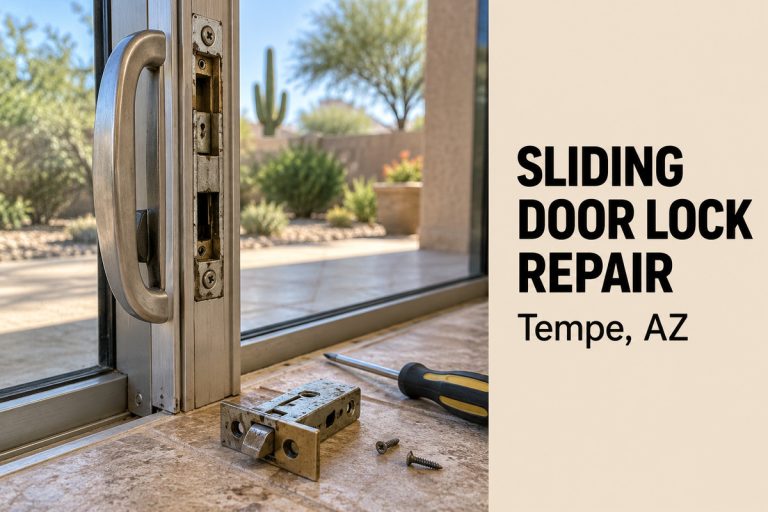
You bought a replacement fob online, or the one in your pocket suddenly stopped locking the doors, and now you’re staring at a button that does nothing. That silence usually isn’t the battery — it’s a fob the car has never been taught to recognize, or one that lost its sync after a dead cell or a module reset. Every modern remote carries a coded chip that has to be authorized by the vehicle before it will unlock a door or start the engine, and that authorization is exactly what “programming” means.

For most drivers the practical fix is straightforward once you know which path your car takes, and our automotive locksmith work covers both the on-board method and the scanner-based method for vehicles that lock programming behind a security PIN. If you want to confirm you’re dealing with a local shop and not a call-center dispatcher, you can see our Tempe location and reviews on Google Maps before anyone touches your car.

CallOrange Locksmith has worked on cars across Tempe, Mesa, Chandler, and Scottsdale since 2008, and the pattern is consistent: the fob itself is rarely the hard part — matching it to the vehicle’s security system is. This guide walks through what programming really involves, the three routes to get it done, the general steps, the mistakes that waste an afternoon, and the point where a professional saves you money instead of costing it.

What Key Fob Programming Actually Is

A key fob is a small radio transmitter. Inside it sits a transponder chip and a circuit board that broadcasts on a fixed frequency — usually 315 MHz in North America, sometimes 433 MHz on imports. When you press unlock, the fob sends a coded signal. When you sit in the driver’s seat of a push-to-start car, the fob answers a challenge from the vehicle without you pressing anything at all.

Programming is the process of registering that chip’s unique ID inside two of the car’s computers: the immobilizer, which decides whether the engine is allowed to start, and the body control module (BCM), which handles locks, lights, and the remote functions. Until both accept the fob, the remote is just a plastic shell with a working battery.

This is why a fresh battery doesn’t always bring a fob back to life. A dead cell interrupts power; a lost pairing interrupts trust. If your remote worked yesterday and died today after nothing more than a battery change, the sync may simply need to be re-established. If it’s a brand-new remote, the car has never seen its code and has to be taught it from scratch — the same handshake that happens when we cut and program a new car key after a lost original.

Two more terms are worth knowing before you start:

  • Rolling code: Modern fobs change their transmitted code every press using an encrypted sequence, so a recorded signal can’t be replayed by a thief. This is also why a fob that falls far out of sync can’t just be pressed back into working order.
  • Proximity vs. remote: A basic remote unlocks doors from a distance. A proximity fob on a push-to-start or keyless ignition system also has to be authorized to start the engine — a separate, tighter layer of programming.

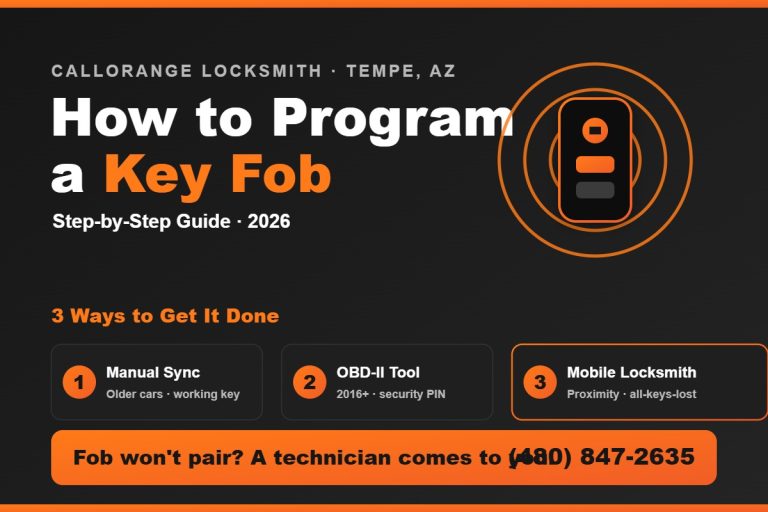
Methods to Program a Key Fob: OBD-II, Manual Sync, and Locksmith

There are three real routes to program a fob. Which one applies depends almost entirely on the make, model, and year of your vehicle — not on how handy you are.

Manual on-board sync. A shrinking number of vehicles — many domestic models built before roughly 2015 — allow an on-board procedure. You use an already-working key and a specific sequence of ignition cycles and button presses to put the car into a learning mode, then register the new remote. It needs no tools, but it only works when the car supports it and you already have at least one recognized key.

OBD-II programming. Most newer vehicles require a scanner plugged into the OBD-II port under the dash. The programmer talks directly to the immobilizer and BCM, and on many models it also requires a security PIN or incode/outcode pulled from the manufacturer before it will authorize a new key. This is the method that covers the majority of 2016-and-newer cars and nearly all proximity systems.

Dealership or professional locksmith. When the vehicle demands manufacturer security access, an all-keys-lost situation, or proximity-key pairing, the job goes to a dealer or a professional automotive locksmith. A locksmith is usually the same-day, lower-cost option and comes to your driveway; the dealer means a tow and an appointment. Both can produce and pair replacement car keys when there’s no working original left to trigger a learning mode.

Tools You Need

If your vehicle is one of the models that supports do-it-yourself programming, this is the realistic checklist:

  • At least one working key or fob — most on-board sequences won’t start without an already-paired remote
  • The new fob, correct by FCC ID and frequency — the number printed on the back must match your vehicle
  • A fresh CR2032 or CR2025 battery installed in the new fob before you begin
  • Your owner’s manual for the exact on-board sequence, which varies by model
  • An OBD-II programmer for any car that won’t accept an on-board method
  • The manufacturer security PIN for models that gate programming behind it
  • A fully charged vehicle battery — a low battery mid-sequence corrupts the pairing

Note the honest catch: an all-keys-lost car, a proximity system, or a PIN-locked model puts most of this out of reach at home. That’s the line where the tool list stops mattering.

Key Fob Programming Methods Compared

Method Best For What You Need Do It Yourself?
Manual on-board sync Many domestic models built before ~2015 A working key, the correct new fob, owner’s manual Often yes
OBD-II programming Most 2016-and-newer vehicles OBD-II programmer, often a manufacturer security PIN Rarely — needs equipment
Proximity / push-to-start pairing Keyless-ignition vehicles Scanner, security access, VIN-matched fob No — professional only
All-keys-lost programming No working key remaining Locksmith equipment and manufacturer access No — professional only
Dealership Any of the above, at higher cost Appointment and usually a tow No — drop-off required

General Steps to Program Your Key Fob

The exact sequence is model-specific, but on vehicles that allow an on-board method the flow generally follows this order. Always confirm your car’s procedure in the owner’s manual first — the wrong sequence can lock the immobilizer into a timeout.

  1. Park, set the brake, and gather your keys. Have the working key and the new fob within reach, battery already installed in the new one.
  2. Enter programming mode. This usually means cycling the ignition from off to on a set number of times within a few seconds, or using the working key to reach the “on” position. The car signals it’s listening with a door-lock cycle or a chime.
  3. Register the new fob. Press the lock button on the new remote once. A confirming lock cycle means the BCM accepted the code.
  4. Add any additional fobs. If you’re pairing more than one, register each while the car is still in learning mode.
  5. Exit and test. Turn the ignition off, remove the key, and test lock, unlock, and — on push-to-start cars — engine start from a normal distance.

If nothing confirms at step two or three, stop. Repeating a failed cycle over and over is the most common way drivers push a car into a security lockout that then needs a scanner to clear. A no-response fob after two clean attempts is a signal the car wants the OBD-II route, not more retries. For proximity and PIN-gated vehicles, there’s no home sequence at all — the pairing has to happen through the port with manufacturer access.

Diagnosis at a Glance: When Programming Doesn’t Take

When a fob won’t cooperate, the symptom usually points to a specific cause a professional can confirm on the spot.

Symptom Likely Cause What a Pro Checks
New fob does nothing after the sequence FCC ID or frequency mismatch on the remote Verifies the fob part number against the VIN before pairing
Doors lock but engine won’t start Fob paired to BCM but not the immobilizer Reads immobilizer status and re-runs key authorization
Fob worked, then quit after a battery change Lost sync / rolling-code drift Re-syncs the remote or re-registers through the port
Car rejects all programming attempts Security PIN required or module in timeout Pulls the manufacturer PIN and clears the lockout
Only one of two fobs responds Second fob never registered in learning mode Re-enters programming mode and adds the missing remote

Common Mistakes When Programming a Fob

Most failed do-it-yourself attempts trace back to a short list of avoidable errors. Knowing them ahead of time saves the afternoon:

  • Buying the wrong fob. A remote that looks identical can carry a different FCC ID or frequency. If the number on the back doesn’t match your vehicle, no sequence will ever pair it.
  • Skipping the battery check. A weak vehicle battery or a half-charged fob cell interrupts the handshake and leaves a partial, corrupted pairing.
  • Assuming every car has an on-board mode. Most 2016-and-newer models don’t. Cycling the ignition on a car that requires a scanner just risks a timeout.
  • Ignoring the security PIN. On PIN-gated vehicles, programming cannot complete without the manufacturer code — there’s no workaround at home.
  • Trying to program with no working key. An all-keys-lost situation almost always needs professional equipment; the on-board method depends on an existing paired key.
  • Retrying a failed sequence repeatedly. Each failed attempt can push the immobilizer further into a protective lockout that then requires a scan to reset.
  • Overlooking a worn key blade. If the physical key won’t turn the ignition cleanly, the problem may be the cylinder, not the fob — which points toward ignition repair rather than reprogramming.

A remote that still won’t respond after a careful attempt isn’t a failure on your part — it usually means the vehicle falls into the professional-only category, and forcing it does more harm than good.

When to Call a Professional Locksmith

Programming a key fob comes down to one question: does your car allow an on-board sequence, or does it lock pairing behind a scanner and a manufacturer PIN? On older models with a working spare, the driveway method is realistic. On most modern vehicles, an all-keys-lost car, or any proximity system, the job needs OBD-II equipment and security access that isn’t available over the counter.

When you hit that wall, the right next step is a mobile automotive locksmith who can come to you, confirm the correct fob against your VIN, and pair it on the spot — without a tow to the dealership. CallOrange Locksmith has cut, coded, and programmed keys for drivers across Tempe, Mesa, Chandler, Scottsdale, Phoenix, Gilbert, and Guadalupe since 2008, working from a fully equipped mobile van rather than a fixed counter. That local experience is why so many East Valley drivers call us before they call the dealer, and you can read more about our Tempe locksmith team and the full range of locksmith services we handle, including residential lock work.

If a fob won’t program, you’re locked out of your car, or you’ve lost your only key, call (480) 847-2635 or reach us through our contact page to get a technician headed your way. We’re available from 6 AM to 10 PM, seven days a week, and we’ll match the right key to your vehicle before we ever start the pairing. You can also browse more locksmith guides on our blog for the next key or lock question that comes up.

Sources: National Highway Traffic Safety Administration on vehicle anti-theft systems and the Federal Communications Commission on radio-frequency key fob devices.

Frequently Asked Questions

How much does it cost to program a key fob?

It depends on the vehicle and the type of fob. A basic remote for a car with an on-board procedure is inexpensive, while proximity and push-to-start fobs that need a scanner and a manufacturer PIN cost more because of the equipment and security access involved. A locksmith gives you an upfront quote for your exact make and model before starting, and it is almost always below dealership pricing.

Can I program a key fob myself?

Sometimes. Many domestic vehicles built before about 2015 allow an on-board sequence using an existing working key. Most 2016-and-newer cars, proximity systems, and any all-keys-lost situation require an OBD-II programmer and manufacturer security access, which are not available over the counter. Check your owner’s manual first to see which category your vehicle falls into.

Why did my key fob stop working after I changed the battery?

A battery change can interrupt the rolling-code sync between the fob and the vehicle. The remote still has power, but it has drifted out of the encrypted sequence the car expects. Re-syncing or re-registering the fob usually restores it, a short procedure a locksmith can do at your location.

Do I need the original key to program a new fob?

For most on-board sequences, yes, the car needs at least one already-paired key to enter learning mode. If you have lost every key, the vehicle is in an all-keys-lost state, which needs professional equipment to authorize a brand-new remote from scratch. That is one of the most common reasons drivers call a locksmith.

How long does key fob programming take?

An on-board sequence takes a few minutes once you have the right fob and procedure. A scanner-based pairing on a modern vehicle typically runs 15 to 30 minutes, including verifying the fob against the VIN and pulling any required security code. Proximity systems on the newest cars can take longer.

Will any replacement fob work with my car?

No. The fob has to match your vehicle by FCC ID and radio frequency, and it must be the correct type for your ignition, standard remote versus proximity. A remote that looks identical can carry different internals. Matching the fob to the VIN before pairing is the single most important step, and getting it wrong is the top reason a self-programmed fob never responds.

Do you come to me in Tempe to program a key fob?

Yes. CallOrange Locksmith runs a mobile service across Tempe, Mesa, Chandler, Scottsdale, Phoenix, Gilbert, and Guadalupe, so a technician comes to your driveway, workplace, or parking lot. Call (480) 847-2635 anytime from 6 AM to 10 PM, seven days a week, and we bring the equipment and blank fobs to your location.

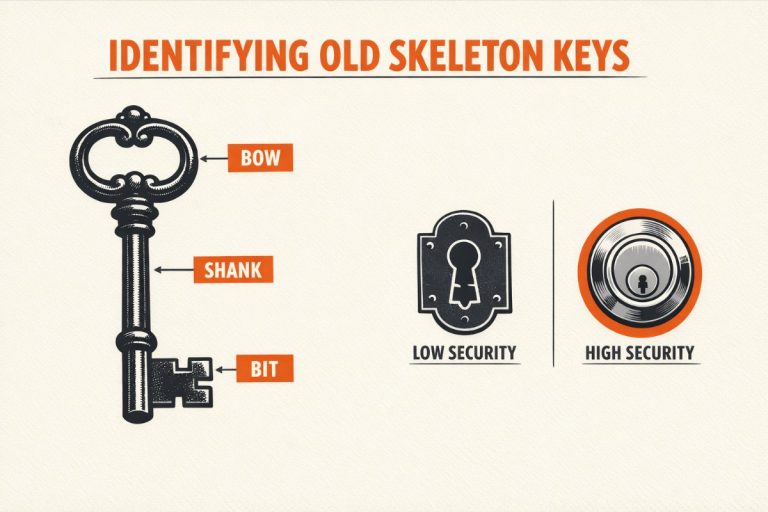
Infographic identifying the parts of an old skeleton key and comparing antique warded locks to modern deadbolt security

Found an Old Key? A Guide to Identifying Old Skeleton Keys

Identifying old skeleton keys comes down to reading three parts: the looped bow you hold, the long shank in the middle, and the flat bit at the end that turns the lock. Most antique keys found around the house once opened warded locks — a simple style standard in American homes before the 1940s. The shape of that bit is the clearest clue to what the key originally opened.
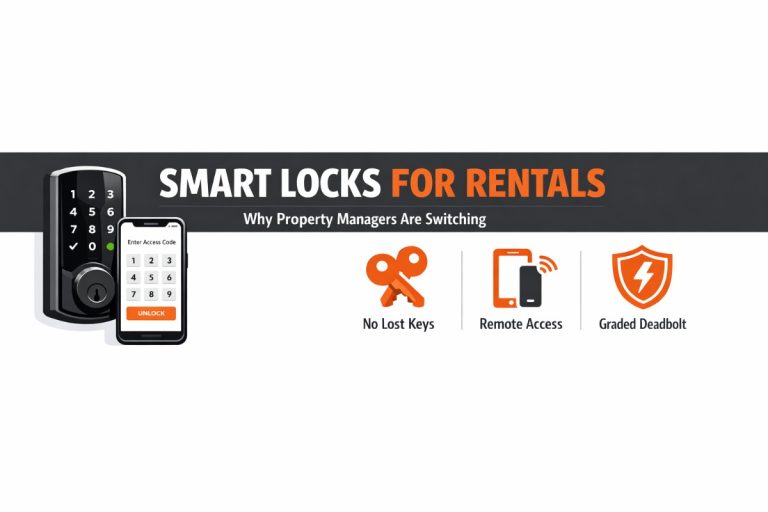
You clean out a drawer, an attic box, or a relative’s old desk, and there it sits — a heavy metal key with a fancy looped top that matches nothing in the house. It won’t slide into a single modern door, and you have no idea what it was meant to open. That puzzle is common, and it usually has a simple answer. Most of these mystery keys are antique skeleton keys built for lock styles no longer used on American doors. The good news is that you can learn to read one. In this guide, a professional locksmith walks through how to name the key in your hand, what it likely opened, and what it means for the safety of your home today. Keep reading to put a name to that old key.

What Is a Skeleton Key, Anyway?

A skeleton key is a key that has been filed down — or purpose-built — so the central shaft and a single thin bit can slip past the wards inside a warded lock. “Wards” are the small obstructions cast into a lock that block the wrong key from turning. A true skeleton key strips away everything except the part that actually moves the bolt, which lets one key open many similar warded locks. That same simplicity is why these locks faded out for exterior doors: the design that makes them charming also makes them easy to bypass.

For a deeper look at how the mechanism works, the overview of the warded lock on Wikipedia is a solid starting point.

How to Start Identifying Old Skeleton Keys

Identifying old skeleton keys comes down to four features. Examine each part of the key in good light before you guess.

The Bow, Shank, and Bit

The bow is the decorative loop you grip. Ornate, scrolled bows often point to furniture or cabinet keys, while plain rounded bows lean toward door locks. The shank is the long stem between the bow and the bit. A solid shank usually means a bit key made for a door; a hollow shank — one that would slide over a pin inside the lock — marks a barrel key, common on clocks and older cabinets. The bit is the flat blade at the end that does the work. The notches and grooves cut into that bit are the fingerprint of the lock it once matched.

Size and Material

Large iron or steel keys, roughly three to six inches long, were typically made for the interior and exterior doors of older houses. Smaller brass keys usually belonged to cabinets, desks, chests, or trunks. Hand-filed edges, uneven casting, and natural tarnish are signs of real age rather than a modern reproduction sold for decoration.

Markings and Maker Stamps

Turn the key over and check the bow and shank for stamped numbers, letters, or a maker’s name. Brand and pattern details documented in collector references for antique keys can help you trace an origin. A number stamped on the bow is usually a lock-pairing code, not a year.

Key Types Compared

Use this table to match the key in your hand to its most likely purpose and the level of protection it offered.

Key Type Typical Era What It Opened Protection Level Common Today?
Bit key (skeleton) Pre-1940s Interior & exterior warded door locks Low Rare
Barrel key 1800s–1900s Clocks, cabinets, older furniture Low Rare
Furniture / cabinet key 1800s–early 1900s Desks, chests, trunks Low Occasional
Lever-lock key 1800s–today Lever-tumbler locks & some safes Medium Some
Tubular key 1930s–today Bike locks, vending, some cabinets Medium Some
Pin-tumbler key (modern) 1900s–today Modern deadbolts & knob locks High Standard
Dimple key 1970s–today High-security cylinders High Growing
Smart / electronic credential 2000s–today Keypad & smart deadbolts High Growing

On a phone, swipe the table sideways to see every column.

Antique Keys and Your Home Safety Today

Here is the part many homeowners miss. If a warded lock and its skeleton key are still installed on an interior or exterior door, that opening is not protected against anyone holding a generic passkey. Antique skeleton keys are wonderful to collect and display — but they were never built to meet modern home safety standards.

A current exterior door should rely on a deadbolt with a pin-tumbler cylinder. Real deadbolt security comes from a one-inch throw bolt seated in a reinforced strike plate, paired on the inside with a thumbturn lock you can operate by hand without a key. If you’ve inherited or bought an older property that still runs on warded hardware, upgrading those locks is one of the more meaningful steps you can take for the household. A professional locksmith can rekey or swap the cylinders so every door answers to one modern key instead of a passkey almost anyone could own. Homeowners across Tempe and the wider East Valley ask us about exactly this when they move into an older home.

For hands-on help, our team handles lock change and lock rekey for houses throughout the area. If a door has been standing open to you and now sticks or jams, a home lockout visit can get you back in, and you can review every residential locksmith option on one page.

Pro Tip From the Field

After years of opening older homes around Tempe, here is the test I use right on the doorstep: insert the key and try to wiggle it gently side to side. If a key rocks loosely in the keyway yet still turns the bolt, you are almost certainly looking at a warded lock — and a skeleton key will likely operate it. On a modern pin-tumbler deadbolt, the key seats snugly with no play at all. That simple wiggle tells you, before you remove a single screw, if the door is protected by current hardware or by a mechanism from another era. When it is the latter, treat the lock as decorative history on the door — not as security.

Turn That Old Key Into a Smarter Lock

That antique key is a great find — frame it, hang it, or add it to a collection. Just don’t let an old warded lock stand guard over a door your family uses every day. If you’ve discovered original hardware in a Tempe-area home and want to know what is actually protecting the household, our professional locksmith team can assess your doors and recommend an upgrade that fits the house. Call CallOrange Locksmith Tempe at (480) 847-2635 to schedule a lock change or a full security audit. Learn more about us or contact our team to get started.

Frequently Asked Questions

How can I tell if my old key is a real skeleton key?

Look at the bit — the flat blade at the end. A genuine skeleton key has had most of its bit filed away, leaving a thin profile that slips past the wards inside the lock. Pair that with a looped bow, a long shank, and hand-filed edges, and you are almost certainly holding an antique skeleton key.

What kind of lock does a skeleton key open?

Skeleton keys are made for warded locks, a design built around fixed obstructions called wards. They were standard on American interior and exterior doors before the 1940s and still appear on antique furniture, cabinets, and older homes that were never upgraded.

Are antique skeleton keys worth anything?

Many are collectible, especially keys with ornate bows, maker stamps, or ties to a specific brand or era. Condition, rarity, and original hardware matter most to collectors. A decorative reproduction, by contrast, will usually show machine-cut edges and little tarnish.

Can one skeleton key open every door in my house?

If your doors still use warded locks, a single generic passkey can often operate several of them — which is exactly why warded hardware is no longer suitable for an entry door. Modern deadbolt security uses pin-tumbler cylinders that respond only to one cut key.

Should I keep using an antique lock on my front door?

For home safety, an antique warded lock is better treated as a display piece than as front-door security. A pin-tumbler deadbolt with a one-inch throw bolt and an interior thumbturn lock offers far stronger protection. A professional locksmith can upgrade the hardware while keeping the look of the door intact.

Can a locksmith make a key for an old lock?

Often, yes. A locksmith can cut a working key for many vintage warded and lever locks, or rekey the mechanism so a fresh key operates it. If the goal is real security on an active door, replacing the cylinder is usually the better route. Call CallOrange Locksmith Tempe at (480) 847-2635 to talk through the options.

Infographic banner on smart locks for rentals in Tempe rental properties

Smart Locks for Rentals: Why Property Managers Are Switching to Smart Locks for Every Unit

Managing keys across a portfolio of rental units is one of the quiet headaches no property manager talks about until a tenant moves out without returning a single key. Smart locks for rentals solve the core problem of physical key control — they let you grant, change, and revoke access from a phone or dashboard, so a vacated unit is secured the moment a lease ends. Below, a professional locksmith perspective on why electronic access is replacing the brass key, what to look for in the hardware, and how to roll it out across every door without creating new risks. Keep reading to see the full comparison and the questions other managers ask most.
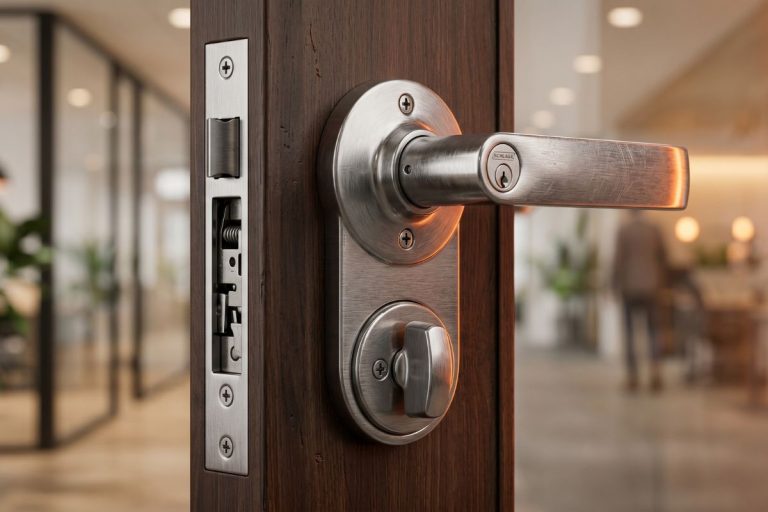
The Hidden Cost of Traditional Keys in Rental Properties

Every metal key cut for a unit is a copy you can no longer account for. Tenants make duplicates at the hardware store, hand spares to friends, and forget how many are floating around by the time they leave. For a property manager, that uncertainty is a liability. The standard fix has always been a lock rekey between tenants, which works well — but it still depends on coordinating a visit, tracking pins, and physically touching every door at turnover.

A residential locksmith sees the same pattern across Tempe, Mesa, and Chandler properties: lost keys, missing spares, and the scramble to secure a unit after a tenant disappears. Smart locks remove the variable that causes most of it — the key itself.

What “Smart Locks for Rentals” Actually Means

A smart lock is an electronic locking mechanism that opens with a code, a fob, a smartphone, or a combination of these instead of a cut key. For rentals, the value is in the management layer behind it: a dashboard where you issue a unique entry code per tenant, set it to start on move-in day, and expire it on move-out day. No handoff, no return, no rekey scramble.

Most quality models still pair their electronics with a mechanical deadbolt security bolt — the same hardened bolt that throws into the door frame on a traditional lock. That matters. The “smart” part handles access; the deadbolt handles force. A unit’s home safety depends on both working together, which is why hardware selection should never be left to the cheapest model on the shelf.

Key Terms, Explained Simply

  • Thumbturn lock: The interior knob a tenant turns by hand to lock or unlock the deadbolt from inside. On smart models, this stays manual, so a tenant is never trapped if the battery dies.
  • Deadbolt: The solid metal bolt that extends into the frame. Grade matters far more than the brand name on the front.
  • Auto-lock: A setting that re-engages the bolt after a set delay, so a unit is never left open behind a forgetful tenant.

Why Property Managers Are Making the Switch

The shift comes down to control. With electronic access, a manager handles turnover remotely, audits who entered and when, and stops chasing returned keys. Maintenance crews and cleaners get their own temporary codes that you switch off when the job ends. If a tenant reports a home lockout, you can often resolve it from the dashboard instead of dispatching anyone.

There is also a tenant-experience angle. Renters increasingly expect keyless entry the way they expect a working dishwasher. Offering it across every unit positions a property as modern without a major renovation. Pairing the rollout with a clean lock change on older doors brings the whole entry system up to a consistent standard.

Smart Lock Tiers for Rental Units: A Comparison

Not every smart lock belongs in a rental. The table below compares the main categories a property manager evaluates, focused on security and management features.

Lock Type Access Method Deadbolt Grade Best For Management Control
Keypad deadbolt PIN code ANSI Grade 2–3 Single units, light turnover Manual code reset
App-connected smart lock Phone + code ANSI Grade 1–2 Multi-unit portfolios Remote, per-tenant codes
Smart lock + hub Phone, code, remote ANSI Grade 1 High-turnover buildings Full dashboard + audit log
Mechanical + thumbturn (legacy) Cut key ANSI Grade 1–3 Owner units, low turnover Physical rekey only
Commercial electronic strike Fob, code, mobile Grade 1 / fire-rated Shared entries, lobbies Centralized, scheduled

Grades reference the ANSI/BHMA durability standard. A professional locksmith can match the right tier to each door.

The right tier depends on how often a unit turns over and how many people need access. A duplex owner has different needs than a manager running fifty doors. A professional locksmith can match the grade and management layer to the property rather than the marketing.

Pro Tip: The Mistake That Undoes a Good Smart Lock

After installing smart hardware on hundreds of doors across the East Valley, the most common failure is not the electronics — it is the door itself. A premium smart deadbolt mounted on a worn strike plate with short screws will pull loose under a shoulder strike, no matter how advanced the lock. Before any smart lock goes on, reinforce the strike plate with three-inch screws that bite into the wall stud, and confirm the deadbolt fully extends without binding. The electronics protect against unauthorized access; the strike plate and frame protect against force. Get both right, or the upgrade is only half done.

It is also worth standardizing one brand and one battery type across a portfolio. Mixed hardware means mixed dashboards, mismatched fobs, and maintenance crews carrying four chargers. Consistency is what makes a fleet of smart locks manageable instead of a second job.

Rolling It Out Across Every Unit

A full conversion does not have to happen overnight. Many managers start with units at turnover, installing smart hardware as each lease ends, and standardize the rest within a season. A locksmith handling the install can verify door prep, confirm deadbolt grade, and set up the management dashboard so codes are ready before the next tenant signs. For older buildings, combining the smart upgrade with high-security cylinder hardware closes the gap on doors that were never properly secured in the first place. You can review the full range of residential and commercial services to plan a phased rollout.

External standards help here. Reviewing the ANSI/BHMA grading system before buying tells you whether a lock’s deadbolt is rated for residential or commercial duty, and the Consumer Product Safety Commission publishes guidance on door and entry hardware that property managers can lean on when setting a standard.

Secure Every Door With Professional Installation

Smart locks give property managers something brass keys never could: real control over who enters a unit and when. But the hardware only performs as well as the installation behind it. If you manage rentals across Tempe, Mesa, Scottsdale, or Phoenix and want every unit on a consistent, secure access system, talk to a professional locksmith before you buy. CallOrange Locksmith Tempe can audit your doors, recommend the right grade for each entry, and handle the full install. Call (480) 847-2635 or reach out through our contact page to schedule a security audit for your property.

Smart Locks for Rentals — Frequently Asked Questions

Are smart locks secure enough for rental units?

A quality smart lock pairs electronic access with a graded mechanical deadbolt, so it resists force the same way a traditional lock does. Security depends on the deadbolt grade and the door prep behind it, not just the electronics. A professional locksmith can confirm the unit is rated for the duty you need.

What happens to a smart lock if the batteries die?

Most rental-grade smart locks keep a manual thumbturn on the inside, so a tenant can always exit. Many also include a physical key override or external contacts to power the keypad. Choosing a model with a low-battery alert helps a property manager swap cells before access is interrupted.

Can I reuse the same smart lock for a new tenant?

Yes. Instead of a physical rekey, you delete the previous tenant’s code and issue a new one from the dashboard. This is the main advantage of smart locks for rentals — turnover access is handled without touching the hardware or cutting a new key.

Do I need a professional locksmith to install them?

A locksmith verifies the door prep, reinforces the strike plate, and confirms the deadbolt extends fully before the electronics go on. Across a multi-unit portfolio, professional installation also keeps every door on a consistent standard and dashboard, which is what makes the system manageable.

What deadbolt grade should a rental smart lock have?

For most rental doors, an ANSI/BHMA Grade 1 or Grade 2 deadbolt is the standard to aim for. Grade 1 is built to commercial duty, while Grade 2 suits typical residential entries. The grade tells you how the bolt holds up under repeated use and force.

Should I switch every unit at once or phase it in?

Many property managers convert units at turnover and standardize the rest over a season. Phasing it in spreads out the work while still bringing the whole property onto one access system. A locksmith can plan the rollout so codes are ready before each new tenant signs.

Commercial door hardware

Choosing the Right Commercial Door Hardware for High-Traffic Offices

Office managers across Tempe and Mesa face a recurring headache: door hardware that fails months after installation. Handles loosen, latches misalign, and locks jam during peak business hours, leaving employees locked out and clients waiting in lobbies. The solution is straightforward — match the right grade of commercial door hardware to your actual traffic volume and security needs from day one. Keep reading to learn how to specify the correct hardware for your office, avoid the most common mistakes, and protect your building without overpaying for features you’ll never use.
Why Standard Hardware Fails in Commercial Settings

Residential-grade locks and handles are engineered for a household — perhaps 20 to 30 cycles per day. A busy office door, by contrast, can see 1,000 or more cycles in a single workday. That mismatch is the single biggest reason commercial properties end up calling a professional locksmith for emergency repairs within the first year of occupancy.

[IMAGE: Insert Image Described Here]

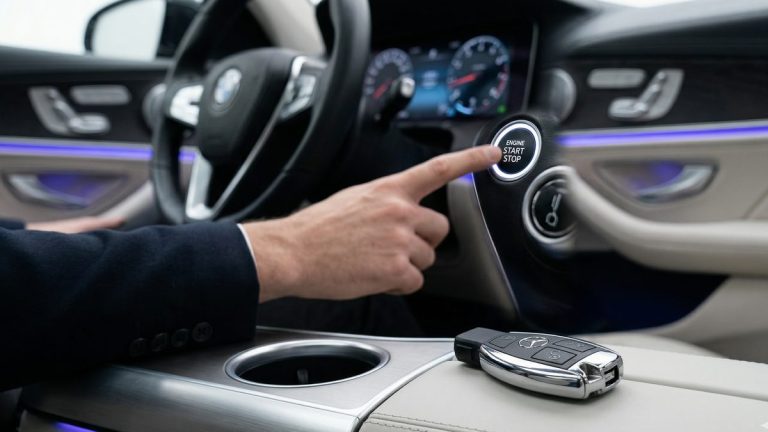
Image prompt: A photorealistic close-up of a polished stainless steel commercial lever handle installed on a glass office door, with a blurred background showing employees walking through a modern Tempe office lobby. Natural daylight from large windows highlights the brushed metal finish and the heavy-duty mortise lock body visible at the door edge.

The American National Standards Institute (ANSI) and the Builders Hardware Manufacturers Association (BHMA) classify commercial hardware into three grades. Understanding these grades is the foundation of every smart purchasing decision.

ANSI/BHMA Grades Explained

The grading system measures cycles, force resistance, and finish durability. Most office buildings only need to remember one rule: pick the grade that matches your door’s daily volume.

Hardware Grade Cycle Rating Best For Lifespan in Office Use
Grade 1 (Heavy Duty) 800,000+ cycles Main entrances, conference rooms, server rooms 10–15 years
Grade 2 (Medium Duty) 400,000 cycles Interior offices, break rooms, supply closets 5–8 years
Grade 3 (Light Duty) 200,000 cycles Residential only — not recommended for offices 2–3 years in commercial use
Mortise Lock (Grade 1) 1,000,000+ cycles High-security entries, executive suites 15+ years


A Grade 3 lock on a main lobby door will fail. Period. We’ve replaced hundreds of them across Tempe office buildings where contractors cut corners during the build-out.

The Four Hardware Components Every Office Needs

A complete commercial door system is more than just a lock. Each component plays a role in security, code compliance, and daily usability.

1. The Lockset

For high-traffic openings, a mortise lockset is the gold standard. The lock body sits inside a pocket cut into the door edge, distributing force across a large internal mechanism rather than relying on a small bored hole. Cylindrical locksets are acceptable for medium-traffic interior doors but are not built for main entrances.

2. The Deadbolt

Strong deadbolt security is non-negotiable for any door that locks the building down at end of day. Look for a 1-inch throw bolt with a hardened steel insert and a reinforced strike plate secured with 3-inch screws into the door frame stud. A standard half-inch latch is not a deadbolt — it’s a courtesy lock that any motivated intruder can defeat in seconds.

3. The Handle Trim

Lever handles are required by the Americans with Disabilities Act (ADA) on most commercial doors. Avoid round knobs unless you have a specific exemption. Stainless steel and solid brass levers outlast plated zinc-alloy handles by a factor of three or more.

4. The Closer and Exit Device

Doors with panic bars and automatic closers are governed by local fire codes. Grade 1 closers maintain consistent door speed and latching pressure across temperature swings — critical in Arizona, where summer heat warps cheaper hardware fast.

Thumbturn vs. Double-Cylinder: Which Is Safer?

A common debate in commercial security is whether to install a thumbturn lock on the interior or a double-cylinder deadbolt requiring a key on both sides. The answer depends on the door.

A thumbturn allows anyone inside to exit immediately without a key — a major advantage during fire emergencies and a requirement under most building codes for primary egress doors. Double-cylinder locks add a layer of security on glass doors where an intruder could break a pane and reach the interior knob, but they create a serious life-safety risk and are prohibited on egress paths in many jurisdictions.

For most office front doors in the East Valley, a Grade 1 deadbolt with a thumbturn interior is both code-compliant and secure when paired with a reinforced strike plate.

Pro Tip from the Field

After 15+ years of commercial installs across Mesa, Chandler, and Scottsdale, here’s the single upgrade that saves clients the most money long-term: replace the factory strike plate. Almost every commercial door ships with a strike plate held by half-inch screws into the door frame casing — not the structural stud. Swap those for 3-inch screws that bite into the framing lumber behind the casing. This one $5 fix increases kick-in resistance by roughly 400% and takes 10 minutes per door. Most break-ins through commercial doors fail at the frame, not the lock itself.

Common Specification Mistakes to Avoid

When reviewing your office’s hardware schedule, watch for these red flags:

  • Mixing grades on a single door. A Grade 1 lockset paired with a Grade 3 closer will still fail at the closer.
  • Ignoring keying alignment. Master key systems must be planned before purchase, not retrofitted afterward.
  • Skipping the strike plate upgrade. As noted above — this is where most security plans collapse.
  • Choosing finish over function. Polished brass looks elegant but pits and tarnishes within months in Arizona’s dry, dusty climate. Satin chrome and oil-rubbed bronze hold up far better.

Home safety principles apply at the office too: layered security beats a single expensive lock every time. A Grade 1 lockset, a reinforced strike, a working closer, and a documented key control policy together cost less than one emergency board-up after a break-in.

Frequently Asked Questions

What grade of commercial door hardware should I install on my office’s main entrance?

Grade 1 hardware is the standard for any main entrance with high foot traffic. It’s tested for over 800,000 cycles and built with reinforced internal components that handle the daily wear of a busy commercial property. Grade 2 is acceptable for interior offices, but Grade 3 should never be used on a primary commercial door.

Is a thumbturn lock secure enough for a commercial office door?

A thumbturn lock is secure and code-compliant for most office front doors when paired with a Grade 1 deadbolt and a reinforced strike plate. It also satisfies fire egress requirements by allowing immediate exit without a key. The exception is glass doors, where a double-cylinder option may be considered if local code permits.

How long does professionally installed commercial door hardware last?

Grade 1 commercial hardware typically lasts 10 to 15 years in heavy office use, and mortise locks can exceed 15 years with proper maintenance. Lower-grade hardware installed in commercial settings often fails within 2 to 3 years, which is why grade selection is the most important specification decision.

Can I upgrade my existing office hardware without replacing the doors?

In most cases, yes. A professional locksmith can replace locksets, deadbolts, strike plates, and closers on existing doors without removing the door itself. Mortise lock retrofits are more involved and may require door modification, but standard cylindrical and deadbolt upgrades are straightforward same-day work.

What’s the most cost-effective security upgrade for a commercial door?

Replacing the factory strike plate with a reinforced strike using 3-inch screws into the framing stud. This single upgrade dramatically increases kick-in resistance and pairs with any existing Grade 1 or Grade 2 deadbolt. It’s the highest-impact, lowest-investment improvement available for home safety and commercial security alike.

Does CallOrange Locksmith Tempe service commercial properties outside of Tempe?

Yes. We provide commercial door hardware installation and security audits across Tempe, Mesa, Chandler, Scottsdale, Phoenix, and Gilbert. Call (480) 847-2635 to schedule a walkthrough of your property.

Getting It Right the First Time

Specifying commercial door hardware is a one-time decision with a 10-year impact. The wrong choice means recurring service calls, frustrated tenants, and avoidable security gaps. The right choice means doors that simply work — every cycle, every day, for the life of the building.

If you’re planning a new office build-out, a tenant improvement, or a security upgrade across an existing portfolio, schedule a walkthrough with a commercial locksmith who works on your specific door types. Call CallOrange Locksmith Tempe at (480) 847-2635 for a no-obligation security audit of your office hardware. We’ll evaluate every opening, flag the weak points, and give you a written specification you can hand directly to your contractor or facilities team.

Contact us today to schedule your commercial security audit.

push-to-start-key-fob-not-working-tempe

Push-to-Start Key Fob Not Working? What to Do in Tempe

A push-to-start key fob that stops responding usually traces back to a depleted coin-cell battery, corroded contact terminals inside the fob housing, or heat-damaged circuitry from Arizona’s extreme summers. A licensed locksmith tests the fob’s signal output, inspects the internal PCB, and either replaces the battery, repairs the contacts, or programs a replacement fob to your vehicle’s receiver module.

Prices shown reflect general market ranges for the Tempe and Phoenix metro area as of 2026. Actual costs depend on your vehicle’s year, make, model, and the type of key fob required. Contact us directly for a personalized quote.

You press the brake, hit the start button, and nothing happens. The dashboard stays dark or flashes a “key not detected” warning. In Tempe, this scenario plays out more often than most drivers expect — especially between May and October when surface temperatures inside parked vehicles regularly exceed 150°F. That kind of heat doesn’t just make your steering wheel untouchable. It warps the plastic housing around delicate electronic components that your fob depends on to communicate with your car.

The push-to-start system relies on a low-frequency signal exchange between your key fob and a receiver antenna built into the steering column or center console. When the fob’s internal transmitter weakens — whether from a dying battery, cracked solder joints, or UV-degraded circuitry — the vehicle can’t authenticate the signal and refuses to start. The problem isn’t always the fob itself, either. The vehicle’s antenna module, the immobilizer ECU, or even a drained car battery can mimic the same symptoms.

The right approach starts with professional diagnosis. A certified locksmith uses frequency-testing equipment to measure whether the fob is transmitting at all, then narrows down the cause to the fob, the vehicle’s receiver, or the programming link between them. That process avoids the common mistake of buying a new fob online only to discover the real issue was somewhere else entirely.

CallOrange.com has been diagnosing and programming push-to-start key fobs in Tempe since 2015. With 4.8 stars across 1,451 Google reviews and mobile technicians who come to your location, the diagnostic and repair process happens wherever your vehicle is parked — your driveway, an office lot in Downtown Tempe, or the ASU campus parking structure off University Drive.

Symptom Likely Cause What a Pro Checks
Fob works only at very close range Weak battery or partially cracked antenna trace on PCB Frequency analyzer measures signal strength at multiple distances
No response from any fob button Dead battery, fried transmitter chip, or broken solder joint Opens fob housing, inspects PCB for burn marks and tests battery voltage
Lock/unlock works but car won’t start Immobilizer rolling-code desynchronization Connects OBD-II diagnostic tool to check ECU-to-fob code alignment
Fob works intermittently in hot weather Thermal solder fatigue on transmitter circuit Inspects solder joints under magnification for micro-cracks
One button works, others don’t Degraded rubber membrane under specific button Removes button pad, checks conductive coating for wear or UV damage
Dashboard shows “key not detected” Vehicle receiver antenna failure or weak 12V battery Tests receiver antenna response with known-good fob; checks vehicle battery voltage
Fob works only at very close range
Likely CauseWeak battery or partially cracked antenna trace on PCB
What a Pro ChecksFrequency analyzer measures signal strength at multiple distances
No response from any fob button
Likely CauseDead battery, fried transmitter chip, or broken solder joint
What a Pro ChecksOpens fob housing, inspects PCB for burn marks and tests battery voltage
Lock/unlock works but car won’t start
Likely CauseImmobilizer rolling-code desynchronization
What a Pro ChecksConnects OBD-II diagnostic tool to check ECU-to-fob code alignment
Fob works intermittently in hot weather
Likely CauseThermal solder fatigue on transmitter circuit
What a Pro ChecksInspects solder joints under magnification for micro-cracks
One button works, others don’t
Likely CauseDegraded rubber membrane under specific button
What a Pro ChecksRemoves button pad, checks conductive coating for wear or UV damage
Dashboard shows “key not detected”
Likely CauseVehicle receiver antenna failure or weak 12V battery
What a Pro ChecksTests receiver antenna response with known-good fob; checks vehicle battery voltage

Why Push-to-Start Fobs Fail in the Phoenix Metro Area

Arizona’s Sonoran Desert climate creates conditions that accelerate electronic component failure in ways that drivers in milder states rarely experience. Understanding what actually breaks inside your fob helps you make smarter decisions about repair versus replacement.

Thermal cycling is the primary culprit. When you park your car at Tempe Marketplace or along Mill Avenue during a July afternoon, the cabin temperature can spike past 160°F within 20 minutes. The fob sitting in your cupholder or center console absorbs that heat directly. Over weeks and months, the repeated cycle of extreme heat during the day and air-conditioned cool at night causes the solder joints on the fob’s printed circuit board to expand, contract, and eventually crack. Once a solder joint fractures, the signal transmission becomes intermittent — the fob works sometimes and fails other times with no obvious pattern.

UV radiation degrades the rubber button membranes that seal the fob’s internal contacts. When those membranes harden and shrink, pressing the lock or unlock button no longer makes reliable contact with the circuit board underneath. You might notice that you have to press harder than you used to, or press multiple times before the car responds. That’s a textbook sign of membrane deterioration, and it’s far more common in Arizona than in northern climates.

The coin-cell battery inside a standard key fob — usually a CR2025 or CR2032 — has a rated shelf life of about five years under normal conditions. Arizona heat cuts that lifespan roughly in half. The chemical reaction inside lithium cells accelerates at higher temperatures, which means a fob battery that would last four years in Seattle might drain in under two years here in the Valley.

Fine desert particulate also works its way into the fob casing through button gaps and seam lines. This dust is abrasive at a microscopic level. It settles on the battery contacts and the PCB traces, creating a resistive layer that weakens the signal output even when the battery is technically still charged.

The Emergency Backup: Starting Your Car with a Dead Fob

Most drivers don’t realize that every push-to-start vehicle has a built-in backup method for when the fob battery dies. This doesn’t fix the underlying problem, but it gets you moving while you arrange professional service.

Hold the dead fob directly against the start button. On most Toyota, Honda, Nissan, Hyundai, and Kia models, the start button contains a secondary antenna coil that can read the fob’s passive RFID chip at near-zero range — even with a completely dead battery. Press the brake pedal, hold the fob flat against the button, and press start. The car should recognize the chip and fire the engine.

On some vehicles — particularly certain Ford, Mazda, and Subaru models — the backup antenna is located in the center console, the steering column, or a marked spot on the dashboard. Check your owner’s manual for the exact location. A few important things to keep in mind:

  • This backup method only works if the fob’s RFID chip is intact — heat damage to the chip itself will prevent even close-range detection
  • The method does not restore remote lock, unlock, or trunk functions — those require active battery power
  • If the vehicle’s own 12V battery is also weak, the passive read may fail because the antenna coil needs vehicle power to operate
  • Starting the car this way is a temporary solution, not a permanent fix — the fob still needs diagnosis and repair
  • Some luxury vehicles like BMW, Mercedes, and Lexus have a physical emergency key blade hidden inside the fob that unlocks the driver’s door manually

If the backup start fails entirely, the problem likely goes beyond just a dead fob battery. That’s when professional automotive locksmith diagnosis becomes necessary to identify whether the fob, the vehicle’s receiver, or the immobilizer module needs attention.

What a Locksmith Actually Tests During Fob Diagnosis

When a mobile locksmith arrives to diagnose your push-to-start issue, the process follows a structured sequence that eliminates possibilities one at a time. Understanding this sequence helps you know what to expect and why the diagnosis matters before jumping straight to a replacement.

Step one is verifying the fob’s output signal. The technician uses a frequency analyzer to check whether the fob is broadcasting on the correct frequency — typically 315 MHz for North American vehicles or 433 MHz for some European models. If there’s no signal at all, the issue is internal to the fob. If the signal is present but weak, the battery contacts or antenna trace may be corroded.

Step two isolates the vehicle’s receiver. Even if the fob is transmitting correctly, the car won’t start if the receiver antenna module isn’t picking up the signal. The technician tests the antenna by attempting communication with a known-good fob or diagnostic tool. Receiver failures are less common than fob failures, but they do happen — especially in vehicles that have been in accidents where the steering column or dashboard took impact.

Step three checks the immobilizer handshake. Modern push-to-start systems use rolling-code encryption between the fob and the vehicle’s ECU. Each time you start the car, the code changes. If the synchronization between fob and ECU falls out of alignment — which can happen after a battery replacement, a jump start, or prolonged disconnection — the system locks out the fob even though the hardware is fine. A locksmith’s diagnostic programming equipment can resynchronize the codes and restore normal operation.

The vehicle’s 12V battery also plays a role. A weak car battery reduces the power available to the receiver antenna and the immobilizer module. In Tempe’s heat, car batteries degrade faster than the national average. If the vehicle cranks slowly or the interior lights dim when you press start, the 12V battery should be tested before assuming the fob is at fault.

Common Fob Symptoms and What They Actually Mean

Not every fob problem means you need a full replacement. Some symptoms point to simple fixes, while others indicate more serious component failure. Here’s what the most common warning signs actually tell a trained technician:

Intermittent response — the fob works from three feet away but not from ten — usually means a weak battery or corroded contacts. The fob is still transmitting, just not with enough power to reach the vehicle’s antenna at normal range. Battery replacement and contact cleaning resolve this about 80% of the time.

No response at all from any button could mean a dead battery, a fried circuit board, or a broken solder joint on the transmitter chip. If pressing the fob against the start button still starts the car, the passive RFID chip is intact and the issue is limited to the active transmitter circuit. If even the backup start fails, the chip itself may be heat-damaged.

Buttons work for lock/unlock but the car won’t start points to a problem with the immobilizer authentication rather than the fob’s radio transmitter. The fob is communicating, but the rolling code exchange is failing. This often happens after a car battery replacement or when someone attempts to program a third-party fob without proper equipment.

One button works but others don’t is almost always a membrane issue. The rubber pad under that specific button has hardened, torn, or lost its conductive coating. In Arizona, UV and heat cause uneven degradation across buttons depending on which side of the fob faces upward in sun-exposed storage.

The fob works only when very close to the car suggests the fob’s internal antenna trace has a partial break. The antenna is a thin copper trace printed on the PCB. Thermal expansion can crack it partially, reducing transmission range dramatically without killing the signal completely.

Market Pricing for Fob Diagnosis and Replacement in 2026

Push-to-start fob service costs vary significantly depending on whether you need a simple battery swap, a circuit repair, or a complete fob replacement with programming. Here’s what the Tempe and Phoenix metro market looks like for the most common scenarios.

A basic fob battery replacement is straightforward and inexpensive. The battery itself costs a few dollars, and most locksmiths include the replacement as part of a diagnostic visit. If the battery is the only issue, you’re looking at the lowest end of the service range.

Fob reprogramming — resynchronizing the rolling codes between a working fob and the vehicle — typically falls in the mid-range. This service requires professional diagnostic equipment that connects to the vehicle’s OBD-II port and communicates directly with the immobilizer ECU. The equipment investment is one reason this isn’t a DIY job.

Complete fob replacement and programming is the most involved service. It includes sourcing a compatible blank fob for your specific make, model, and year, cutting the emergency key blade if applicable, programming the fob’s transponder chip to the vehicle’s immobilizer, and syncing the remote functions. Luxury and European vehicles cost more because their encryption systems require manufacturer-level software access.

A few factors that affect final pricing in this market:

  • Vehicle make and year — a 2024 Toyota Camry fob costs less than a 2024 BMW X5 fob
  • OEM versus aftermarket fob blanks — OEM parts carry higher cost but guaranteed compatibility
  • Number of fobs being programmed — programming two fobs at the same time costs less per unit than programming one
  • Time of service — evening and weekend calls may carry different rates depending on the provider
  • Mobile service — having a technician come to your location is standard for locksmith services in Tempe but some providers charge differently

Dealership pricing for fob replacement and programming typically runs two to three times higher than what a licensed mobile locksmith charges for the same service. The dealership uses the same diagnostic process, but their overhead structure — facility costs, parts markup, scheduling delays — inflates the final bill. Many Tempe drivers discover this after calling the dealer first, then searching for a local alternative.

Which Vehicles Need Special Attention in Arizona

Certain vehicle brands and their push-to-start systems are more vulnerable to heat-related fob failures than others. If you drive one of these vehicles in Tempe or anywhere in the Valley, proactive fob maintenance can save you from an unexpected no-start situation.

Nissan Intelligent Key fobs are among the most common failure cases in Arizona. The plastic housing uses a thin seam that allows fine dust infiltration, and the PCB layout places the battery contacts close to the antenna trace — meaning corrosion from a leaking battery can disable both the active transmitter and the passive chip simultaneously.

Hyundai and Kia Smart Key fobs from 2018 to 2023 use a compact design that traps heat inside the housing. The solder joints on the transmitter module in these fobs are known to fatigue faster in extreme-heat climates. If your Hyundai or Kia fob starts working intermittently during summer months, thermal solder fatigue is the most likely explanation.

Toyota and Lexus Smart Key systems are generally more heat-resilient, but the rubber button membranes degrade at the same rate as other brands. Toyota fobs also use a unique encryption protocol that requires Toyota-specific software for key programming — generic tools won’t complete the pairing process.

Ford and Lincoln push-to-start fobs use a two-piece housing design that’s easier to open for battery replacement but also more susceptible to dust and moisture entry. The positive trade-off is that battery replacement is simpler, which means routine maintenance is less of a barrier.

European brands — BMW, Mercedes-Benz, Audi, and Volkswagen — use the most complex encryption and the most expensive fob hardware. Replacement fobs for these vehicles require dealer-level or advanced aftermarket programming equipment and carry higher parts costs. Having a spare fob programmed before your primary fails is especially worthwhile for these vehicles.

When to Replace Versus When to Repair

The decision between repairing your existing fob and replacing it entirely comes down to the type of failure and the cost comparison. Not every dead fob needs to be thrown away.

Repair makes sense when the fob housing is intact, the PCB shows no visible burn marks or cracked traces, and the issue traces back to a dead battery, dirty contacts, or a worn button membrane. A technician can replace the battery, clean the contacts with electronic-grade solvent, and replace the button pad for a fraction of the cost of a new fob. This is the right call for fobs that are less than five years old with a single point of failure.

Replacement is the better path when the PCB has visible damage — scorched components, multiple cracked solder joints, or a corroded antenna trace. At that point, repairing individual connections becomes unreliable because adjacent components are likely to fail soon after. It’s also the better option when the fob housing itself is cracked open, since a compromised seal means dust and moisture will continue to degrade the internals even after repair.

Programming is required in both cases whenever the immobilizer codes need to be re-synced. Whether you’re restoring a repaired fob or pairing a brand-new one, the vehicle’s ECU needs to recognize and authorize the fob before the push-to-start system works. This is the step that requires professional equipment and training — it’s not something a YouTube tutorial and an Amazon tool can handle reliably.

CallOrange.com technicians carry both repair supplies and blank fob inventory on every mobile service call. That means the diagnosis, the decision, and the fix all happen in a single visit at your location in Tempe, Mesa, Scottsdale, Chandler, or anywhere in the Phoenix metro area.

Keep Your Fob Working Longer in Arizona Heat

Preventive care extends the life of your push-to-start fob and reduces the chance of being stranded with a no-start condition. These maintenance steps are simple but make a measurable difference in a desert climate.

Replace the fob battery every 12 to 18 months instead of waiting for it to die. In Arizona, the standard battery lifecycle is significantly shorter than the manufacturer’s estimate. A proactive swap costs very little and eliminates the most common cause of fob failure.

Store your spare fob indoors, not in the car. Many drivers keep a backup fob in the glovebox or center console. In Tempe’s summer heat, that spare is absorbing the same thermal punishment as the primary fob. Keep it inside your home or office where temperatures stay controlled.

Avoid placing your fob near magnetic sources like phone mounts, tablet cases, or magnetic purse clasps. Strong magnetic fields can interfere with the fob’s internal antenna and gradually demagnetize components that affect signal strength.

Clean the battery contacts annually. Open the fob housing — most use a small flathead slot or a release button — and gently clean the battery contact points with a dry cotton swab. If you see green or white residue, that’s corrosion from the battery. Replace the battery and clean the contacts with isopropyl alcohol before reassembling.

Use a protective silicone case if your fob rides in a pocket with keys, coins, or other metal objects. Physical impact and scratching can compromise the housing seal over time, accelerating dust infiltration.

Frequently Asked Questions

Why did my push-to-start fob suddenly stop working?

The most common cause is a depleted coin-cell battery, especially in the Phoenix metro area where summer heat drains lithium batteries faster than in cooler climates. Other causes include corroded battery contacts, cracked solder joints from thermal cycling, or a desynchronized immobilizer code. A diagnostic test identifies the exact point of failure before any parts are replaced.

Can I start my car if the key fob battery is dead?

Yes. Most push-to-start vehicles have a backup method. Hold the dead fob directly against the start button while pressing the brake. The start button contains a secondary antenna that reads the fob’s passive RFID chip at close range, even with no battery power. Check your owner’s manual for the exact location of the backup reader on your vehicle.

How often should I replace the fob battery in Arizona?

Every 12 to 18 months in the Tempe and Phoenix area. The manufacturer’s estimate of three to five years assumes moderate climates. Arizona’s sustained heat above 110°F accelerates the chemical drain inside lithium coin cells significantly, so proactive replacement before symptoms appear is the safest approach.

Can a locksmith program a new fob or only the dealership?

A licensed automotive locksmith with professional programming equipment can program fobs for virtually all major vehicle brands, including Toyota, Honda, Nissan, Hyundai, Ford, Chevrolet, BMW, and Mercedes-Benz. The process uses the same OBD-II diagnostic interface as the dealership. Mobile locksmiths bring the equipment to your location, which eliminates the need to tow the vehicle.

Do I need my vehicle registration for fob replacement?

Yes. Any reputable locksmith requires your current vehicle registration and a valid government-issued photo ID before performing key fob programming or replacement. This is a security measure that protects vehicle owners from unauthorized key duplication and is standard practice across the locksmith industry.

Is it cheaper to buy a fob online and have it programmed?

Sometimes, but it carries risk. Aftermarket fobs from Amazon or eBay may not be compatible with your specific vehicle year and trim, and some lack the correct encryption chip for programming. If the fob doesn’t match, you’ll pay for a service visit with no result. A locksmith who supplies the fob guarantees compatibility and typically includes programming in the price.

How long does fob programming take on-site?

Most standard fob programming takes 20 to 45 minutes once the technician arrives. Luxury and European vehicles with more complex encryption may take up to 60 minutes. The process includes diagnosis, pairing the fob to the vehicle’s immobilizer ECU, and testing all remote functions before the technician leaves.

Getting Your Fob Diagnosed and Fixed in Tempe

A push-to-start fob that stops working doesn’t always mean you need a new one. In many cases, a battery replacement, contact cleaning, or code resynchronization restores full function at a fraction of the cost of a replacement. The key is accurate diagnosis before spending money on parts you might not need.

CallOrange.com has served the Tempe and Phoenix metro area since 2015, with 1,451 Google reviews and a 4.8-star rating built on transparent pricing and mobile service that comes to you. Every technician carries diagnostic equipment, replacement batteries, fob blanks, and programming tools — so the entire process from diagnosis to fix happens in a single visit. Licensed, insured, and experienced with every major vehicle brand on the road today.

Call (480) 847-2635 to schedule a diagnostic visit at your location. Bring your vehicle registration and a valid photo ID — both are required before any key fob programming or replacement service. You can also reach out through the contact page to describe your fob issue and get a preliminary estimate. Learn more about the team and service history on the about us page.