
best-door-locks-arizona-heat

Best Door Locks for Arizona Homes: Heat-Resistant Picks for 2026

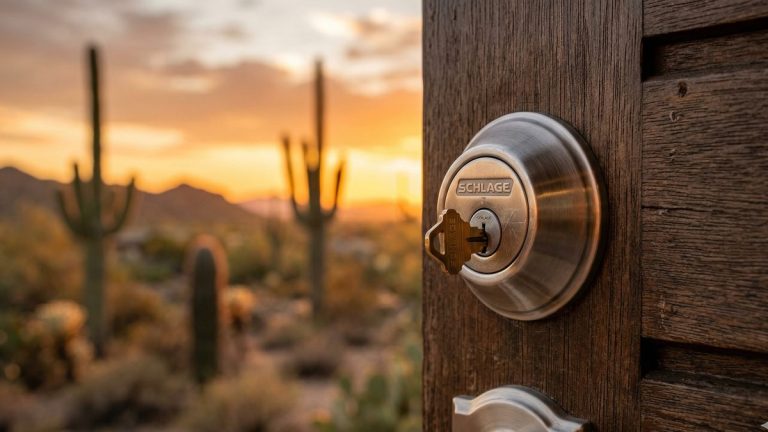
Standard residential locks degrade faster in Arizona because daily thermal cycling between 115°F+ surface temperatures and overnight cooling expands and contracts internal metal components beyond factory tolerances. Heat-resistant door locks use hardened steel pin stacks, reinforced spring alloys, and UV-stabilized finishes designed to maintain cylinder precision through thousands of expansion cycles. A licensed locksmith matches the right lock grade to your door’s exposure, security requirements, and budget.
Prices shown reflect general market ranges for the Tempe and Phoenix metro area as of 2026. Actual costs depend on lock brand, security grade, and installation requirements. Contact us directly for a personalized quote.

If you’ve lived in Tempe for more than a few years, you’ve probably noticed that exterior door hardware doesn’t last as long here as manufacturers claim. A deadbolt rated for ten to fifteen years of residential use in a temperate climate might show significant wear in five to seven years on a south-facing or west-facing door in the Phoenix metro area. The finish fades and flakes. The key gets harder to turn. The deadbolt sticks in summer and loosens in winter. These aren’t signs of a defective lock — they’re signs of a lock that wasn’t built for desert conditions.

The problem starts with the pin tumbler mechanism inside the cylinder. Each time the lock heats up, the brass pins, steel springs, and zinc alloy housing expand at different rates. Over thousands of cycles, this differential expansion widens the clearances between pins and chambers. The lock still functions, but the tolerances that make it resistant to picking, bumping, and manipulation have degraded. A lock that was ANSI Grade 2 when installed might perform closer to Grade 3 after five Arizona summers.

Choosing the right lock for an Arizona home means looking past brand recognition and focusing on material composition, security grade, and finish durability. The residential locksmith team at CallOrange.com installs and services every major lock brand in Tempe and across the Phoenix metro area. With 4.8 stars across 1,451 Google reviews and eleven years of Arizona-specific experience, our technicians know which locks hold up and which ones don’t in this climate.

Lock Model Grade Pick/Bump Resistant Best For AZ Heat Rating
Schlage B60N Grade 1 Yes — 6-pin anti-pick Primary entry doors, sun-exposed Excellent
Medeco Maxum Grade 1 Yes — rotating pins, UL 437 High-security homes, restricted key Excellent
Mul-T-Lock Hercular Grade 1 Yes — telescoping pins Maximum security, dual shear line Excellent
Schlage Encode Plus Grade 2 Yes — with key backup Smart home, Apple Home Key Good (shade preferred)
Kwikset SmartKey (current gen) Grade 2 Yes — SecureScreen DIY rekeying, shaded doors Good
Yale Assure Lock 2 Grade 2 Yes — with key backup Multi-platform smart home Good (shade preferred)
Builder-grade (generic) Grade 3 Minimal Interior doors only Poor — replace on exterior
Schlage B60N
GradeGrade 1
Pick/Bump ResistantYes — 6-pin anti-pick
Best ForPrimary entry doors, sun-exposed
AZ Heat RatingExcellent
Medeco Maxum
GradeGrade 1
Pick/Bump ResistantYes — rotating pins, UL 437
Best ForHigh-security homes, restricted key
AZ Heat RatingExcellent
Mul-T-Lock Hercular
GradeGrade 1
Pick/Bump ResistantYes — telescoping pins
Best ForMaximum security, dual shear line
AZ Heat RatingExcellent
Schlage Encode Plus
GradeGrade 2
Pick/Bump ResistantYes — with key backup
Best ForSmart home, Apple Home Key
AZ Heat RatingGood (shade preferred)
Kwikset SmartKey (current gen)
GradeGrade 2
Pick/Bump ResistantYes — SecureScreen
Best ForDIY rekeying, shaded doors
AZ Heat RatingGood
Yale Assure Lock 2
GradeGrade 2
Pick/Bump ResistantYes — with key backup
Best ForMulti-platform smart home
AZ Heat RatingGood (shade preferred)
Builder-grade (generic)
GradeGrade 3
Pick/Bump ResistantMinimal
Best ForInterior doors only
AZ Heat RatingPoor — replace on exterior

Understanding Lock Grades and Why They Matter in Arizona

The American National Standards Institute (ANSI) and the Builders Hardware Manufacturers Association (BHMA) rate residential and commercial locks on a three-tier grading system. The grade determines how much physical abuse, cycle wear, and manipulation resistance a lock provides out of the box.

ANSI/BHMA Grade 1 is the highest rating for commercial and residential use. Grade 1 deadbolts must withstand 250,000 locking cycles, ten strikes of 75 pounds each, and pass UL 437 pick and drill resistance tests. These locks use hardened steel components, reinforced mounting hardware, and finishes designed for high-traffic environments. In Arizona, Grade 1 hardware lasts significantly longer than lower grades because the internal components are built with tighter manufacturing tolerances that absorb thermal cycling better.

ANSI/BHMA Grade 2 is the standard for quality residential hardware. Grade 2 deadbolts must survive 400,000 cycles (more than Grade 1 for cycles, fewer for forced entry resistance) and moderate physical attacks. Most name-brand residential deadbolts from Schlage, Kwikset, and Baldwin fall into this category. In Arizona’s heat, Grade 2 locks perform well for five to eight years on shaded doors and three to five years on sun-exposed doors before tolerances degrade noticeably.

ANSI/BHMA Grade 3 is the minimum for residential use. Builder-grade hardware — the locks that come pre-installed in new construction — are almost always Grade 3. These locks meet basic functional requirements but offer minimal pick resistance, shorter bolt throws, and finishes that break down quickly in UV exposure. If your Tempe home still has the original builder-grade locks, upgrading is one of the most impactful security improvements you can make.

The practical takeaway for Arizona homeowners: Grade 1 or Grade 2 hardware from a reputable manufacturer provides the best balance of security and longevity. Grade 3 locks should be replaced, especially on exterior doors that receive direct afternoon sun. A locksmith can assess your current hardware grade during a lock rekey or inspection visit.

Top Lock Brands That Perform Well in Arizona Heat

Not all locks within the same grade perform equally in desert conditions. Material choices, finish coatings, and internal design differences create real-world performance gaps between brands. Here are the locks that Tempe locksmiths see lasting the longest on Arizona doors.

Schlage B60N is the most widely recommended Grade 1 residential deadbolt for Arizona homes. The solid metal construction, six-pin cylinder (compared to the five-pin standard in most competitors), and anti-pick shield provide strong baseline security. The finish options include a PVD (Physical Vapor Deposition) coating on certain models that resists UV degradation significantly better than standard plated finishes. Schlage’s cylinders use nickel silver pins that handle thermal cycling better than standard brass.

Medeco Maxum represents the high-security tier. Medeco’s patented rotating pin system adds a third dimension to the pin tumbler mechanism — pins must not only be lifted to the correct height but rotated to the correct angle. This makes the lock essentially pick-proof and bump-proof with current techniques. The Maxum model uses a Grade 1 rated deadbolt with a one-inch bolt throw and hardened steel insert to resist cutting and sawing. For Arizona, Medeco’s solid brass construction handles thermal cycling well, and the restricted keyway prevents unauthorized key duplication.

Mul-T-Lock Hercular uses a telescoping pin-within-a-pin design that provides two shear lines instead of one. This doubles the number of pin positions an attacker must defeat simultaneously, making manipulation extremely difficult. The Hercular model includes a hardened steel bolt, anti-drill protection, and bump resistance built into the cylinder design. The chrome-plated finish holds up well in Arizona conditions, though brass body construction ensures good thermal stability.

Schlage Encode Plus is the leading smart lock option for Arizona homes. Unlike battery-powered smart locks that struggle in extreme heat, the Encode Plus uses a robust electronic platform with Apple Home Key support. The important distinction for Arizona: the Encode Plus includes a physical key backup cylinder, so battery failure from heat exposure doesn’t leave you locked out. The electronic components are housed behind the door where they’re protected from direct sun exposure.

Kwikset SmartKey deserves mention for its rekeying convenience — homeowners can rekey the lock themselves without removing it from the door. However, early SmartKey generations had known bypass vulnerabilities. Current-generation SmartKey (identified by the “SecureScreen” feature) has addressed these issues. For Arizona use, Kwikset’s finishes tend to degrade faster than Schlage’s PVD options on sun-exposed doors, but the locks perform well on shaded entries.

ASSA Abloy / Yale products cover the commercial crossover market. If you want a residential lock with commercial-grade internals, ASSA Abloy’s high-security cylinders use hardened steel components throughout and offer patented key control. Yale’s Assure Lock 2 is a strong smart lock alternative with multiple connectivity options and a solid mechanical backup.

What to Look for When Choosing a Lock for an Arizona Door

Beyond brand and grade, specific features determine how well a lock survives Arizona conditions. Use these criteria when evaluating any lock for a Tempe home.

Bolt throw length should be at least one inch. The bolt throw is the distance the deadbolt extends into the door frame when locked. Many Grade 3 and budget Grade 2 locks have bolt throws of only ½ to ¾ inch, which makes them vulnerable to frame spreading attacks. In Arizona, door frames expand in heat, and a short bolt can partially disengage from the strike plate during peak summer temperatures. A full one-inch throw maintains engagement even as the frame shifts.

Strike plate anchoring matters more than most homeowners realize. The strike plate — the metal plate on the door frame that receives the bolt — should be secured with 3-inch screws that reach into the structural stud behind the door frame. Most builder-installed strike plates use ¾-inch screws that only grip the thin door frame trim. Upgrading the strike plate screws is a five-minute improvement that dramatically increases kick-in resistance.

Finish type determines UV and weather resistance. PVD (Physical Vapor Deposition) finishes are the gold standard for Arizona exterior doors — they’re applied in a vacuum chamber and bond at the molecular level, creating a surface that resists UV fading, scratching, and corrosion. Standard electroplated finishes (common on budget locks) break down within two to three years on sun-exposed doors. Look for “PVD” or “Lifetime Finish” designations.

Pick and bump resistance are built into the cylinder design. Anti-pick pins (spool pins, serrated pins, or mushroom pins) make single-pin picking significantly more difficult. Bump resistance comes from specialized pin designs or sidebar mechanisms that prevent the bump technique from working. Grade 1 locks typically include both features; Grade 2 varies by manufacturer.

Smart lock battery management is critical in Arizona. Electronic locks that rely on AA or AAA batteries will drain faster on heat-exposed doors. Choose a smart lock with a physical key backup and an external emergency power terminal (9V battery contact) so you’re never locked out when the electronics fail. Replace batteries every six months on sun-exposed doors regardless of the low-battery indicator.

Common Lock Mistakes Arizona Homeowners Make

Certain lock choices and installation practices that work fine in other climates create problems in the Phoenix metro area. Avoid these common mistakes.

Keeping builder-grade locks after purchase. New construction in Tempe typically comes with the cheapest Grade 3 locks the builder can source. These locks meet code minimums but provide minimal security and degrade quickly in Arizona heat. Replacing them with Grade 1 or Grade 2 hardware should be part of your move-in process, ideally during the same visit when you rekey or replace locks for key control.

Using the same lock on all exposures. A north-facing front door and a west-facing back door experience dramatically different UV and heat loads. The west-facing door may need a higher-grade lock with a PVD finish, while the shaded north-facing door can use a standard finish. Matching the lock to the door’s exposure saves money and extends hardware life.

Ignoring the strike plate. A Grade 1 deadbolt with a one-inch bolt throw is only as strong as the strike plate holding it in the frame. If the strike plate is secured with short screws into soft trim wood, a single kick can split the frame and pop the bolt free. Upgrading to a reinforced strike plate with 3-inch structural screws takes minutes and costs less than a new lock.

Lubricating with WD-40. WD-40 is a solvent, not a lubricant. It temporarily loosens a sticky lock but evaporates quickly and leaves a residue that attracts Arizona’s fine desert dust. Within weeks, the lock is stickier than before. Use a dry graphite lubricant or a PTFE-based spray specifically designed for lock cylinders. A locksmith applies the correct lubricant during any service visit.

Skipping the physical key backup on smart locks. Every smart lock has a failure mode — dead battery, firmware crash, Bluetooth disconnection, Wi-Fi outage. In 115°F heat, electronic failures happen more frequently. A smart lock without a physical key backup or emergency power terminal is a lockout waiting to happen. Always verify the backup entry method works before relying on a keyless system as your only entry point.

How a Locksmith Helps You Choose and Install the Right Lock

Selecting and installing a residential lock involves more than picking a box off a shelf. A licensed locksmith evaluates your specific doors, security needs, and budget to recommend hardware that performs in Arizona conditions.

Door assessment comes first. The locksmith checks each exterior door for material (wood, fiberglass, steel), thickness, existing bore holes (standard is 2⅛-inch bore with a 2⅜-inch or 2¾-inch backset), and sun exposure. Doors that have warped from heat may need the bore realigned or the door planed before a new lock can operate correctly.

Security evaluation considers your neighborhood, the door’s visibility from the street, whether the door has glass panels near the lock (which allow an intruder to break glass and reach the thumb turn), and your daily access patterns. A door with a glass sidelight might need a double-cylinder deadbolt (keyed on both sides) or a smart lock with auto-lock to prevent reach-through attacks.

Lock recommendation matches grade, brand, and features to your situation. The locksmith explains the trade-offs between security level, cost, and convenience so you can make an informed decision. If you want a keypad deadbolt on the garage door, a high-security deadbolt on the front door, and standard Grade 2 on the back door, the technician can key the mechanical locks alike so one key works on both.

Professional installation ensures the lock operates correctly from day one. Improper installation — misaligned bore, incorrect backset, stripped screw holes, or a sagging strike plate — causes binding, premature wear, and security gaps that no lock grade can compensate for. The locksmith tests the lock from both sides, verifies the bolt fully extends into the strike plate, and confirms the key operates smoothly before completing the job.

Frequently Asked Questions

What lock grade is best for Arizona homes?

ANSI/BHMA Grade 1 provides the best security and durability for Arizona conditions. Grade 2 from quality manufacturers like Schlage also performs well. Avoid Grade 3 builder-grade locks on exterior doors — they degrade quickly in desert heat and offer minimal pick resistance.

How long do door locks last in Arizona heat?

Grade 1 locks typically last eight to twelve years on Arizona exterior doors. Grade 2 locks last five to eight years on shaded doors and three to five years on sun-exposed doors. Grade 3 builder-grade locks may show significant wear within two to three years on south-facing or west-facing entries.

Is Schlage or Kwikset better for Arizona?

Both brands make quality residential hardware. Schlage’s B60N offers a six-pin cylinder and PVD finish options that resist UV degradation better in direct sun. Kwikset’s SmartKey offers easy DIY rekeying convenience. For sun-exposed doors, Schlage’s finish durability gives it an edge.

Do smart locks work well in Arizona heat?

Smart locks work well if you manage battery replacement proactively. Batteries drain faster on heat-exposed doors — replace every six months instead of waiting for the low-battery warning. Always choose a smart lock with a physical key backup and emergency power terminal in case electronics fail.

What finish lasts longest on Arizona exterior doors?

PVD (Physical Vapor Deposition) finishes last the longest because they bond at the molecular level and resist UV fading, scratching, and corrosion. Standard electroplated finishes break down within two to three years on sun-exposed doors. Look for “PVD” or “Lifetime Finish” designations when shopping.

Should I replace builder-grade locks on a new home?

Yes. Builder-grade locks are almost always ANSI Grade 3 — the minimum allowed by code. They offer limited pick resistance, short bolt throws, and finishes that degrade quickly in Arizona sun. Upgrading to Grade 1 or Grade 2 hardware is one of the most impactful security improvements for a new home.

What lubricant should I use on door locks in Arizona?

Use dry graphite lubricant or a PTFE-based spray designed for lock cylinders. Never use WD-40 — it’s a solvent that evaporates quickly and leaves residue that attracts fine desert dust, making the lock stickier over time. A locksmith applies the correct lubricant during any service visit.

Choosing the Right Lock for Your Tempe Home

The lock on your exterior door is the primary physical barrier between your home and an intruder. In Arizona’s climate, that barrier degrades faster than anywhere else in the country if you choose the wrong hardware. A Grade 1 or high Grade 2 lock with a PVD finish, one-inch bolt throw, anti-pick pins, and a reinforced strike plate provides the security and durability that Tempe homes need.

CallOrange.com has been installing, rekeying, and replacing residential locks across Tempe and the Phoenix metro area since 2015. With 1,451 Google reviews at 4.8 stars, our licensed, insured, and bonded technicians carry inventory from Schlage, Kwikset, Medeco, Mul-T-Lock, and smart lock brands on every service call. Whether you need a single deadbolt upgrade, a whole-house lock replacement, or a professional assessment of your current hardware, the work gets done in one visit.

Call (480) 847-2635 and let us know what doors you want to secure and what’s currently installed. You can also reach out through the contact page or read more about our team on the about us page.

rekey-vs-lock-change-tempe

Rekey vs Replace Locks: Which One Saves You Money in Tempe?

Rekeying a lock changes the internal pin configuration inside the existing cylinder so that old keys stop working and a new key operates the lock. Replacing a lock removes the entire hardware — deadbolt, knob, or lever — and installs a new unit with a fresh cylinder, new keys, and updated internal components. A licensed locksmith evaluates the lock’s condition, the reason for the change, and your security goals to recommend the right option.

Prices shown reflect general market ranges for the Tempe and Phoenix metro area as of 2026. Actual costs depend on your lock type, number of locks, and whether additional work is needed. Contact us directly for a personalized quote.

Most homeowners in Tempe reach the rekey-or-replace decision after one of three events: they’ve just moved into a new home and don’t know how many copies of the existing key are circulating, they’ve had a roommate or tenant move out, or a key has been lost or stolen. In each scenario, the goal is the same — make sure nobody with an old key can open your doors. The question is whether you need new internal pins or entirely new hardware to achieve that goal.

The answer depends on what’s already on your door. A lock that’s structurally sound, operates smoothly, and provides the level of security you need is a strong candidate for rekeying. The locksmith disassembles the cylinder, swaps the pin stack for a new combination, and cuts a key to match. The entire process takes ten to fifteen minutes per lock, and the cost is a fraction of a full replacement because you’re keeping the existing hardware.

But if the lock is worn, damaged, outdated, or doesn’t meet current security standards, rekeying just gives you a fresh key for a weak lock. In that case, replacement is the smarter investment. A new deadbolt from Schlage, Kwikset, or Medeco gives you a current-generation cylinder with tighter tolerances, better pick resistance, and a finish that hasn’t been degraded by eleven years of Arizona UV exposure.

CallOrange.com has been helping Tempe homeowners make this decision since 2015. With 4.8 stars across 1,451 Google reviews, our licensed mobile locksmiths arrive with the tools and hardware inventory to rekey or replace any residential lock on-site — same visit, no second appointment needed. Whether you’re in a newly purchased home near Tempe Marketplace or a rental property near ASU, the residential locksmith team handles both options daily.

Situation Rekey Replace Why
Just moved into a resale home ✔ Recommended Only if locks are worn Eliminates unknown key copies at lowest cost
Tenant or roommate moved out ✔ Recommended Only if damaged Revokes access without replacing functional hardware
Key lost or stolen ✔ Recommended Only if security upgrade needed Immediate key invalidation, same-visit service
Lock cylinder feels loose or wobbly Temporary fix only ✔ Recommended Worn pin chambers need a new cylinder, not just new pins
Finish is corroded or flaking from UV Not effective ✔ Recommended Exterior damage migrates to internals over time
Upgrading to high-security or smart lock Not applicable ✔ Required New technology requires entirely new hardware
Want all doors on one key ✔ Recommended Works too, but costs more Keying alike during rekey is the most cost-effective method
Just moved into a resale home
Rekey✔ Recommended
ReplaceOnly if locks are worn
WhyEliminates unknown key copies at lowest cost
Tenant or roommate moved out
Rekey✔ Recommended
ReplaceOnly if damaged
WhyRevokes access without replacing functional hardware
Key lost or stolen
Rekey✔ Recommended
ReplaceOnly if security upgrade needed
WhyImmediate key invalidation, same-visit service
Lock cylinder feels loose or wobbly
RekeyTemporary fix only
Replace✔ Recommended
WhyWorn pin chambers need a new cylinder, not just new pins
Finish is corroded or flaking from UV
RekeyNot effective
Replace✔ Recommended
WhyExterior damage migrates to internals over time
Upgrading to high-security or smart lock
RekeyNot applicable
Replace✔ Required
WhyNew technology requires entirely new hardware
Want all doors on one key
Rekey✔ Recommended
ReplaceWorks too, but costs more
WhyKeying alike during rekey is the most cost-effective method

How Rekeying Works — and When It Makes Sense

Rekeying is a cylinder-level service. The locksmith removes the lock cylinder from the housing, dumps the existing pin stack, and loads a new set of pins cut to a different key depth. The springs, housing, and external hardware stay in place. When the locksmith reassembles the cylinder and tests the new key, every old key that previously worked on that lock becomes useless.

Rekeying makes sense when the lock hardware is in good condition but key control has been lost. This is the most common scenario for Tempe homeowners. You’ve moved into a resale home and the previous owner’s keys, their contractor’s keys, the old house cleaner’s keys, and the neighbor’s spare key all still work on your front door. You don’t need new hardware — you need new pins.

The process is also ideal when you want all the locks in your home to work on a single key. If your front deadbolt, back door knob, and garage entry use three different keys, a locksmith can rekey all of them to match one key. This is called keying alike, and it’s done during the same rekey visit with no additional hardware purchase.

Rekeying is the right choice when:

  • You’ve just moved into a home or apartment and never changed the locks
  • A tenant, roommate, or ex has moved out and kept their key
  • A key was lost or stolen and you want to eliminate access immediately
  • You want all your locks on one key for convenience
  • The existing locks are structurally sound and meet your security expectations
  • You’re on a budget and need to secure multiple doors at the lowest cost per lock

What rekeying does NOT fix: worn cylinders with sloppy keyway tolerances, deadbolts with short bolt throw, locks with visible corrosion from Arizona dust and monsoon moisture, or outdated hardware that lacks pick resistance, bump resistance, or drill resistance. If the lock itself is the problem, rekeying just puts fresh pins inside a compromised housing.

When Lock Replacement Is the Better Investment

Lock replacement removes everything — the deadbolt or knob assembly, the strike plate, and all associated hardware — and installs a new unit. You get a new cylinder with factory-fresh tolerances, new keys, new pins, a new finish, and whatever security features the replacement model includes.

Replacement is necessary when the lock has physical or mechanical problems that rekeying can’t fix. The most common triggers for replacement in the Tempe market are heat-related finish degradation, worn cylinder internals from fine desert dust, and outdated hardware that was builder-grade from the start.

Tempe homes built in the early 2000s often came with basic Kwikset or Defiant deadbolts that met minimum building code but offered little pick resistance. Two decades of thermal cycling — expanding in 115°F summers, contracting in 40°F winter mornings — wears the pin chambers and springs inside those cylinders. The deadbolt might still lock and unlock, but the tolerances are loose enough that a basic manipulation technique could defeat it. Rekeying that lock changes the key but doesn’t restore the cylinder to its original precision.

Consider replacing your locks when:

  • The deadbolt bolt throw is less than one inch (many older budget locks have ½-inch throws)
  • The cylinder turns with noticeably loose play — the key wobbles in the keyway
  • The lock finish is degraded, flaking, or corroded from UV exposure and monsoon moisture
  • You’re upgrading from a basic pin tumbler to a high-security cylinder (Medeco, Mul-T-Lock, Schlage Primus)
  • The lock doesn’t have anti-pick, anti-bump, or anti-drill features and you want that level of security
  • The strike plate is mounted with short screws that don’t reach the door frame stud
  • You want to switch from a keyed deadbolt to a smart lock or keypad system

A locksmith replaces the lock on-site in fifteen to twenty-five minutes depending on the hardware. If the door prep — the holes drilled in the door for the deadbolt and latch — matches the new lock’s specifications, it’s a direct swap. If the new lock requires a different bore size or backset, the locksmith modifies the door prep during installation.

Cost Comparison: Rekey vs Replace in the Tempe Market

This is where the decision gets practical. Both options have a service call component and a per-lock component, and the math changes depending on how many doors you need to secure.

Rekeying costs typically include the service call (travel and labor) plus a per-lock fee for the pin swap and new key cutting. Because the locksmith reuses your existing hardware, there’s no cost for new locks. If you’re rekeying four or five locks during the same visit, the per-lock cost decreases and the overall expense stays well below replacement.

Replacement costs include the service call plus the price of the new lock hardware plus installation labor per lock. The hardware cost varies significantly based on brand and security grade. A basic Kwikset deadbolt costs far less than a Medeco M3 or a Schlage B60N commercial-grade deadbolt. Smart locks and keypad deadbolts from August, Yale, or Schlage Encode carry higher hardware costs but eliminate the need for physical key management.

The break-even point. For a home with three to four entry doors, rekeying all of them costs roughly the same as replacing one lock. If your locks are in good shape and you just need key control, rekeying three to five locks in a single visit is the most cost-effective path. If one lock is damaged and needs replacement while the others are fine, the locksmith can replace the one and rekey the rest to match the new lock’s key — giving you one key for the entire house.

When replacement has better ROI despite higher upfront cost: If you’re replacing builder-grade locks with high-security hardware, the increased pick resistance, bump resistance, and drill resistance provides a tangible insurance benefit. Some homeowner’s insurance policies offer premium discounts for documented high-security lock installations. The initial investment pays for itself over the life of the lock, which is typically ten to fifteen years for quality residential hardware in Arizona conditions.

Rekey and Replace: Arizona-Specific Factors That Affect Your Decision

Arizona’s climate isn’t kind to door hardware, and the conditions in Tempe create specific wear patterns that influence whether rekeying or replacement is the smarter option.

Thermal cycling accelerates cylinder wear. A deadbolt on a south-facing or west-facing door in Tempe absorbs direct afternoon sun from March through October. The metal components inside the cylinder — pins, springs, driver pins, and the plug itself — expand and contract daily. Over five to ten years, this repeated cycling widens pin chamber tolerances beyond factory specifications. The lock still works, but it’s mechanically compromised. Rekeying puts new pins in worn chambers. Replacement puts new pins in new chambers.

UV degradation attacks finishes and plastic components. The brass, bronze, or satin nickel finish on an exterior lock exposed to Arizona sun degrades faster than the same lock in a shaded or northern-climate installation. Once the protective coating breaks down, the underlying metal corrodes from monsoon moisture and desert dust. A lock with a degraded finish is a candidate for replacement regardless of its internal condition because the exterior deterioration eventually migrates inward.

Desert dust clogs keyways and pin chambers. Fine silica particulate from the surrounding desert enters the keyway every time you insert or remove a key. Over time, this grit settles into the pin chambers and acts as an abrasive, wearing the pins and accelerating the tolerance problem. A locksmith performing a rekey will clean the cylinder during the process, but if the wear is already significant, cleaning and repinning is a temporary fix on a lock that needs replacement.

Monsoon season introduces moisture damage. Tempe’s July through September monsoon season brings sudden humidity spikes that affect door frame alignment and lock operation. A deadbolt that worked fine in May may stick or bind in August because the wooden door frame has swelled from moisture absorption. If the lock itself is sound but the door frame alignment has shifted, the locksmith adjusts the strike plate during a rekey visit. If the lock internals are also affected by moisture infiltration (visible corrosion on pins or springs), replacement is the cleaner fix.

What Happens During a Rekey Visit vs a Replacement Visit

Understanding the process helps you prepare and set expectations for timing and cost.

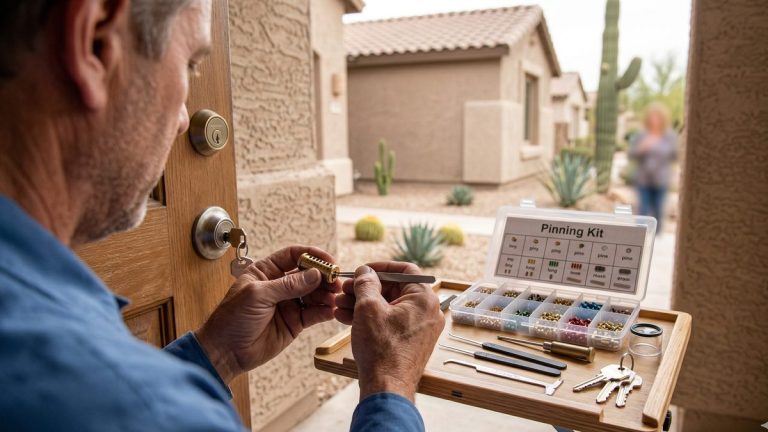
During a rekey visit, the locksmith arrives with a pinning kit — a case containing hundreds of pins in various lengths, organized by depth. The technician removes the cylinder from the lock housing, extracts the existing pins using a follower tool to keep the springs compressed, inserts new pins matched to a new key cut, reassembles the cylinder, and tests the new key. Each lock takes ten to fifteen minutes. If you’re keying multiple locks alike, the locksmith cuts all cylinders to the same pin depths so one key works everywhere.

During a replacement visit, the locksmith arrives with an inventory of new lock hardware — typically several brands and grades in the van. After you select the replacement lock based on your security needs and budget, the technician removes the old hardware (deadbolt, strike plate, and any associated components), confirms the door prep matches the new lock, installs the new hardware, tests operation from both sides, and provides the new keys. If you’re replacing multiple locks and want them keyed alike, the locksmith pins all the new cylinders to one key during installation.

The hybrid approach is the most common recommendation for Tempe homeowners who need both security improvement and key control. Replace the primary entry door deadbolt with a higher-security model, then rekey all remaining locks to match. One visit, one key, improved security on your most vulnerable entry point, and fresh pin configurations on every other door. This approach costs less than replacing every lock while still addressing the weakest point in your home’s security.

Frequently Asked Questions

Is rekeying cheaper than replacing a lock?

Yes, in most cases rekeying costs significantly less than a full lock replacement. Rekeying reuses your existing hardware and only changes the internal pin configuration, so you pay for labor and pins rather than new hardware. For a home with three to five doors, rekeying all of them typically costs about the same as replacing a single lock.

Can I rekey locks myself?

Some lock brands sell DIY rekey kits, but without proper training you risk damaging the cylinder, losing springs, or creating a pin configuration that jams. A locksmith completes the job in ten to fifteen minutes per lock with guaranteed results and no risk to your hardware.

Should I rekey when I move into a new home?

Absolutely. You have no way of knowing how many copies of the existing key were made by previous owners, their contractors, house cleaners, or neighbors. Rekeying immediately after closing or signing a lease is the most cost-effective way to secure your home from day one.

Can different lock brands be keyed alike?

In many cases, yes. A locksmith can rekey locks from different manufacturers to work with the same key, as long as the keyway profiles are compatible. Schlage and Kwikset use different keyways, so cross-brand keying alike may require changing one cylinder to match the other. Your locksmith will assess compatibility on-site.

How do I know if my lock needs replacement?

Signs that point to replacement rather than rekeying include: the key wobbles noticeably in the keyway, the deadbolt sticks or binds when turning, the finish is visibly corroded or flaking, or the bolt throw is less than one inch. A locksmith inspects the lock during any service visit and can recommend the right option based on the hardware’s condition.

Does Arizona heat affect lock lifespan?

Yes. Extreme heat causes daily thermal expansion and contraction of metal components inside the cylinder, gradually widening pin chamber tolerances. UV exposure degrades exterior finishes, and fine desert dust acts as an abrasive inside the keyway. Locks on south-facing and west-facing doors in Tempe typically show accelerated wear compared to shaded or north-facing installations.

Can I rekey and replace locks during the same visit?

Yes, and this is actually the most common approach. Many homeowners replace the primary deadbolt on the front door with a higher-security model and then rekey the remaining locks to match the new key. This gives you one key for the entire house, improved security on your main entry, and lower overall cost than replacing every lock.

Making the Right Choice for Your Tempe Home

The rekey-or-replace decision comes down to two questions: is the existing lock hardware structurally sound, and does it provide the level of security you need? If yes to both, rekey. If no to either, replace. A licensed locksmith inspects the lock, tests the cylinder, measures the bolt throw, and checks the strike plate anchoring before making a recommendation — so you don’t have to make the call blind.

CallOrange.com has been performing lock rekeying and replacements across Tempe and the Phoenix metro area since 2015. With 1,451 Google reviews at 4.8 stars, our licensed, insured, and bonded mobile technicians carry both pinning kits and new lock inventory on every call. Whether you need a full rekey after moving into a new home, a single deadbolt upgrade, or a hybrid approach that combines both services, the work gets done in one visit.

Call (480) 847-2635 and let us know how many locks you’re working with and what prompted the change — move-in, lost key, security upgrade, or tenant turnover. You can also reach out through the contact page or learn more about our residential locksmith team on the about us page.