
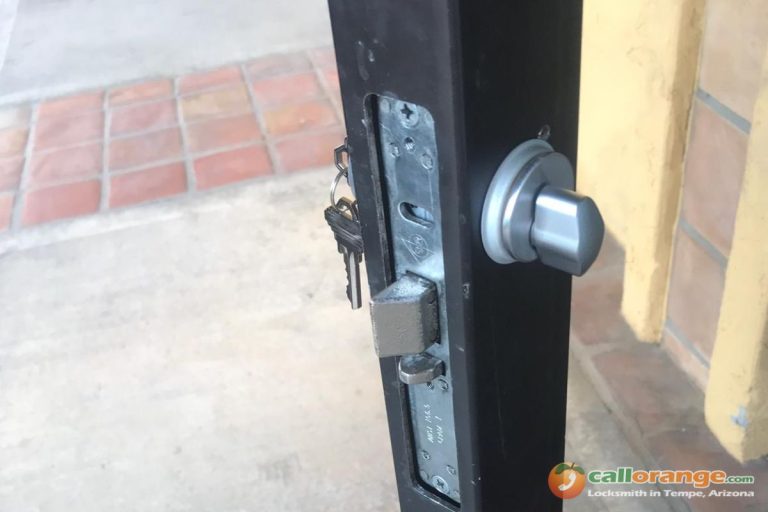
Residential door lock replacement service by locksmith in Tempe Arizona

Locksmith Tempe AZ: Business Door Hardware Issues That Cause Lockouts (Panic Bars, Closers, Strikes)

Most commercial “lockouts” in Tempe aren’t a bad key—they’re a door hardware timing problem. Heat expansion, door sag, and worn components throw off latch timing, panic bar retraction, or closer control, so the door looks unlocked but won’t open (or won’t secure).

Tempe businesses see this more than they expect—especially on high-traffic entries, back doors, and office suites that cycle hundreds of times a day. If you’re dealing with a door that suddenly binds, a panic bar that feels “mushy,” or a latch that won’t catch unless you pull the door hard, the hardware stack is telling you something is out of tolerance.

For broader commercial topics we publish, start in our commercial locksmith article hub on the blog category page: commercial locksmith resources. You can also browse the full library on our blog.

If you need help on a live site, CallOrange is a local team established in 2008, focused on correct diagnosis—door geometry first, then lock hardware, then authorization (keys/access) in the right order. See our About Us and contact us from the Contact page when you’re ready.

Directions and reviews: Google Maps


Why commercial doors fail differently in Tempe

Commercial openings are systems—hinges, door leaf, frame, closer, latch/lock, strike, sometimes a panic device, and sometimes an electronic or smart lock layer. When one part drifts, everything downstream suffers.

Phoenix-area conditions amplify common failure modes:

  • Heat expansion: Metal frames, strikes, and latch components expand. Small clearance issues become big friction issues.
  • Dust + grit: Fine dust works into latch and strike interfaces, accelerating wear and binding.
  • High cycle counts: Retail and office doors see constant use; springs, linkages, and latch components fatigue.
  • Door sag over time: Hinge wear changes latch alignment by millimeters—enough to cause a “won’t latch” or “won’t open” complaint.

Bold takeaway: If the door doesn’t close cleanly, the lock can’t “behave.” Lock hardware is not designed to compensate for poor closing geometry.

If you want a technical reference point for commercial components we commonly evaluate, see: commercial door hardware overview.


The hardware stack that causes most business lockouts

Below are the components that most often create “lockout-like” symptoms in Tempe businesses:

1) Strike plate and latch alignment

When the latch hits the strike wrong, you get:

  • “Door only locks if I lift/pull it”
  • “Key turns but door won’t open”
  • “Latch won’t catch unless slammed”

We check:

  • Strike height and lateral alignment
  • Latch-to-strike clearance
  • Frame condition (warped, shifted, paint buildup, loose screws)

Related reading: commercial lockout service.

2) Door closer control and latch timing

A closer that’s mis-set or failing changes the closing speed and “latching energy.” Too slow and the latch never seats. Too fast and components slam/wear.

We evaluate:

  • Sweep and latch speeds
  • Backcheck behavior
  • Arm geometry and mounting points
  • Door seals/weatherstripping drag

Bold takeaway: A closer problem often looks like a lock problem.

3) Panic bars (exit devices) on retail / public doors

A panic device can create lockouts even when it “moves”:

  • Worn linkage doesn’t retract latch fully
  • Binding latchbolt from misalignment
  • Loose mounting causes inconsistent retraction

If your building has panic hardware, this is a must-read: panic push bar installation insights.

4) Cylinder tolerances and keyway wear (pin-tumbler behavior)

Commercial cylinders live hard lives. Keys get copied on worn blanks, pins and springs fatigue, and tolerances stack up. In desert heat and dust, lubrication dries out and friction climbs.

We look for:

  • Key blank wear and poor cuts
  • Cylinder plug drag
  • Pin wear / spring fatigue
  • Keyway contamination (dust + dried lubricant)

If you’re deciding whether to rekey after turnover or staffing changes, see: office rekey guidance.

5) High-security cylinders and restricted key systems

High-security hardware improves control, but it’s less forgiving of poor door geometry. If the door is sagging or the strike is off, the system feels “tight” and can fail early.

Our commercial service page: high-security locks.


Quick Diagnosis: symptom → likely cause → what a pro checks

No bypass steps here—just safe, legal diagnostic direction. This is how we separate “door” problems from “lock” problems quickly.

Symptom Likely cause What a pro checks
Key turns, door won’t open Latch not retracting fully Latch travel, strike interference
Door won’t latch unless pulled Door sag / strike misaligned Hinge wear, latch-to-strike height
Panic bar feels soft/mushy Linkage wear / loose mounts Device mounting, latch retraction
Door closes but won’t stay closed Closer mis-set / latch speed Latch speed, sweep, seal drag
Key sticks on hot afternoons Expansion + friction in cylinder Plug drag, key wear, lubrication state
Smart lock works but door won’t lock Alignment/timing issue Bolt path, strike pocket clearance

Bold takeaway: When the symptom changes with temperature or time of day, think clearance and friction—not “bad luck.”


Rekey vs lock change for businesses: what actually drives the decision

Tempe businesses often ask whether they should rekey after employee changes, tenant transitions, or lost keys.

Important commercial nuance: If the door geometry is the true failure point, rekeying alone won’t stop future “lockouts.” Fix alignment first, then address key control.


Smart locks on commercial doors: why alignment matters more than features

Commercial smart locks often fail in predictable ways:

  • Bolt path is tight due to strike pocket misalignment
  • Door closer is slamming, loosening mounting and drifting alignment
  • Door seals create drag, stopping full closure before bolt engagement

If your business is considering smart hardware, reference: commercial smart lock installation discussion.

Bold takeaway: Smart locks still need “dumb” fundamentals—square doors, correct strikes, stable closers.


How we approach commercial hardware calls (what you should expect)

When you call a locksmith for commercial door hardware in Tempe, you want a process that prevents repeat failures:

  1. Door geometry first: hinges, sag, closer behavior, latch timing
  2. Strike and latch interface: alignment, clearance, fasteners, frame condition
  3. Lock cylinder health: key quality, tolerances, friction, wear pattern
  4. Key control and access policy: rekey plan, restricted keys (if needed)
  5. Document what changed: so your facilities team has a baseline

You can start from our Services page and reach us through Contact Us. If you’re new to CallOrange, begin at the homepage for the full service breakdown.


Technical notes: components that quietly cause repeated failures

Key blank wear and poor duplication

Worn keys and off-spec blanks cause intermittent cylinder binding. A key might “work” but feel gritty or require jiggle. That’s a tolerance clue—not something you want escalating at a critical entry.

Related automotive reading (for key/remote wear patterns): car remote behavior and car keys replacement.

Wafer vs pin-tumbler behavior (high level)

  • Pin-tumbler cylinders are common in commercial doors; friction and contamination show up as sticking/drag.
  • Wafer systems are more common in certain automotive and cabinet contexts; wear shows up differently.

We keep this at a conceptual level to avoid misuse, but it’s helpful for understanding why some locks “age” badly in dust-heavy environments.

Authorization concepts (no bypass)

For restricted systems, the “lockout” is sometimes organizational—keys issued, keys lost, access policy unclear. We can help you reset key control the right way (rekeying, restricted keyways where appropriate), without risky shortcuts.


FAQs

1) Why does my business door only lock if I pull it hard?

That usually indicates door sag or strike misalignment. A locksmith will check hinge wear, latch height, and the strike pocket clearance before touching the cylinder.

2) The key turns, but the door still won’t open—what’s happening?

Often the latch isn’t retracting fully due to strike interference, latch drag, or linkage issues (especially with panic devices). The right fix starts with measuring latch travel and contact points.

3) Can a door closer cause lockouts?

Yes. If the closer doesn’t provide proper latch speed, the door may never seat enough for the latch to engage. It looks like a lock issue, but it’s a timing and closing-energy issue.

4) Are panic bars supposed to feel “soft” when they’re worn?

A change in feel can signal loose mounts, internal wear, or binding at the latch. A pro checks retraction consistency and alignment—because partial retraction can trap you outside even when the device moves.

5) Should we rekey or replace locks after employee turnover?

Rekeying is often enough when the hardware is in good condition and you’re restoring key control. If the lock is worn, binding, or mismatched across doors, a lock change or upgrade may be smarter.

6) Do smart locks fix door alignment problems?

No—smart locks still require correct alignment. If the bolt path is tight or the door doesn’t fully close, the lock may fail or drain power faster due to repeated attempts.

7) Why do these issues seem worse in Tempe summers?

Heat expansion reduces clearances, dust increases friction, and high door usage accelerates wear. The combination makes small tolerance issues become operational failures.

8) What should I prepare before calling a locksmith for a commercial door issue?

Have the door location, a description of the symptom pattern (time of day, temperature, frequency), and whether it’s a panic bar, closer, or standard lever/deadbolt setup. That helps prioritize the right diagnostic checks.


Wrap-up: keep your entry doors dependable

Commercial lockouts in Tempe are frequently door hardware timing failures—strike alignment, door sag, closer behavior, or panic device retraction issues that make a door act “locked” even when it isn’t.

The correct path forward is to diagnose the opening as a system: confirm geometry and closing behavior first, restore latch/strike alignment, then address cylinder health and key control (rekeying or upgrades) based on what the hardware is actually doing.

CallOrange is a local Tempe team established in 2008, and our work is built around repeatable diagnostics, durable fixes, and clear verification—so your staff isn’t fighting the same door next week.

If your business door is binding, won’t latch, or keeps creating lockout situations, call (480) 847-2635. We’ll confirm authorization and keep changes compliant—because high-security openings require legal verification and careful handling to prevent damage and reduce security risk.