
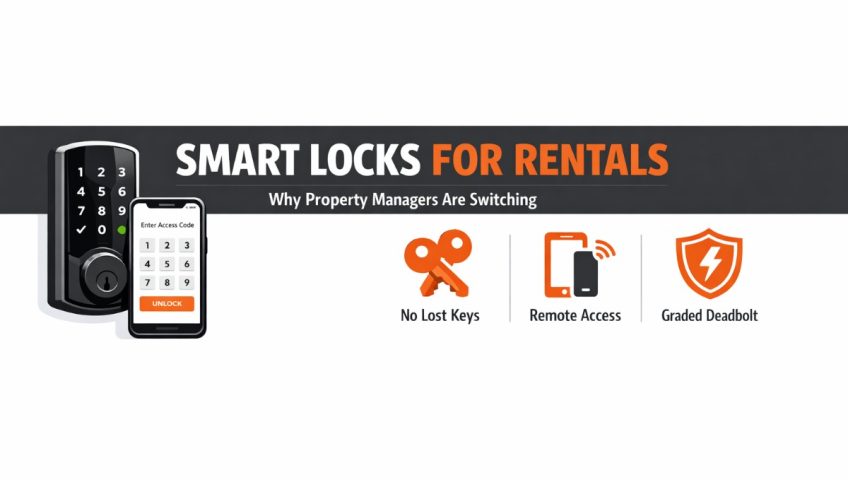
Managing keys across a portfolio of rental units is one of the quiet headaches no property manager talks about until a tenant moves out without returning a single key. Smart locks for rentals solve the core problem of physical key control — they let you grant, change, and revoke access from a phone or dashboard, so a vacated unit is secured the moment a lease ends. Below, a professional locksmith perspective on why electronic access is replacing the brass key, what to look for in the hardware, and how to roll it out across every door without creating new risks. Keep reading to see the full comparison and the questions other managers ask most.
The Hidden Cost of Traditional Keys in Rental Properties
Every metal key cut for a unit is a copy you can no longer account for. Tenants make duplicates at the hardware store, hand spares to friends, and forget how many are floating around by the time they leave. For a property manager, that uncertainty is a liability. The standard fix has always been a lock rekey between tenants, which works well — but it still depends on coordinating a visit, tracking pins, and physically touching every door at turnover.
A residential locksmith sees the same pattern across Tempe, Mesa, and Chandler properties: lost keys, missing spares, and the scramble to secure a unit after a tenant disappears. Smart locks remove the variable that causes most of it — the key itself.
What “Smart Locks for Rentals” Actually Means
A smart lock is an electronic locking mechanism that opens with a code, a fob, a smartphone, or a combination of these instead of a cut key. For rentals, the value is in the management layer behind it: a dashboard where you issue a unique entry code per tenant, set it to start on move-in day, and expire it on move-out day. No handoff, no return, no rekey scramble.
Most quality models still pair their electronics with a mechanical deadbolt security bolt — the same hardened bolt that throws into the door frame on a traditional lock. That matters. The “smart” part handles access; the deadbolt handles force. A unit’s home safety depends on both working together, which is why hardware selection should never be left to the cheapest model on the shelf.
Key Terms, Explained Simply
- Thumbturn lock: The interior knob a tenant turns by hand to lock or unlock the deadbolt from inside. On smart models, this stays manual, so a tenant is never trapped if the battery dies.
- Deadbolt: The solid metal bolt that extends into the frame. Grade matters far more than the brand name on the front.
- Auto-lock: A setting that re-engages the bolt after a set delay, so a unit is never left open behind a forgetful tenant.
Why Property Managers Are Making the Switch
The shift comes down to control. With electronic access, a manager handles turnover remotely, audits who entered and when, and stops chasing returned keys. Maintenance crews and cleaners get their own temporary codes that you switch off when the job ends. If a tenant reports a home lockout, you can often resolve it from the dashboard instead of dispatching anyone.
There is also a tenant-experience angle. Renters increasingly expect keyless entry the way they expect a working dishwasher. Offering it across every unit positions a property as modern without a major renovation. Pairing the rollout with a clean lock change on older doors brings the whole entry system up to a consistent standard.
Smart Lock Tiers for Rental Units: A Comparison
Not every smart lock belongs in a rental. The table below compares the main categories a property manager evaluates, focused on security and management features.
| Lock Type | Access Method | Deadbolt Grade | Best For | Management Control |
|---|---|---|---|---|
| Keypad deadbolt | PIN code | ANSI Grade 2–3 | Single units, light turnover | Manual code reset |
| App-connected smart lock | Phone + code | ANSI Grade 1–2 | Multi-unit portfolios | Remote, per-tenant codes |
| Smart lock + hub | Phone, code, remote | ANSI Grade 1 | High-turnover buildings | Full dashboard + audit log |
| Mechanical + thumbturn (legacy) | Cut key | ANSI Grade 1–3 | Owner units, low turnover | Physical rekey only |
| Commercial electronic strike | Fob, code, mobile | Grade 1 / fire-rated | Shared entries, lobbies | Centralized, scheduled |
Grades reference the ANSI/BHMA durability standard. A professional locksmith can match the right tier to each door.
The right tier depends on how often a unit turns over and how many people need access. A duplex owner has different needs than a manager running fifty doors. A professional locksmith can match the grade and management layer to the property rather than the marketing.
Pro Tip: The Mistake That Undoes a Good Smart Lock
After installing smart hardware on hundreds of doors across the East Valley, the most common failure is not the electronics — it is the door itself. A premium smart deadbolt mounted on a worn strike plate with short screws will pull loose under a shoulder strike, no matter how advanced the lock. Before any smart lock goes on, reinforce the strike plate with three-inch screws that bite into the wall stud, and confirm the deadbolt fully extends without binding. The electronics protect against unauthorized access; the strike plate and frame protect against force. Get both right, or the upgrade is only half done.
It is also worth standardizing one brand and one battery type across a portfolio. Mixed hardware means mixed dashboards, mismatched fobs, and maintenance crews carrying four chargers. Consistency is what makes a fleet of smart locks manageable instead of a second job.
Rolling It Out Across Every Unit
A full conversion does not have to happen overnight. Many managers start with units at turnover, installing smart hardware as each lease ends, and standardize the rest within a season. A locksmith handling the install can verify door prep, confirm deadbolt grade, and set up the management dashboard so codes are ready before the next tenant signs. For older buildings, combining the smart upgrade with high-security cylinder hardware closes the gap on doors that were never properly secured in the first place. You can review the full range of residential and commercial services to plan a phased rollout.
External standards help here. Reviewing the ANSI/BHMA grading system before buying tells you whether a lock’s deadbolt is rated for residential or commercial duty, and the Consumer Product Safety Commission publishes guidance on door and entry hardware that property managers can lean on when setting a standard.
Secure Every Door With Professional Installation
Smart locks give property managers something brass keys never could: real control over who enters a unit and when. But the hardware only performs as well as the installation behind it. If you manage rentals across Tempe, Mesa, Scottsdale, or Phoenix and want every unit on a consistent, secure access system, talk to a professional locksmith before you buy. CallOrange Locksmith Tempe can audit your doors, recommend the right grade for each entry, and handle the full install. Call (480) 847-2635 or reach out through our contact page to schedule a security audit for your property.
Smart Locks for Rentals — Frequently Asked Questions
Are smart locks secure enough for rental units?
A quality smart lock pairs electronic access with a graded mechanical deadbolt, so it resists force the same way a traditional lock does. Security depends on the deadbolt grade and the door prep behind it, not just the electronics. A professional locksmith can confirm the unit is rated for the duty you need.
What happens to a smart lock if the batteries die?
Most rental-grade smart locks keep a manual thumbturn on the inside, so a tenant can always exit. Many also include a physical key override or external contacts to power the keypad. Choosing a model with a low-battery alert helps a property manager swap cells before access is interrupted.
Can I reuse the same smart lock for a new tenant?
Yes. Instead of a physical rekey, you delete the previous tenant’s code and issue a new one from the dashboard. This is the main advantage of smart locks for rentals — turnover access is handled without touching the hardware or cutting a new key.
Do I need a professional locksmith to install them?
A locksmith verifies the door prep, reinforces the strike plate, and confirms the deadbolt extends fully before the electronics go on. Across a multi-unit portfolio, professional installation also keeps every door on a consistent standard and dashboard, which is what makes the system manageable.
What deadbolt grade should a rental smart lock have?
For most rental doors, an ANSI/BHMA Grade 1 or Grade 2 deadbolt is the standard to aim for. Grade 1 is built to commercial duty, while Grade 2 suits typical residential entries. The grade tells you how the bolt holds up under repeated use and force.
Should I switch every unit at once or phase it in?
Many property managers convert units at turnover and standardize the rest over a season. Phasing it in spreads out the work while still bringing the whole property onto one access system. A locksmith can plan the rollout so codes are ready before each new tenant signs.